The Hot Spot Rating
Halloween (1978)
Cast: Jamie Lee Curtis, Donald Pleasance, Nancy Loomis, PJ Soles, Charles Cyphers
Director: John Carpenter
Synopsis: Carpenter’s brilliance had audiences gripped worldwide as this tiny independent film starring nobody went on to become one of the most successful indie films of all time.
“A visceral experience — we aren’t seeing the movie, we’re having it happen to us.”— Roger Ebert, Chicago Sun-Times (1978)
“Scary.”— Gene Siskel, Chicago Tribune (1978)
“An astonishingly effective thriller.”— The Village Voice (1978)
“One of the best and most restrained horror movies I have seen in a long time.”— Cinefantastique magazine (1979)
“Carpenter is a talented director, but perhaps his greatest achievement here was creating Michael Myers.”— Vincent Canby, The New York Times (1978)
“A terrifying masterpiece.”— retrospective assessment from Empire magazine
“Halloween is absolutely a classic.”— Rotten Tomatoes critical consensus
“The quintessential slasher movie.”— AllMovie retrospective review
“A landmark in horror filmmaking.”— British Film Institute commentary
“Halloween is an absolutely merciless thriller, a movie so violent and suspenseful that, yes, I would compare it to Psycho.” – Roger Ebert
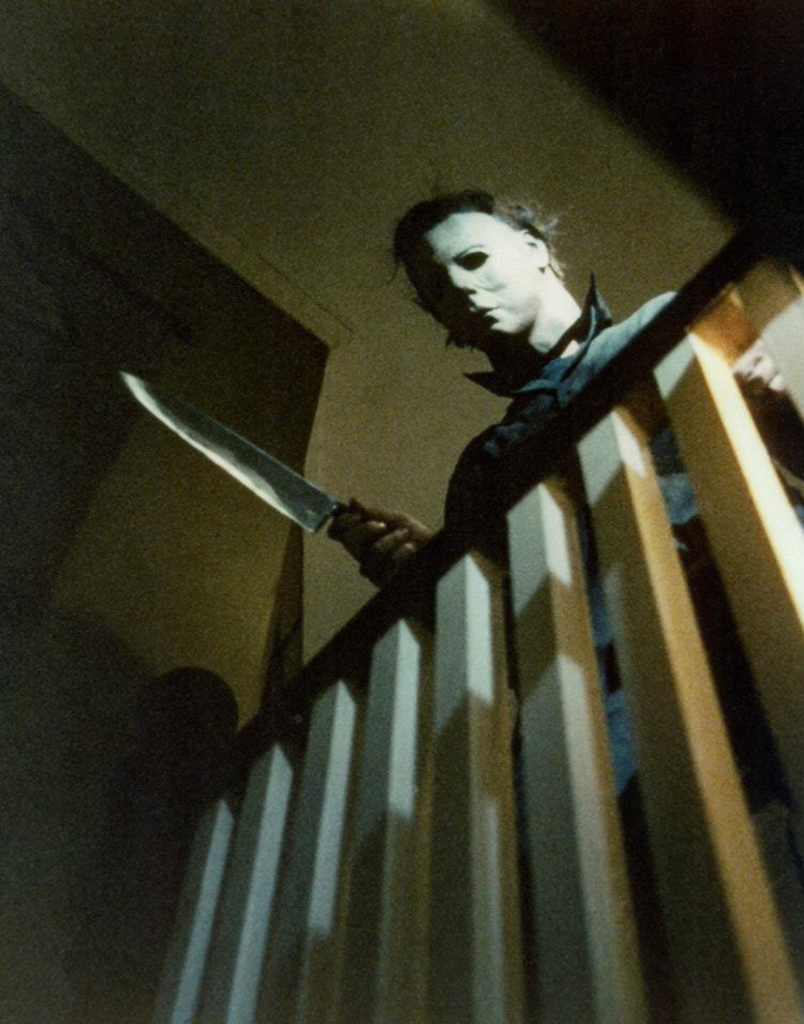
There is little point in attempting to add yet another review to a film now rightly regarded as nothing short of a masterpiece — not merely as a horror movie, but as a work of cinema of the highest quality and craftsmanship.
What I can offer instead is a personal recollection of seeing the film during its original release in London at the old Odeon Chelsea on the then punk-infested King’s Road. These were the days just before multiplexes began spreading across the world like a rash. Back then, the Odeon was still a magnificent single-screen cinema seating around 700 people — and every single seat was occupied that night.
It took only moments for that pre-cell-phone audience to become utterly spellbound, their nerves shredded and jangled like seldom before.
There was something extraordinary about witnessing an audience held in absolute pin-drop silence, collectively pulverised by the relentless tension that John Carpenter layers scene upon scene until, finally, the mayhem is unleashed. Assisted enormously by his magnificent musical score, Carpenter ratchets up the suspense to almost unbearable levels.
An audience of 700 people squirmed as one.
Every single person in that theatre held their breath alongside Laurie Strode while Michael Myers prowled outside the closet door.
Sadly, it is the kind of communal cinematic experience that scarcely exists anymore outside of film festivals, where audiences still respect films enough to switch off their phones and completely surrender themselves to the experience. Halloween was one of those rare films that seized its audience by the scruff of the neck and simply refused to let go until the bitter end.
And even then, it still had one final sucker punch left to deliver.
While many rightly point to Peeping Tom and Black Christmas as important precursors to the slasher genre — and they certainly have a strong case — stylistically and in terms of sheer execution, Halloween towers above the field on its own pedestal.
Today it stands rightfully recognised as the finest and classiest slasher film of the late 1970s and early 1980s.
Naturally, a flood of imitators followed, but almost immediately they began misunderstanding what made Carpenter’s film so effective.
The first truly successful copycat was Friday the 13th, which became a huge box-office success but approached horror from an entirely different angle, even if the underlying template had already been established by Halloween.
The POV camerawork became the most imitated element, while countless hacks attempted to reproduce Carpenter’s music cues and directorial tricks in a desperate attempt to make a quick buck. Yet almost all of them missed the essential ingredient.
The emphasis shifted.
Studios began churning out slashers that cared far less about atmosphere and mounting dread than Carpenter had. Instead, the focus rapidly moved toward increasingly elaborate gore effects and shock killings, especially after the arrival of the brilliantly gruesome make-up work of Tom Savini.
Where Halloween created terror through tension, suggestion, atmosphere, and stalking fear, Friday the 13th became more about a succession of inventive killings designed to provoke shock reactions through gore and brutality.
There was a clear shift away from suspense and toward spectacle.
Halloween largely avoided the Grand Guignol excesses that soon came to dominate the slasher genre after Friday the 13th became such a success. Before long, imitators were piling on more gore, more elaborate kills, and increasingly grotesque effects, mistakenly assuming that shock value itself equalled fear.
But gore was never what made Halloween frightening.
Films like He Knows You’re Alone shamelessly copied Carpenter’s camerawork, stalking sequences, and even attempted to imitate the score so closely that parts bordered on parody.
Soon there were countless slashers built almost entirely around elaborate death scenes and opportunities for Savini-inspired make-up effects.
The genre lost sight of what Carpenter had originally achieved almost immediately.
Jaws had audiences terrified of shadows in swimming pools. Ridiculous though it sounds, it genuinely happened. Halloween had people hesitating to walk past hedges and dark suburban corners at night. The mere possibility of Michael Myers lurking silently nearby was enough to generate pure dread without requiring gallons of blood or elaborate effects.
That was Carpenter’s genius.
Halloween generated fear through masterful direction, pacing, atmosphere, and a script that made its characters feel believable and human — people the audience genuinely cared about.
Not merely disposable teenagers waiting to be butchered after showing a little flesh, as rapidly became the norm throughout the endless slasher boom that followed.
Interestingly, one of the very few films that later managed to recreate a similar sense of unbearable tension arrived decades later in the form of High Tension by Alexandre Aja.
That savage little masterpiece somehow fused brutal gore and genuine suspense together in a way most slashers never managed. Through sheer style, atmosphere, music, and nail-biting tension, it came closer than most to recreating the adrenaline-fuelled dread Carpenter achieved with Halloween.
The vast majority of the thousands of slasher films that followed, however, simply copied the template while endlessly escalating the gore. Predictably, the genre rapidly became repetitive and stale, eventually degenerating into self-parody.
By the time Scream arrived, Wes Craven and Kevin Williamson cleverly turned the entire slasher formula into both homage and satire, openly acknowledging the rigid “rules” that had emerged after decades of imitation.
Ironically, many filmmakers ultimately succeeded in cloning Friday the 13th far more effectively than they ever did Halloween.
And that is because Halloween exists on an entirely different level of filmmaking.
I still remember those endless debates in the early 1980s:
“Which did you prefer — Halloween or Friday the 13th?”
There is enormous affection for Friday the 13th, but honestly, the two films barely belong in the same conversation stylistically. Carpenter’s film operates in another realm altogether.
I often think back to that packed Odeon screening in Chelsea in 1978. Seven hundred people sitting together in absolute terror for ninety relentless minutes until that devastating ending leaves you thinking:
“No… he’s still out there.”
And afterwards, every dark hedge and suburban bush suddenly looked threatening.
Never has a mask appeared so menacing. Never has a silent shape lurking in the distance seemed so terrifying.
There has simply never been another slasher film quite like Halloween.
Clearly, I was not alone in feeling that way. A couple of years later, when Halloween II opened, I forced a friend to drive miles so we could catch it in downtown Boston. I have rarely witnessed an audience so wildly excited for a film in my life.
When Carpenter’s theme music kicked in, the entire cinema began clapping rhythmically along with it.
It was another thrilling communal experience.
While Halloween II never quite reached the heights of the original, it retained enough of its atmosphere and style to satisfy many of us perfectly well.
There are countless reasons why Halloween remains the greatest slasher film ever made and, stylistically speaking, one of the true masterpieces of modern horror cinema.
Yes, it may no longer shock audiences in the way it once did, but that is hardly surprising considering its techniques have now been copied a million times over.
Those who know the genre properly understand one thing very clearly:
Halloween was the film that did it first — and still did it best.
Michael Myers remains the definitive slasher icon, and Halloween remains the benchmark everything else continues chasing.
Some films have come close. High Tension perhaps offered the most convincing modern nod toward Carpenter’s style. But most filmmakers still struggle to understand the delicate balance between genuine dread and mere shock value.
Shock is easy.
Fear is much harder.
Ironically, one could argue that The Omen helped popularise the “elaborate gore set-piece” approach that later dominated horror cinema. Carpenter largely rejected that philosophy entirely.
Unfortunately, most imitators discovered it was far easier to stage graphic kills than to create an atmosphere capable of leaving an audience chewing their fingernails in nervous anticipation.
That was what Halloween truly achieved.
Not cheap gore.
Not shock effects.
Pure tension.
There could be endless debates comparing Halloween, Friday the 13th, and the slasher genre as a whole, but can there really be much doubt that Carpenter’s masterpiece stands towering above the rest?
Perhaps My Bloody Valentine has aged better than many of its contemporaries, partly because it retained some atmosphere and mood alongside its gore. It also featured arguably the best killer’s mask since Michael Myers’ now-legendary modified William Shatner mask.
Yet even then, the emphasis remained more on gore than on pure stalking terror.
Halloween remains the undisputed king of slasher cinema.
And with the then-new revival featuring Jamie Lee Curtis returning as Laurie Strode, longtime fans understandably felt genuine excitement again for the first time in years. Early trailers suggested an attempt to recapture the creeping dread that once hung over Haddonfield, especially with Carpenter himself once again involved musically and the original mask returning as well.
For die-hard Halloween fans — and there are legions of them — the heart still beats a little faster whenever that familiar piano theme begins.