
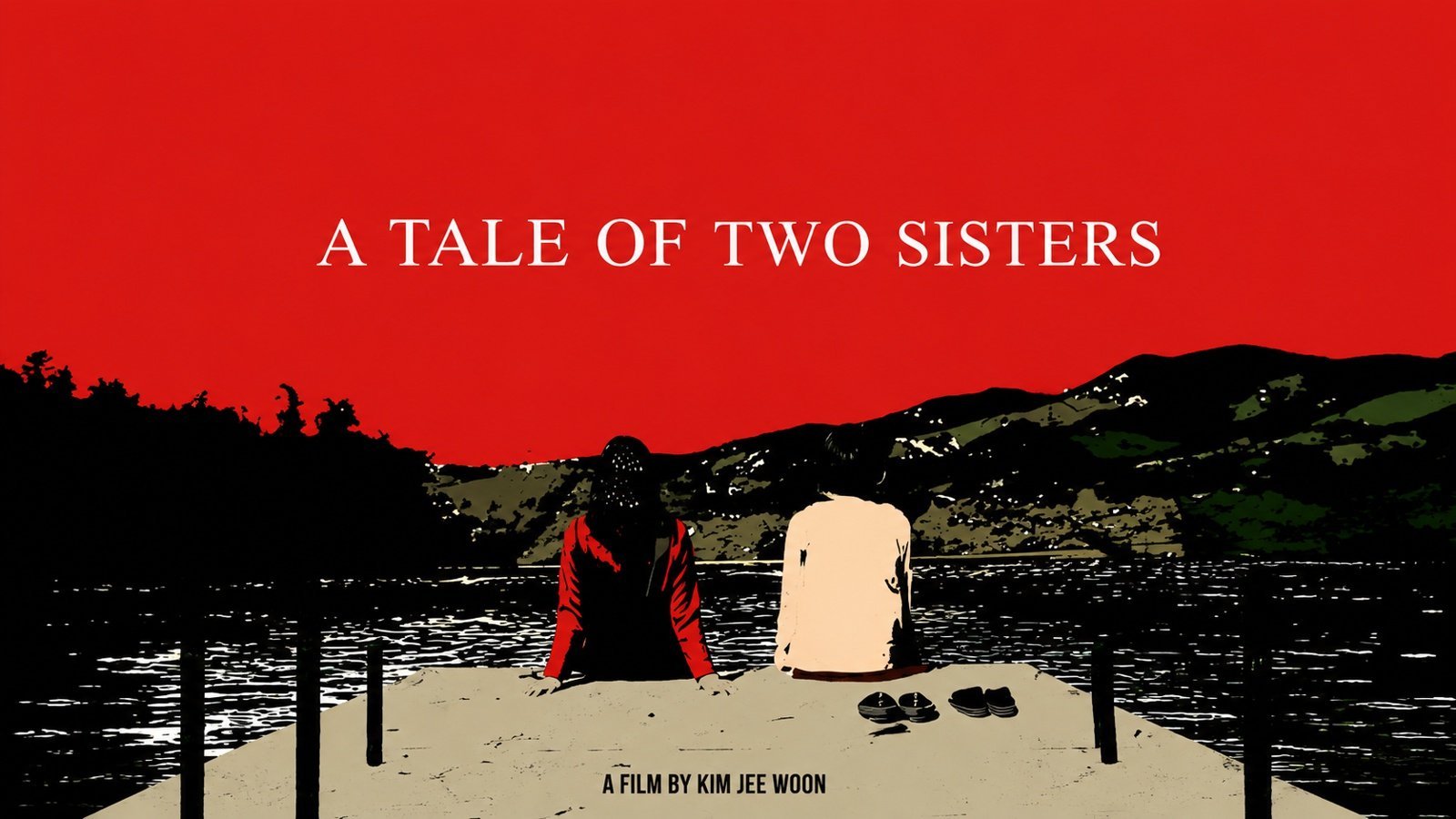
Tale of Two Sisters, A (Janghwa, Hongryeon) (2003)
Cast: Jung-ah Yum, Kap-su Kim, Su-jeong Lim, Geun-yeong Mun
Director: Ji-woon Kim
Synopsis: Beautifully crafted ghostly Korean chiller on the lines of The Others
Reviewed by: Omar Khan
"An elegantly mounted, genuinely creepy ghost story." — Variety
"A hauntingly beautiful horror film." — Empire
"One of the most accomplished horror films in years." — The New York Times (Dave Kehr)
"A richly atmospheric chiller." — Time Out
"Beautifully acted and exquisitely directed." — BBC
"One of the finest horror films of the decade." — Slant Magazine
"An emotionally devastating ghost story." — The A.V. Club
"A masterpiece of psychological horror." — Film Threat
"Visually stunning and deeply unsettling." — The Guardian
"A sophisticated blend of horror and family melodrama." — Chicago Reader (Jonathan Rosenbaum)
This Korean chiller screened in competition at the 2003 Sitges Film Festival, where it made a favourable impression despite ultimately leaving empty-handed. One factor working in its favour was that much of the other Asian horror fare screening that year proved rather less inspiring.
A Tale of Two Sisters is a contemporary reimagining of a traditional Korean folk tale concerning an evil stepmother and her two daughters. Director Kim Jee-woon transforms the old legend into a modern psychological ghost story that is as elegant as it is unsettling.
The film opens with a young girl being questioned by a psychiatrist, who simply asks her to explain "what happened." From there we follow Su-mi as she returns home after a stay in a mental institution, accompanied by her younger sister Su-yeon. The sisters find themselves living under the watchful eye of their cold, overbearing stepmother, whom they openly despise, blaming her for taking the place of their deceased mother. Their father, meanwhile, remains emotionally distant and seemingly unwilling to intervene as tensions within the household steadily escalate.
As the uneasy domestic atmosphere intensifies, it gradually becomes apparent that the house is inhabited by more than just its living occupants. Strange apparitions, disturbing incidents and increasingly fractured perceptions of reality suggest that something deeply traumatic lies buried beneath the family's already fragile relationships.
Kim Jee-woon directs with remarkable assurance, crafting a film of considerable beauty and restraint. Every frame is meticulously composed, the production design is exquisite and the performances are uniformly excellent. The film contains several genuinely unnerving moments, relying less on cheap shocks than on atmosphere, psychological unease and carefully orchestrated suspense. When the shocks do arrive, they are staged with considerable skill and are all the more effective because they are used sparingly.
The influence of Hideo Nakata's Ringu is unmistakable, while echoes of The Sixth Sense and The Others can also be detected. Yet despite these familiar influences, A Tale of Two Sisters possesses a distinct identity of its own, rooted firmly in Korean folklore and family tragedy.
Its principal weakness lies in the closing stages. As the narrative becomes increasingly fragmented and ambiguous, the film threatens to disappear beneath the weight of its own cleverness. The final half-hour is undoubtedly intriguing but also rather muddled, requiring considerable effort from the audience to disentangle reality from illusion. For some viewers this complexity will be richly rewarding; for others it may prove frustrating.
Even so, A Tale of Two Sisters remains a beautifully crafted, superbly acted and often haunting piece of modern Korean horror. It occasionally stumbles over its own narrative ambitions, but its visual elegance, emotional depth and lingering atmosphere more than compensate.
A fine achievement—even if, in the end, it falls just short of true greatness.

0 Comments
Leave a Comment