
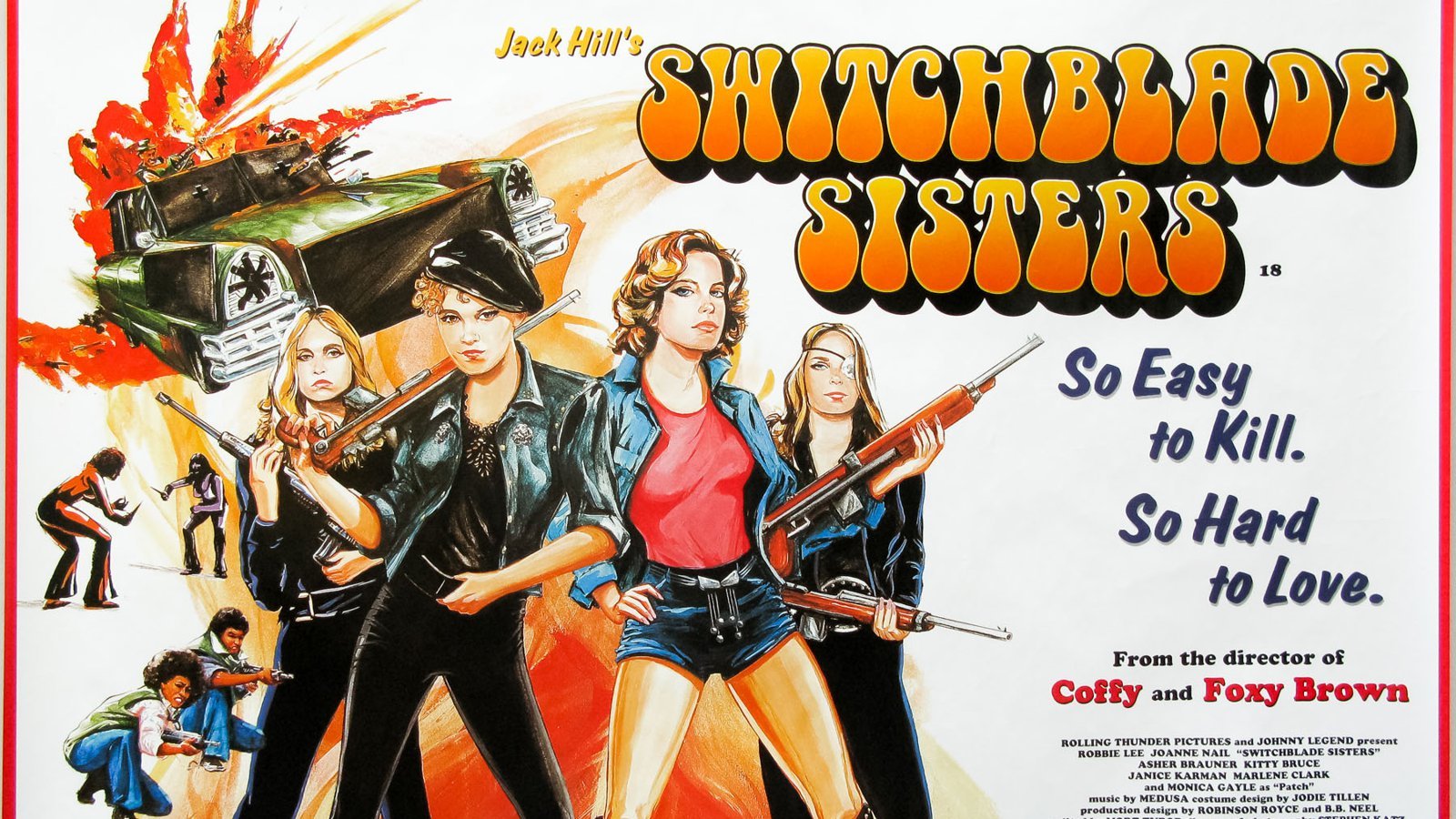
The Hot Spot Rating
Switchblade Sisters (1975)
Cast: Robbie Lee, Joanne Nail, Asher Brauner, Kitty Bruce, Monica Gayle
Director: Jack Hill
Nutshell: top notch 70’s exploitationer features chick gang warfare and revolutionary sisters, just for starters. Wonderful
“cinephiliac slumming” Time Out.
“this gem is a wild, amazing, anything-goes tale. The best female jd movie ever” Psychotronic
“pretty good cheapie”, Maltin’s
“Kitsch and fun” Empire
Switchblade Sisters is pure, unapologetic 1970s exploitation cinema from the great Jack Hill — and what a gloriously savage, trashy, high-energy ride it remains.
Hill, one of the undisputed masters of grindhouse filmmaking, delivers an absolute bull’s-eye here with a film bursting with attitude, sleaze, violence, swagger, and enough gang warfare to satisfy even the most hardened exploitation addict.
This is not subtle filmmaking.
This is switchblades, platform shoes, revenge, revolution, and teenage gang warfare delivered at full voltage.
The film revolves around rival female street gangs including the Dagger Debs, the Silver Daggers, and the Jezebels, all tearing through the streets in a furious battle over territory, loyalty, status, and survival. What could easily have become pure camp nonsense instead acquires surprising momentum and conviction thanks largely to Hill’s sharp direction and the film’s utterly committed performances.
At heart, it is a classic exploitation revenge story infused with elements of social rebellion and revolutionary rhetoric, particularly through the unforgettable Sisters from Harlem — militant revolutionaries armed with copies of Chairman Mao’s Little Red Book and enough firepower to launch their own private uprising.
And honestly, they steal the entire film.
Once the Revolutionary Sisters roll into action in armoured vehicles preaching revolution and female empowerment, the film ascends into exploitation nirvana.
The whole thing plays like some delirious collision between a juvenile-delinquent movie, a women-in-prison film, a street-gang melodrama, and a revolutionary fantasy.
Which, naturally, makes it magnificent.
The performances are perfectly pitched throughout. Everyone understands exactly what sort of movie they are in and attacks the material with complete conviction. Special mention must go to the gloriously sleazy cameo from the obligatory sadistic lesbian prison warden figure, who positively revels in donning her rubber gloves before administering “search procedures” with obvious enthusiasm.
It is exactly the kind of outrageous exploitation excess the film requires.
What makes Switchblade Sisters work so well, however, is that beneath all the camp, violence, and absurdity, the film possesses genuine energy and spirit. Hill never sneers at the material. He embraces it wholeheartedly, giving the gang conflicts real momentum and occasionally even genuine emotional stakes.
The dialogue throughout is packed with wonderfully quotable lines, while the pacing rarely lets up for a moment.
Most importantly, the film remains tremendous fun from beginning to end.
This is exploitation cinema doing precisely what exploitation cinema was meant to do:
shock, entertain, provoke, and leave audiences grinning at the sheer outrageousness of it all.
It is little surprise that Quentin Tarantino later championed the film so enthusiastically through Rolling Thunder Pictures and helped introduce it to a whole new generation of cult film fans. Tarantino clearly recognised the same thing many exploitation devotees already knew:
Switchblade Sisters is one of the great grindhouse gems of the 1970s.
Low-budget? Absolutely.
Exploitative? Shamelessly.
Entertaining? Immensely.
A riotously enjoyable slice of tough-girl exploitation cinema overflowing with attitude, revolutionary rhetoric, switchblade warfare, and enough glorious sleaze to power an entire Times Square grindhouse for a week.