
The Hot Spot Rating
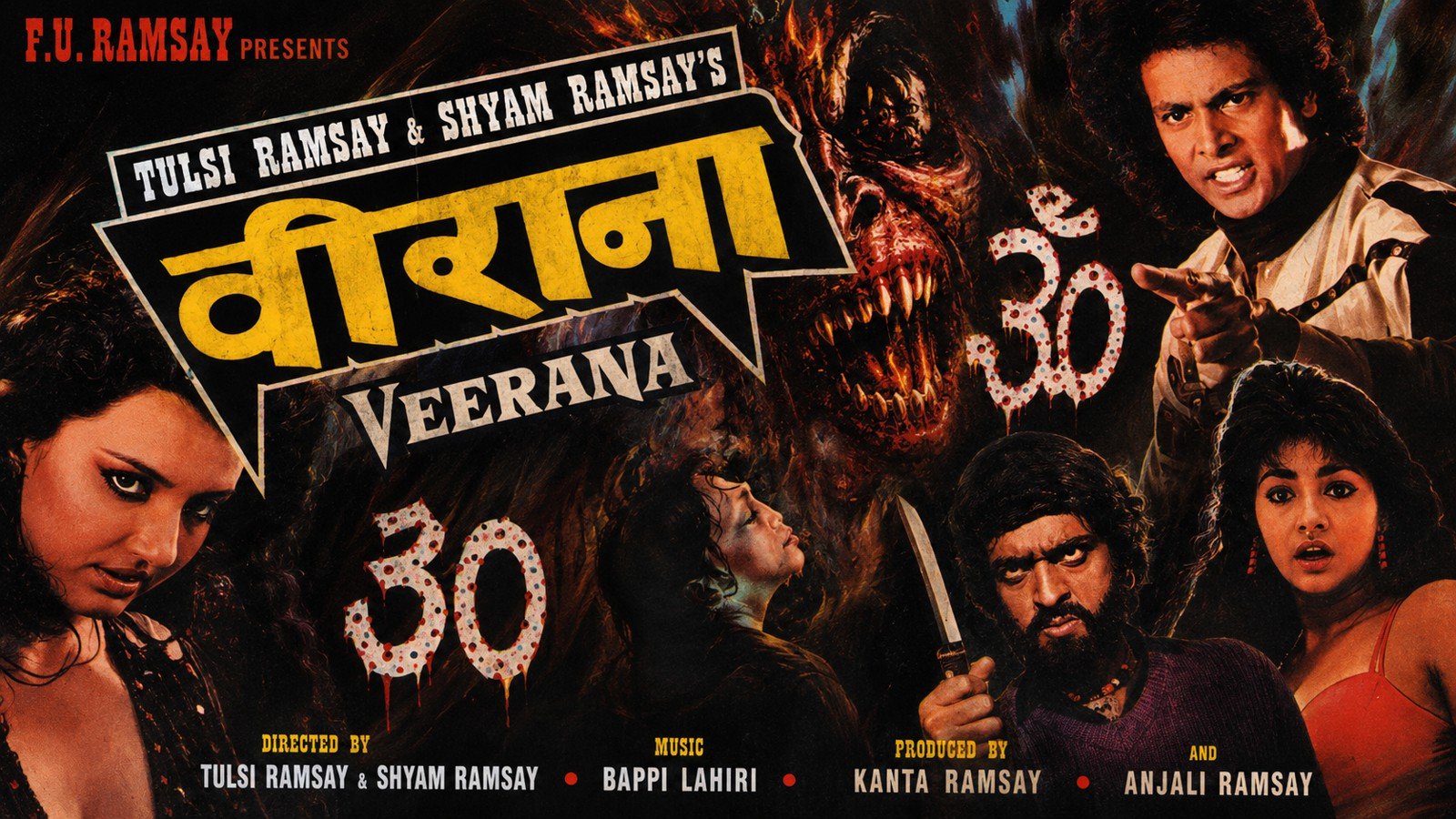
Veerana (1988)
Cast: Jasmin, Hemant Birje, Sahila Chaddha, Satish Shah, Kulbushan Kharabanda
Director: Tulsi Ramsay and Shyam Ramsay
Synopsis: Nasty witch possesses innocent young thing to take her ghastly revenge
The Ramsays open proceedings in suitably lurid fashion with horror regular Vijayendra Ghatge cast as a feudal landlord who succeeds in capturing the dreaded witch Nikita and has her publicly executed by the local villagers. Justice appears to have prevailed until a band of devoted satanic followers manages to spirit away the witch’s charred remains and install them within a sinister underground shrine.
Deep beneath the earth, amid flickering torches and much ritualistic mumbo-jumbo, Nikita’s chief disciple consults a gathering of grotesque cone-headed zombie creatures. A verdict is reached: Vijayendra must pay for his actions, and the instrument of revenge shall be his own young daughter, whose body is to become the vessel for the dead witch’s vengeful spirit.
The plot is set in motion during a journey to the family’s ancestral estate. When the car conveniently breaks down, Vijayendra leaves in search of assistance and the young Jasmin is approached by the sinister high priest. After hypnotising her and snipping away a lock of hair, he returns to his subterranean lair and begins constructing a voodoo effigy.
What follows is one of the most wonderfully bizarre sequences ever produced by the Ramsay brothers.
Summoned by occult forces, the entranced Jasmin wanders through a storm-lashed landscape toward Nikita’s open grave. Amid flashing lightning, satanic chants, swirling mist and a riot of green and red lighting, she is compelled to lie beside the witch’s rotting corpse while the spirit transfer takes place. It is pure Ramsay magic: absurd, theatrical, dreamlike and completely unforgettable. The outlandish sets, the eerie temple-style percussion and those magnificent cone-headed zombies combine to create a sequence that feels genuinely nightmarish.
The ritual succeeds.
With Nikita’s spirit now inhabiting the young girl’s body, the high priest adopts the guise of a humble villager and conveniently delivers Jasmin to the home of her uncle, played by Kulbhushan Kharbanda. So impressed is the family by this apparently selfless stranger that they invite him to remain in the household, giving him the perfect opportunity to supervise his mistress’s revenge from close quarters.
Jasmin immediately begins displaying alarming tendencies.
Fish tanks explode for no apparent reason, household accidents multiply and before long one unfortunate aunt meets a particularly grisly fate. In one of the film’s better scenes, Jasmin adopts a chilling masculine voice and mocks her terrified victim before the woman is later discovered hanging from her own sari in what appears to be a highly improbable suicide. Naturally nobody suspects the innocent-looking child quietly sobbing in the corner.
Years pass.
Kulbhushan sends his own daughter away to Bombay while Jasmin remains behind, growing into a beautiful but troubled young woman whose increasingly sinister behaviour alarms those around her. When cousin Sahila returns home years later she is attacked en route by a bizarre zombie-like creature and rescued by none other than Hemant Birje, still trading heavily on his Tarzan credentials.
Hemant soon finds himself drawn into a mystery involving a series of gruesome murders that leave the authorities baffled. The audience, however, is well aware of the culprit. Nikita, still occupying Jasmin’s body, has developed a particularly unpleasant habit of luring predatory men before revealing her true form and dispatching them in spectacular fashion.
As bodies pile up and supernatural chaos spreads through the community, only Hemant Birje and a suitably mystical Om-emblazoned trident stand between civilisation and complete destruction.
The film was controversial upon release due to its mixture of possession, sexuality and revenge. The censor board reportedly objected strongly to elements of the storyline, resulting in lengthy delays before the film eventually reached cinemas. Despite these difficulties, the movie performed respectably and has since become one of the more memorable entries in the Ramsay catalogue.
Jasmin acquits herself admirably in the central role, successfully balancing vulnerability and menace. Kulbhushan Kharbanda lends a degree of credibility to the proceedings, while Gulshan Grover makes a strong impression in a supporting role. Hemant Birje remains as wooden as ever, Satish Shah’s comedy proves more irritating than amusing, and Sahila Chaddha leaves little lasting impression.
Yet these shortcomings matter surprisingly little.
What elevates the film above many of its contemporaries is the sheer imagination on display. The Ramsays may never have possessed substantial budgets, sophisticated effects or subtle storytelling skills, but at their best they created an atmosphere unlike anyone else in Indian cinema. Few filmmakers could combine voodoo dolls, witches, zombie coneheads, lurid lighting, fog machines and occult rituals with such reckless enthusiasm.
For students of Bollywood horror, this remains essential Ramsay viewing: flawed, outrageous, often ridiculous, but packed with exactly the sort of delirious imagery that made the brothers legends of the genre.