
The Hot Spot Rating
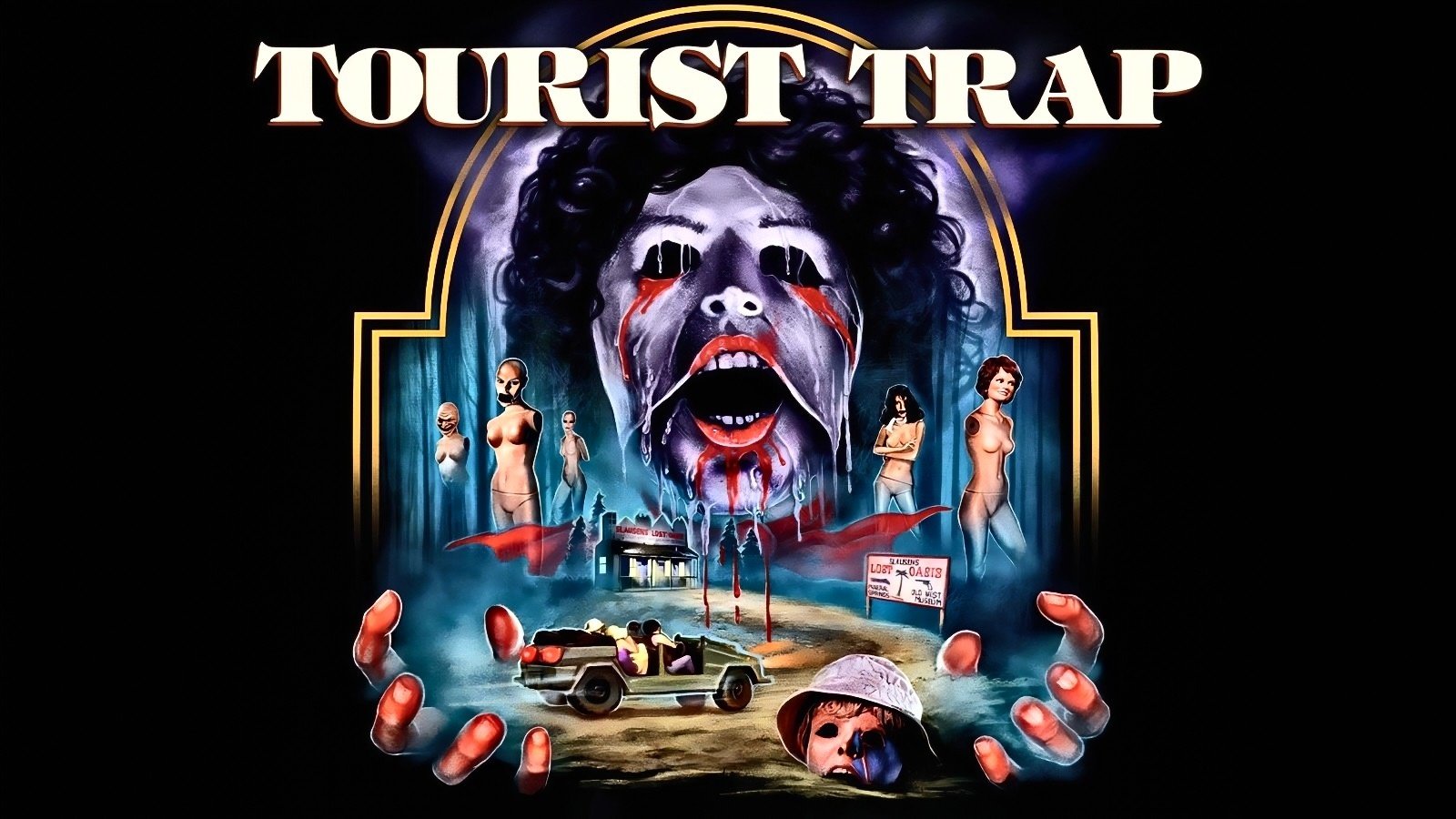
Tourist Trap (1979)
Cast: Chuck Connors, Jocelyn Jones, Jon Van Ness, Robin Sherwood, Tanya Roberts, Shailar Coby
Director: David Schmoeller
Nutshell: A broken down car leads to a stay at a creaky old Tourist Trap where the inhabitants are in for the time of their lives! Macabre and intensely creepy, this film is one of horror’s most majestic yet unheralded classics.
“One of the creepiest horror movies of the 1970s.”— modern cult horror reassessment
“A bizarre and deeply unsettling little nightmare.”— retrospective horror review
“Tourist Trap feels like a deranged carnival attraction that never ends.”— cult cinema commentary
“A surreal hybrid of Psycho, The Texas Chain Saw Massacre and supernatural horror.”— genre critic appraisal
“The mannequins are genuinely terrifying.”— classic horror review
“Dreamlike, disorienting and strangely hypnotic.”— retrospective analysis“An underrated masterpiece of backwoods terror.”— cult horror fandom commentary
“Chuck Connors gives one of the strangest performances in horror history.”— horror retrospective
“The film creates a uniquely uncanny atmosphere that gets under the skin.”— genre review
“Tourist Trap operates according to nightmare logic — and that’s exactly why it works.”— modern horror criticism
“One of my favourite films” – Stephen King
Tourist Trap was one of those unfortunate horror films that very nearly slipped completely through the cracks. Shot in just 24 days during the height of the slasher boom, it arrived at precisely the wrong moment historically. By 1980, particularly in the wake of Friday the 13th, horror audiences had become increasingly conditioned to expect elaborate Tom Savini-style gore effects and increasingly outrageous “creative kills” every time they ventured into a cinema.
Tourist Trap was playing an entirely different game.
Perhaps the film’s greatest handicap — ironically enough — was its mystifying PG rating, which effectively acted as a kiss of death for horror fans seeking blood and carnage. A PG certificate simply did not inspire confidence among the hardcore horror crowd of the era.
Its biggest endorsement at the time ultimately came from Stephen King, who singled the film out for praise in Danse Macabre as being a hidden gem worth seeking out.
As it turns out, King was absolutely right.
My own first encounter with the film came via a pirated VHS tape brought home with virtually no expectations whatsoever because of that dreaded PG certificate. Instead, what unfolded was something genuinely shocking: a film that was deeply creepy, oppressive, unnerving, and often outright terrifying.
Not through gore.
Through atmosphere, dread, madness, and bizarre surreal horror.
Over time, Tourist Trap has gradually been rediscovered and rightly elevated to its current status as one of the strongest and most distinctive horror films of its era.
The story itself initially sounds deceptively familiar. A group of young friends find themselves stranded in the middle of nowhere after their car breaks down, only to stumble into a nightmare beyond explanation.
But the execution is anything but ordinary.
The first death scene alone is enough to announce that the film is operating on a completely different wavelength. One of the stranded youths, Woody, heads off toward a ramshackle roadside inn hoping to repair a damaged tyre.
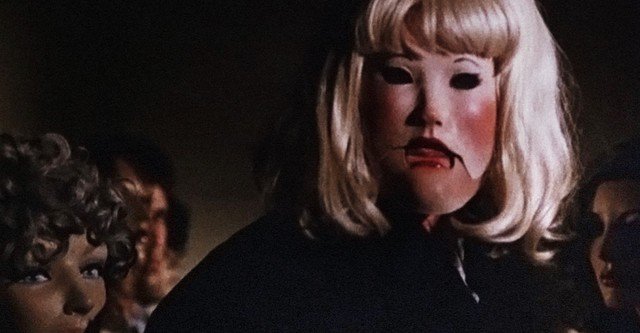
Inside, the building appears abandoned, though he hears what sounds like voices coming from a nearby room. Investigating further, he discovers a shabby motel room containing little more than fragments of mannequins and dismembered dummies that appear disturbingly alive.
Then comes one of the most bizarre and terrifying sequences in 1970s horror cinema.
A closet door slowly creaks open. Objects begin flying violently through the air. Mannequins twitch and cackle hideously. Windows slam shut. Furniture erupts across the room as poor Woody becomes trapped against the wall while invisible telekinetic forces tear the room apart around him.
Describing the scene aloud almost makes it sound absurdly comical.
Onscreen, however, it is genuinely horrifying.
Much of the credit belongs to the extraordinary score by Pino Donaggio, whose music transforms the entire sequence into a crescendo of madness, terror, and mounting hysteria. Anyone familiar with the blood-bucket montage in Carrie will immediately recognise Donaggio’s genius for turning scenes of chaos into overwhelming nightmares through music alone.
Woody’s death is an astonishingly effective sequence and instantly dispels any assumptions that the PG rating meant the film would somehow play things safe.
Tourist Trap is absolutely not kidding around.
The remaining friends are eventually rescued by the genial Mr. Slausen, played wonderfully by Chuck Connors, proprietor of the bizarre Slausen Museum and its adjacent guest house. The museum itself is filled with grotesque mannequins supposedly created by Slausen’s elusive brother Davey.
Slowly, the survivors find themselves drawn deeper into an increasingly surreal world of nightmare logic involving mannequins, masked figures, telekinetic horrors, and psychological terror.
The film constantly flirts with absurdity while somehow remaining deeply unsettling throughout.
The masked “Davey” character inevitably evokes memories of The Texas Chain Saw Massacre — particularly the eerie mannerisms of “The Cook” — which is hardly surprising considering the production design work was handled by Robert A. Burns, whose work on Hooper’s masterpiece remains legendary.
Visually, the film positively reeks of decaying Americana, dusty roadside attractions, carnival grotesquery, and Southern Gothic madness.
This is not glossy studio horror.
Nor is it polished.
But for genuine horror fans who appreciate atmosphere over gore, Tourist Trap offers something infinitely more valuable: pure creeping unease.
Director David Schmoeller — drawing inspiration from his earlier short film The Spider Will Kill You — created perhaps the finest work of his career here. Combined with Donaggio’s magnificent score, the result is a genuinely eerie little horror film that continues to surprise audiences decades later.
Stephen King called it a “hidden gem.”
One might go further and call it a minor masterpiece.
The great tragedy is that audiences largely ignored the film during its original theatrical run. Here was a horror movie overflowing with dread, atmosphere, menace, memorable imagery, and genuinely disturbing sequences, yet it never received the acclaim it deserved.
Even today, it still feels strangely underappreciated.
Yes, the film occasionally loses momentum slightly during its final stretch, but several sequences rank comfortably alongside the finest moments in 1970s horror cinema.
One could describe Tourist Trap as a bizarre collision between Psycho, The Texas Chain Saw Massacre, and Carrie — all filtered through a fever dream involving mannequins and telekinetic terror.
What ultimately lingers, however, is not the violence but the atmosphere.
The film oozes dread.
And for horror fans who value eeriness, mood, and creeping unease above mere gore, Tourist Trap remains absolutely essential viewing.