
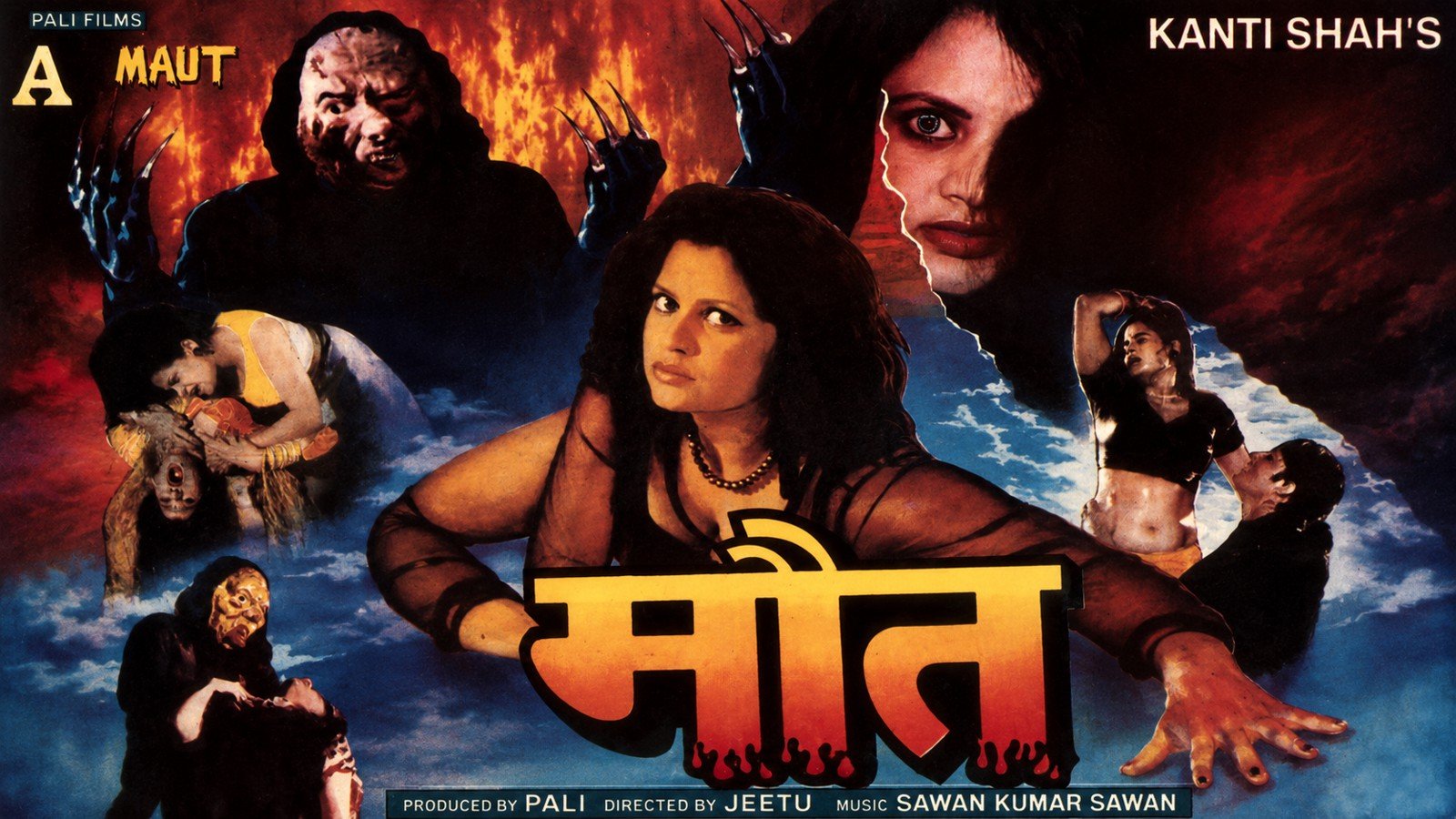
The Hot Spot Rating
Maut (1998)
Cast: Sapna, Poonam Das Gupta, Raj Premi, Shabbir, Aashna, Harish Patel
Director: Jeetu (AKA Jeetendra Chawda)
Synopsis: Stunningly abysmal new (Post Ramsays) wave of horror is really the pits
Just when you thought Bollywood horror couldn’t possibly sink any lower, along comes Jeetendra Chawda’s utterly deplorable Maut. Devoid of even the slightest hint of style, atmosphere or competence, the film manages to drive modern Bollywood horror several feet below rock bottom. Everything about it feels aggressively cheap; from the homemade production values and disastrous make-up effects to the stale storyline and acting that would embarrass an amateur dramatics society.
Attempting to explain the plot grants the film far more respect than it deserves, but for the record, here is our best attempt at deciphering the madness.
Proceedings begin on the obligatory dark and stormy night as Harish Patel (the only vaguely recognisable face in the cast) and a buxom companion go searching for a suitable location in which to indulge in a little romance. They stumble upon a seemingly abandoned haveli and discover a conveniently vacant bedroom.
Just as Harish Patel is settling into the evening’s activities, a hideous figure wearing a rubber monster mask and sporting two bright blue rubber claws materialises from nowhere and begins terrorising the bewildered couple.
The creature promptly catches up with Patel, gives him a savage clawing and sends him collapsing in a heap after a brief coughing fit involving alarming quantities of blood.
Following this promising display of absurdity, the film pauses to explain how the haveli became haunted in the first place.
In flashback we meet Kamini, a woman whose defining character trait appears to be an insatiable appetite for men. Her amorous ambitions eventually extend to her brother-in-law, who reacts to her advances by shooting her between the eyes. Unfortunately for him, the shooting occurs on the dreaded Amavas ki Raat, a particularly inconvenient evening upon which the dead apparently acquire a tendency to return and settle old scores.
Kamini promptly swears vengeance upon the family responsible for her demise. Fortunately, a wise tantrik intervenes and traps her spirit inside a bottle like some supernatural genie, seemingly ending the threat.
Naturally this solution proves temporary.
Kamini soon escapes captivity and returns to the ancestral haveli intent upon revenge.
At this point the film takes a sharp detour into outright lunacy.
Kamini decides to possess a corpse lying in a morgue. Unfortunately the body available has been incorrectly stitched together and consists of a female upper half attached to a male lower half. Quite how this happened is never satisfactorily explained, nor does the film seem remotely interested in explaining it.
The result, according to the screenplay’s unique understanding of anatomy and spirituality, is that Kamini’s desires undergo a dramatic shift. Instead of pursuing men, she now develops an interest in terrorising and murdering attractive young women.
Thus begins a murderous rampage involving a group of remarkably dim-witted picnickers who have gathered at the haveli for reasons known only to themselves.
One by one the women are stalked by Kamini who periodically transforms into a rubber-faced monster sporting blue claws and, for reasons best left unexplored, a fetching black leather mini-skirt. The sight of this bizarre creation lumbering about the haveli is undoubtedly one of the more memorable images in Bollywood horror history, though perhaps not for the reasons intended.
Logic is abandoned completely as the film progresses. Events occur solely to facilitate either another attack sequence or another opportunity to display as much flesh as possible. The director’s priorities become painfully obvious during several scenes where the camera seems far more interested in anatomy than in the monster supposedly terrorising its victims.
The performances throughout are astonishingly dreadful, rivalled only by Chawda’s earlier catastrophe Khooni Ilaaka. Dialogue is delivered with all the conviction of hostages reading ransom notes and the cast appear locked in fierce competition to determine who can be the least convincing.
Films like Maut serve as a useful reminder that whatever faults the Ramsays may have possessed, they at least understood the basics of atmosphere, pacing and entertainment. Compared to the likes of Jeetendra Chawda, K. I. Sheikh and their contemporaries, even the frequently criticised Ramsay productions begin to resemble works of sophistication.
One leaves Maut with a newfound appreciation for Tulsi and Shyam Ramsay. Indeed, after ninety minutes of this ordeal, one is tempted to declare all past criticisms withdrawn.
Most astonishing of all is that Maut was actually a commercial success. Along with similarly dubious productions such as Murda, Shaitaani Aatma and Chandal, it reportedly generated handsome profits and found enthusiastic audiences across the country.
Unbelievable, but apparently true.
Maut is not merely bad. It is a spectacularly, magnificently, almost admirably awful piece of filmmaking that has to be seen to be believed.