
The Hot Spot Rating
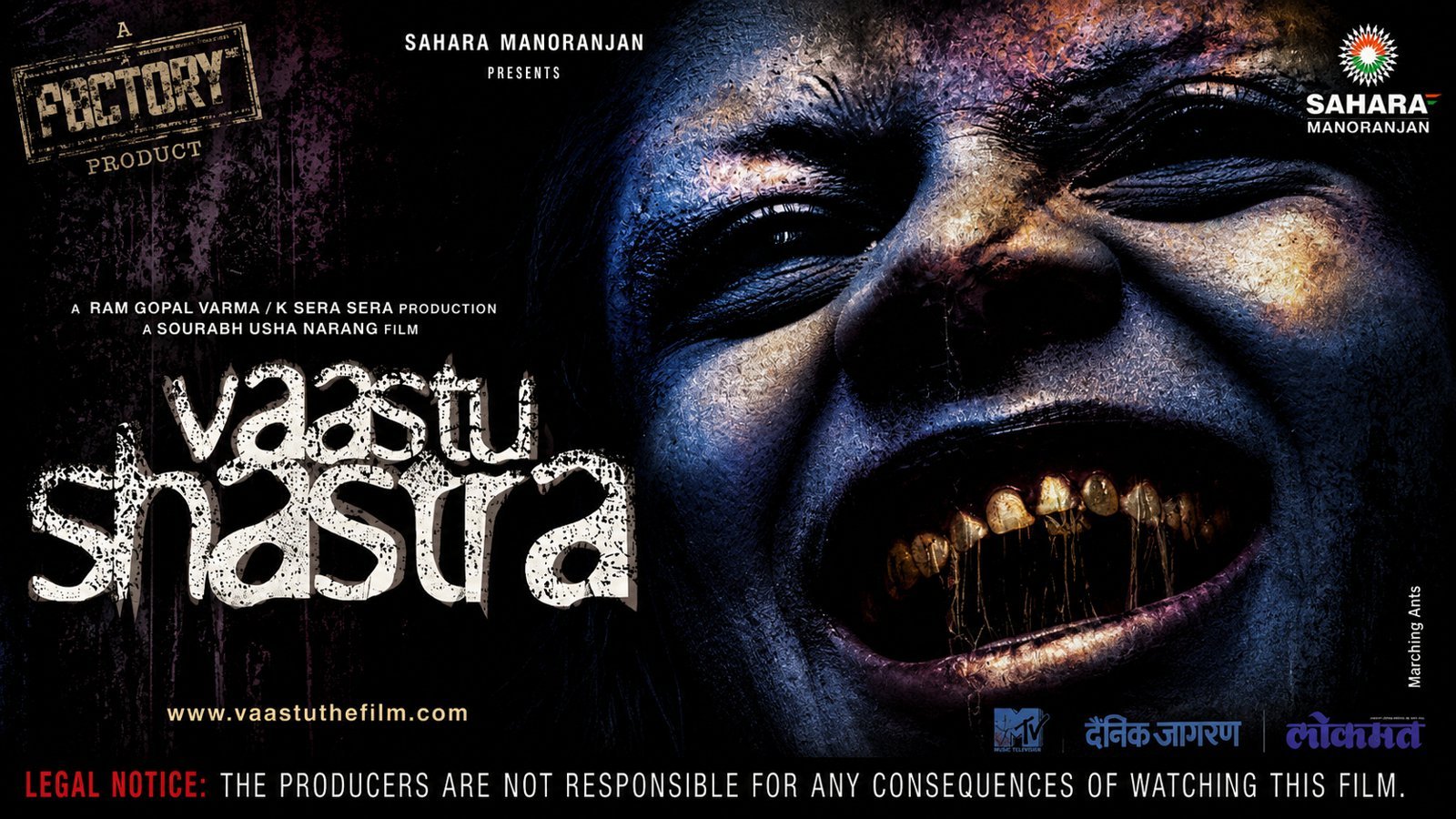
Vaastu Shastra (2004)
Cast: Sushmita Sen, Chakravathry, Piya Rai Chaudhary, Purab Kohli
Director: Saurabh Narang
Synopsis: Promising Ju-on inspired chiller runs out of steam and ends up floundering
With Hollywood horror increasingly looking eastward for inspiration—and profits—it was only a matter of time before Bollywood followed suit. Following the success of Japanese and Korean chillers such as Ringu, Ju-on, Dark Water, The Eye, Pulse and A Tale of Two Sisters, producers everywhere began raiding Asian horror cinema for ideas. Unsurprisingly, one of the first to recognise the trend was Ram Gopal Varma.
His 2003 hit Bhoot already owed a considerable debt to Hideo Nakata’s Dark Water, and Vaastu Shastra, directed by one of Varma’s protégés, continues the trend. Although the promotional material hinted at a blend of The Sixth Sense, The Omen and The Shining, the finished film has far more in common with Ju-on, Dark Water and even the Korean chiller Acacia.
Stylistically it is almost a companion piece to Bhoot. The camera prowls endlessly through corridors and around the exterior of the house, peering through branches, railings and shadows as though desperately trying to convince us that something sinister is lurking just out of frame. Every slow-moving shot is accompanied by a barrage of growls, whispers, creaks and demonic murmurs, ensuring that even the audience members who may have missed the visual cue are repeatedly reminded that danger is supposedly nearby.
After a bewildering prologue involving a lost traveller and a mysterious weeping woman, the film settles into more familiar territory. An affluent couple move into what appears to be their dream home on the outskirts of Pune. Sushmita Sen plays a doctor who is delighted with the property’s design and enthusiastically informs her husband that it conforms perfectly to the principles of Vaastu Shastra. Unfortunately for the family, perfect architectural harmony does not necessarily guarantee freedom from restless spirits.
Before long their young son Rohan begins seeing ghostly children. Naturally the adults dismiss his stories as imagination, despite the fact that objects throughout the house are behaving with increasing eccentricity. Tennis balls roll about of their own accord, strange figures appear in dark corners, and the atmosphere grows steadily more oppressive.
Eventually it becomes clear that the house is haunted. The child encounters two dead youngsters named Manish and Jyoti, but also speaks of a sinister man and a malevolent woman who seem far less friendly. Meanwhile, an unsettling child spirit resembling Toshio from Ju-on wanders in and out of the house at will while a collection of ancient trees appears to harbour distinctly hostile intentions.
Adding to the chaos is a local lunatic who functions rather like Crazy Ralph from Friday the 13th, wandering around warning everyone of impending doom while being largely ignored.
The film’s greatest problem is that it relies almost entirely on borrowed techniques. Every few minutes someone turns around to reveal a pale ghost standing behind them. Figures dart suddenly across foregrounds and backgrounds in an attempt to provoke cheap jolts. Objects move unexpectedly. Doors creak open. Faces appear where faces are least expected.
These techniques can be effective when used sparingly. Here they are deployed so frequently that they become predictable. What should be unsettling quickly becomes mechanical.
The overreliance on sound design is equally problematic. The soundtrack works tirelessly to manufacture tension, often succeeding where the visuals fail, but eventually the constant barrage of growling, whispering and shrieking becomes exhausting rather than frightening.
The film’s final act is where matters truly unravel. Having spent much of its running time carefully building mystery, the script appears to lose confidence in itself. The motivations of the spirits remain vague, the mythology becomes muddled, and the climax lurches from one increasingly absurd development to another. Any attempt at logic is abandoned in favour of frantic spectacle, followed by not one but two final “gotcha” scares and the obligatory open-ended conclusion.
Sushmita Sen emerges with considerable credit and anchors the film with a strong performance. The child actor is less convincing, while the husband contributes little beyond looking perpetually bewildered.
Ultimately, Vaastu Shastra is an entertaining but deeply derivative exercise. It is slickly mounted and professionally assembled, but it never escapes the shadow of the films that inspired it. Every frame reveals techniques borrowed from elsewhere, yet the director never quite leaves a distinctive mark of his own.
More disappointing still is the squandered potential of the title itself. The fascinating concepts and traditions associated with Vaastu Shastra are barely explored beyond a superficial level. Had the filmmakers drawn more deeply from indigenous beliefs rather than leaning so heavily on Japanese and Korean influences, they might have produced something genuinely distinctive.
As it stands, Vaastu Shastra is a reasonably effective haunted-house thriller that spends so much time imitating other films that it forgets to develop a personality of its own. Despite its flaws, Bhoot remains the stronger film.