
The Hot Spot Rating
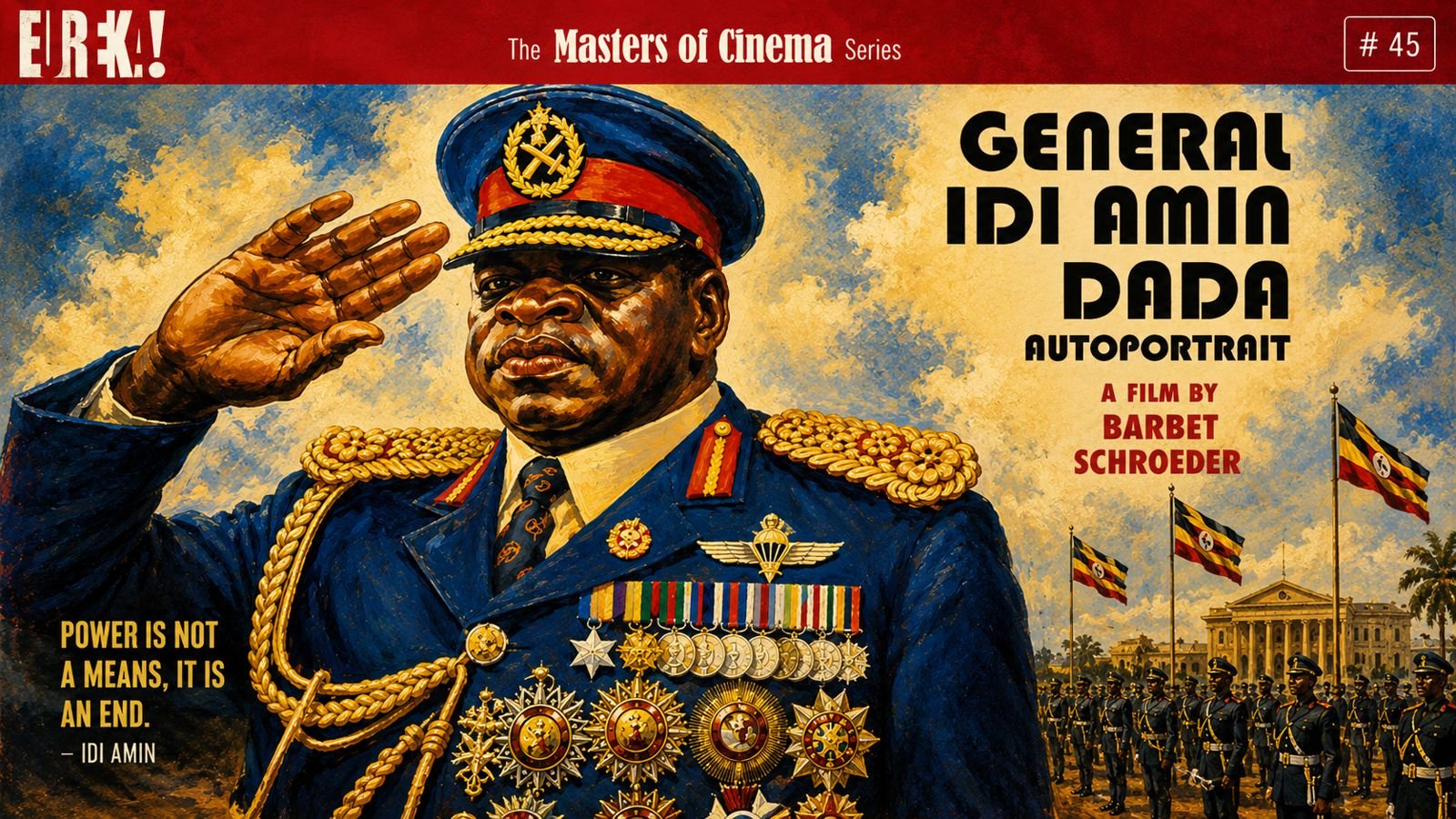
General Idi Amin Dada – A Self Portrait (1974)
Music By: Idi Amin Dada – (CBE) – Conqueror of the British Empire
Director: Barbet Schroeder
Synopsis: Amin virtually directs in this fascinating and revealing documentary
Some documentaries expose their subjects through relentless investigation. Others simply place a camera in front of them and allow them enough rope to hang themselves. General Idi Amin Dada: A Self Portrait belongs firmly in the latter category and is all the more remarkable for it.
The very existence of the film is something of a miracle. Idi Amin was not a man renowned for tolerating criticism and had he suspected for a moment that the filmmakers intended to portray him as the murderous tyrant history remembers, the project would never have been completed. Director Barbet Schroeder understood this perfectly. Rather than challenge Amin directly, he allowed the Ugandan dictator to take control of his own image and effectively direct large portions of the documentary himself.
It was a masterstroke.
The result is one of the most extraordinary self-indictments ever committed to film. Amin is given every opportunity to present himself as he wishes to be seen: a great military strategist, a beloved national leader, a philosopher, a statesman and a man of the people. Yet in doing so he steadily exposes himself as something far more alarming—a charming, vain, deeply insecure and dangerously delusional autocrat.
The film is often hilariously funny, which makes it all the more disturbing.
Amin clearly adores the camera. Every scene becomes a performance. Whether inspecting troops, addressing ministers or outlining grand geopolitical strategies, he behaves as though he is starring in a film about himself. His confidence is boundless and entirely detached from reality. He speaks in sprawling, circular tangents, drifting effortlessly from military strategy to domestic policy to world affairs without ever appearing burdened by facts.
The scenes involving his ministers are priceless. Surrounded by terrified officials furiously scribbling notes, Amin dispenses wisdom and instructions with the confidence of a man convinced of his own genius. His famous military demonstrations are even more astonishing. Watching him personally re-enact his imaginary plans for capturing the Golan Heights is to witness political theatre elevated to surrealist comedy.
At times one suspects the filmmakers can scarcely believe their luck.
The genius of Schroeder’s approach is that he never needs to editorialise. Amin’s words and behaviour do the work for him. The audience is left to marvel at the spectacle of a man whose self-confidence is so immense that he cannot perceive how ridiculous he appears.
Yet beneath the comedy lies something far darker.
It is easy to laugh at Amin’s rambling speeches, bizarre logic and grandiose fantasies, but the laughter catches in the throat when one remembers that this was not merely an eccentric buffoon. This was a dictator responsible for the deaths of hundreds of thousands of people. Behind the humour lurked a ruthless survivor who maintained power through fear, violence and intimidation.
The film repeatedly demonstrates how Amin’s personal charm became one of his most effective political weapons. He possesses a quick wit and a natural ability to disarm critics with humour. Difficult questions are frequently sidestepped with jokes, allowing him to evade scrutiny while maintaining an affable public image. It is easy to understand how so many people initially underestimated him.
The documentary also serves as a fascinating companion piece to fictional portrayals of Amin, particularly those that were once dismissed as exaggerated. Many of the dictator’s most absurd real-life statements and actions turn out to be entirely authentic. If anything, reality often proves stranger than satire.
Particularly revealing are the film’s closing revelations. After seeing the completed documentary, Amin objected to several sequences and attempted to force Schroeder to remove them. His method was characteristic. Members of Uganda’s French community were detained and effectively used as bargaining chips until the requested cuts were made.
Even then, the documentary remains devastating.
What makes General Idi Amin Dada: A Self Portrait such an exceptional film is that it captures Amin exactly as he wished to be seen. The tragedy for him—and the triumph for the filmmakers—is that this proves far more revealing than any hostile exposé could ever have been.
The result is one of the most fascinating portraits of political power ever committed to film: a portrait of a charismatic clown, a gifted manipulator, an insecure narcissist and a mass murderer, all inhabiting the same remarkable individual.
It is both enormously entertaining and deeply unsettling—often at precisely the same moment.
“Women’s Lib comes to the Lab” Creature Features
“tawdry shocker empasizes cheap sex” Blockbuster Video
“Poor” Maltins
“silly” Video Movies Guide