
The Hot Spot Rating
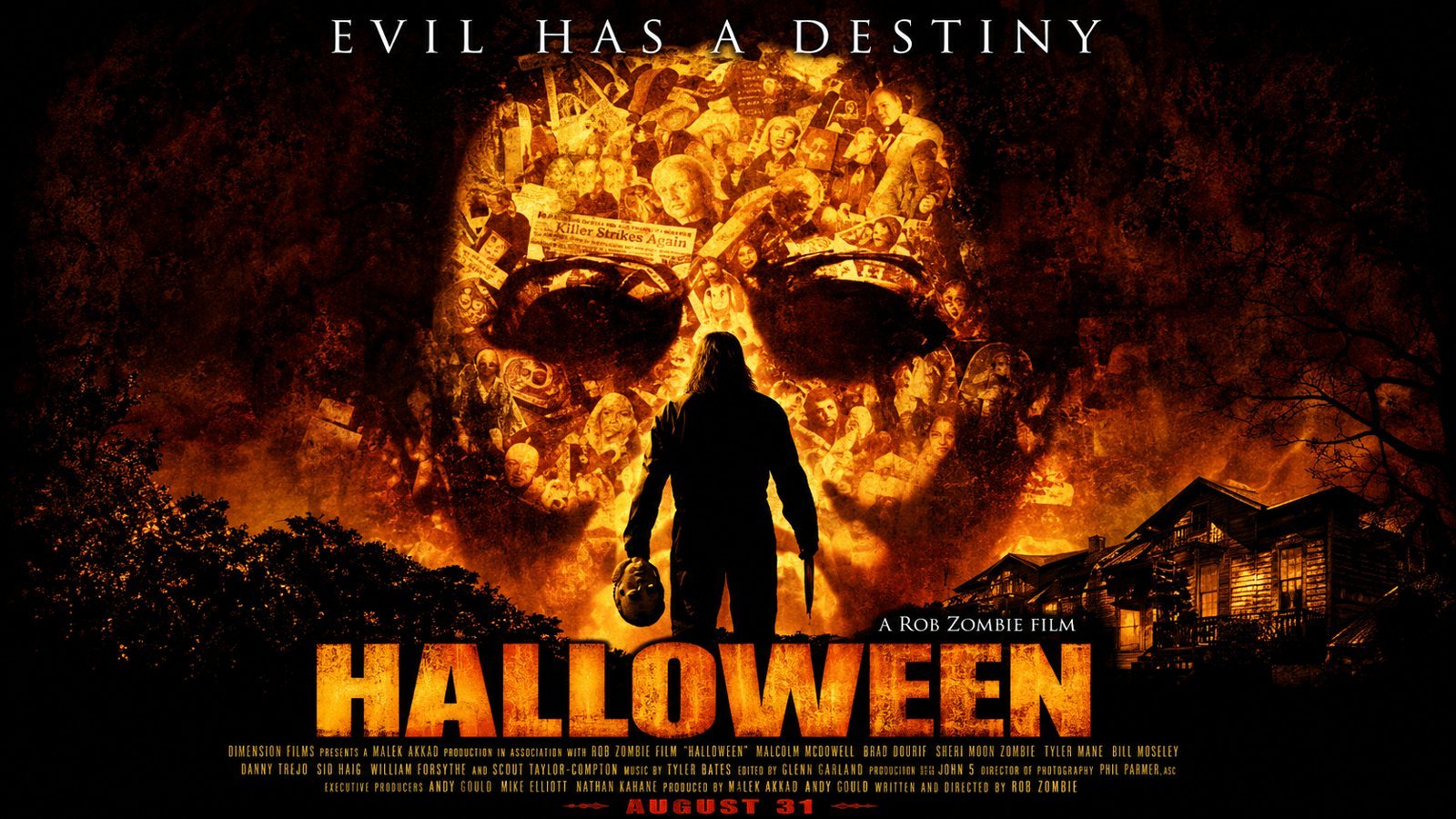
Halloween (2007)
Cast: Malcolm MacDowell, Brad Dourif, Tyler Mane, Daeg Faerch,
Director: Rob Zombie
Synopsis: Rob Zombies reinvention of the all time classic Slasher Film
The prospect of a remake of Halloween initially seemed every bit as misguided as Gus Van Sant’s ill-fated shot-for-shot remake of Psycho. Some films simply do not require reinvention and John Carpenter’s 1978 masterpiece appeared to be one of them. Yet if anyone was going to tackle such a sacred text of horror cinema, it was difficult to imagine a more suitable candidate than Rob Zombie. Whatever one thinks of his films, Zombie is a genuine horror enthusiast whose affection for the genre is beyond question.
The early trailers certainly inspired optimism. The imagery looked dark, brutal and genuinely unsettling, while Michael Myers’ iconic mask appeared every bit as menacing as one could hope. With successful remakes such as The Texas Chainsaw Massacre already demonstrating that classic horror could occasionally survive modern reinterpretation, there was reason for cautious excitement.
Unfortunately, Zombie’s Halloween ultimately misunderstands one of the central strengths of Carpenter’s original.
The most significant change is Zombie’s decision to provide Michael Myers with a detailed psychological backstory. Rather than presenting Myers as an inexplicable embodiment of evil, Zombie attempts to explain his descent into madness. Young Michael is depicted as a troubled child growing up in a dysfunctional trailer-park household, relentlessly bullied and increasingly withdrawn. He finds comfort in masks and develops a disturbing fascination with killing animals long before his murderous rampage on Halloween night leads to his incarceration.
This is where the remake begins to go astray.
One of the most unsettling aspects of Carpenter’s film was its refusal to explain Michael Myers. He simply existed. His motives were unknowable. His evil was irrational and therefore terrifying. Carpenter’s famous description of Myers as “The Shape” perfectly captured the character’s function. He was less a man than an elemental force.
Zombie, however, appears determined to answer every question that never needed answering.
We learn about Myers’ family life, his childhood traumas, his fascination with masks and the psychological roots of his behaviour. Entire sections of the film are devoted to explaining aspects of the character that were far more effective as mysteries. The result is that Myers becomes less frightening the more we learn about him.
The film also abandons much of the restraint that made the original so effective. Carpenter’s Halloween relied upon atmosphere, suspense and patient tension-building. Violence was used sparingly and often occurred off-screen. Zombie’s version embraces the opposite approach. Brutality is foregrounded. The kills are more graphic, the violence more savage and the tone considerably more vulgar.
At times the film feels less like a reinterpretation of Halloween and more like an extension of Zombie’s own cinematic universe, populated by the sort of dysfunctional, foul-mouthed trailer-trash characters familiar from House of 1000 Corpses and The Devil’s Rejects.
To be fair, the film is not without strengths. Several sequences are genuinely effective and Tyler Mane cuts an imposing figure as Myers. Malcolm McDowell brings his own distinctive interpretation to Dr. Loomis, even if comparisons with Donald Pleasence are ultimately unavoidable. Most importantly, Carpenter’s immortal score remains as chilling as ever, even in its updated form.
Yet the film never escapes the shadow of its predecessor.
Where Carpenter created terror through anticipation, Zombie opts for impact. Where the original relied upon mystery, the remake offers explanation. Where Carpenter’s Myers seemed almost supernatural in his blank, inscrutable evil, Zombie’s version is rooted in psychological damage and social dysfunction.
The result is not an incompetent film, merely the wrong approach to the material.
As a brutal modern slasher, Zombie’s Halloween functions reasonably well. As a reinterpretation of one of the greatest horror films ever made, it falls considerably short. It replaces dread with violence, mystery with exposition and atmosphere with aggression.
Most disappointingly of all, it lacks the haunting quality that made Carpenter’s masterpiece linger in the imagination long after the credits rolled.
John Carpenter’s Halloween remains the definitive slasher film, a masterclass in visual storytelling, suspense and economy. Rob Zombie’s version is neither a disaster nor a triumph. It is simply a loud, brutal and ultimately unnecessary footnote to a classic that never required improvement in the first place.
“Women’s Lib comes to the Lab” Creature Features
“tawdry shocker empasizes cheap sex” Blockbuster Video
“Poor” Maltins
“silly” Video Movies Guide
“Graphic violence and extended scenes of nudity.”
— Frank Scheck, The Hollywood Reporter (criticizing Zombie’s replacement of Carpenter’s suspense with brutality)
“Rob Zombie doesn’t bring many new ideas to the table.”
— Rotten Tomatoes Critics Consensus
“Another bloody disappointment for fans of the franchise.”
— Rotten Tomatoes Critics Consensus
“A scary horror movie.”
— Ken Fox, TV Guide
“Making the film his own.”
— Ken Fox, TV Guide
“Successfully terrify an audience.”
— Ken Fox, TV Guide
“Better than getting another sequel.”
— Frank Scheck, The Hollywood Reporter
“A careful dance of wrong-footing.”
— GamesRadar retrospective assessment of Zombie’s approach to Michael Myers
“A well-made film with focused intent.”
— GamesRadar retrospective review