
The Hot Spot Rating
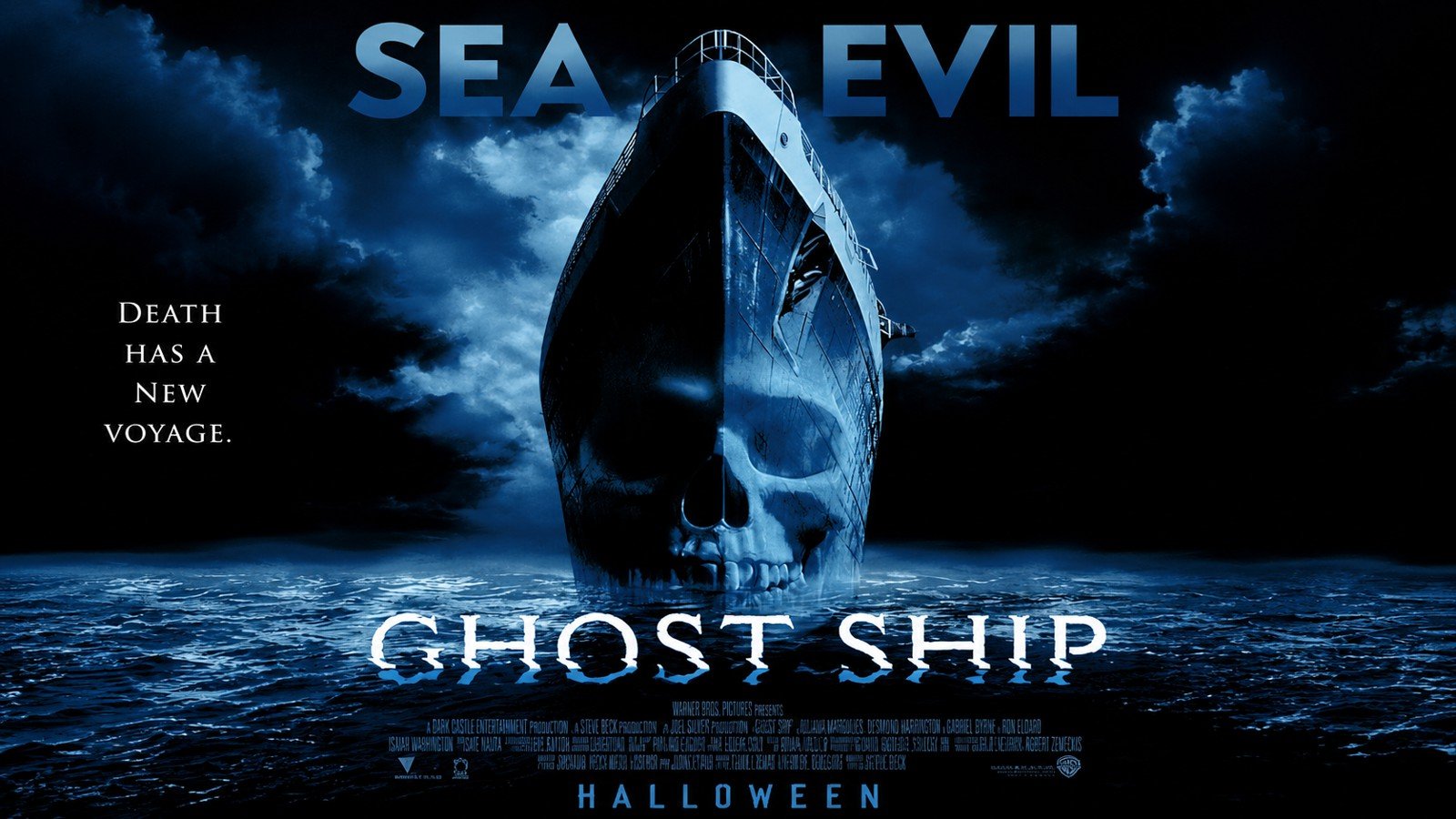
Ghost Ship (2002)
Cast: Gabiel Byrne, Julianna Margulies, Alex Dimitriades, Isaiah Washington
Director: Steve Beck
Synopsis: Crew discover a ghostly ocean liner with a malevolent life of its own
Reviewed by: Omar Khan
“Better than you expect, but not as good as you hope.” — Roger Ebert, Chicago Sun-Times
“An incoherent supernatural thriller that would like to think of itself as a Halloween-ready horror fusion of The Perfect Storm and Titanic.” — Stephen Holden, The New York Times
“A stupid, derivative horror film that substitutes extreme gore for suspense.” — Carla Meyer, San Francisco Chronicle
“With its minor shivers and modest Grand Guignol showmanship…” — Manohla Dargis, Los Angeles Times
“After a very brutal and bloody beginning, Ghost Ship plays like an old-fashioned ghost story, the kind that kept you awake when you were a kid.” — Joel Siegel, Good Morning America
“As a horror fan, I applaud what Silver and Zemeckis are trying to do with Dark Castle; Ghost Ship just isn’t a cruise worth taking.” — Brian Linder, IGN
“It’s the same old tired stuff we’ve seen a hundred times before in various permutations.” — Peter Bradshaw, The Guardian
“The opening sequence is spectacular.” — Jamie Russell, BBC (while awarding the film 2/5 stars)
Another light-on-plot, heavy-on-effects slice of horror hocus from the Dark Castle production company, the outfit established by Robert Zemeckis and Joel Silver with the bright idea of resurrecting William Castle’s legendary B-movie chillers by dressing them up in glossy CGI, MTV-style visuals and enough hyperactive editing to induce motion sickness.
Their remake of House on Haunted Hill had already demonstrated that lavish digital effects and flashy production design were no substitute for atmosphere or imagination. Compared with William Castle’s delightfully cheesy original, the remake was loud, hollow and strangely lifeless. It nevertheless did respectable business, paving the way for the equally juvenile Thirteen Ghosts. Ghost Ship represented Dark Castle’s first “original” production—though even here originality proves to be in desperately short supply.
The influences are immediately obvious. The Shining looms large over proceedings, while Dead Calm, The Sixth Sense and countless post-Japanese horror ghost stories also leave unmistakable fingerprints all over the screenplay.
The film opens with a genuinely spectacular prologue aboard an Italian luxury liner in 1962 before jumping forward forty years to a salvage crew led by Gabriel Byrne and Julianna Margulies. Exhausted after six months at sea and looking forward to some well-earned time ashore, they are approached by a mysterious stranger offering them a fortune to recover an ocean liner long believed lost. Predictably, greed wins out over common sense.
They eventually discover the enormous vessel drifting silently in the middle of nowhere, eerily untouched by time. Once aboard, however, it becomes clear that something unspeakable happened to both ship and passengers. Hallucinations begin, ghostly apparitions emerge, and the vessel itself seems almost alive, manipulating its visitors much as the Overlook Hotel manipulated Jack Torrance in Kubrick’s masterpiece.
A haunted ocean liner is a marvellous premise, and Ghost Ship initially shows flashes of genuine promise. Unfortunately, the further the story progresses, the more absurd it becomes. Whatever atmosphere Steve Beck manages to establish quickly evaporates beneath a succession of predictable jack-in-the-box shocks and increasingly ridiculous plot developments.
Naturally, there is the obligatory pale ghost child to guide the heroine through the mystery. Even more astonishingly, the film eventually abandons any attempt at subtle storytelling altogether when the little ghost conveniently presents Julianna Margulies with what amounts to an MTV-style music video montage, complete with pounding techno soundtrack, explaining exactly what transpired aboard the ship decades earlier. It is one of those moments where the screenplay simply throws in the towel.
The acting fares little better. Gabriel Byrne continues his depressing drift through increasingly uninspired genre material following End of Days and Stigmata, while Julianna Margulies deserves considerable credit simply for maintaining a straight face while delivering dialogue this dreadful. Most disappointing of all is Alex Dimitriades. After his astonishing performance in Head On, he seemed destined for far greater things. Here he is criminally wasted as comic-relief navigator Santos, saddled with a painfully forced accent and dialogue that would embarrass a Saturday morning cartoon.
Director Steve Beck, fresh from Thirteen Ghosts, clearly belongs to the Michael Bay school of filmmaking, where no shot is allowed to linger for more than a few seconds and style constantly overwhelms substance. The visuals are slick, polished and technically impressive, but they never generate genuine suspense. Instead the film resembles an overextended music video or an expensive feature-length trailer.
It is frustrating because Ghost Ship begins with one of the finest opening sequences in modern horror cinema and hints at a genuinely unsettling supernatural mystery. Sadly, almost everything that follows steadily squanders that promise. Beneath all the expensive digital gloss lies a wafer-thin screenplay, wooden performances and a story that collapses under the weight of its own increasingly ludicrous twists. Steve Beck throws every visual trick in the book at the audience, but once the plot sails into outright farce, there is very little left worth salvaging.