The Hot Spot Rating
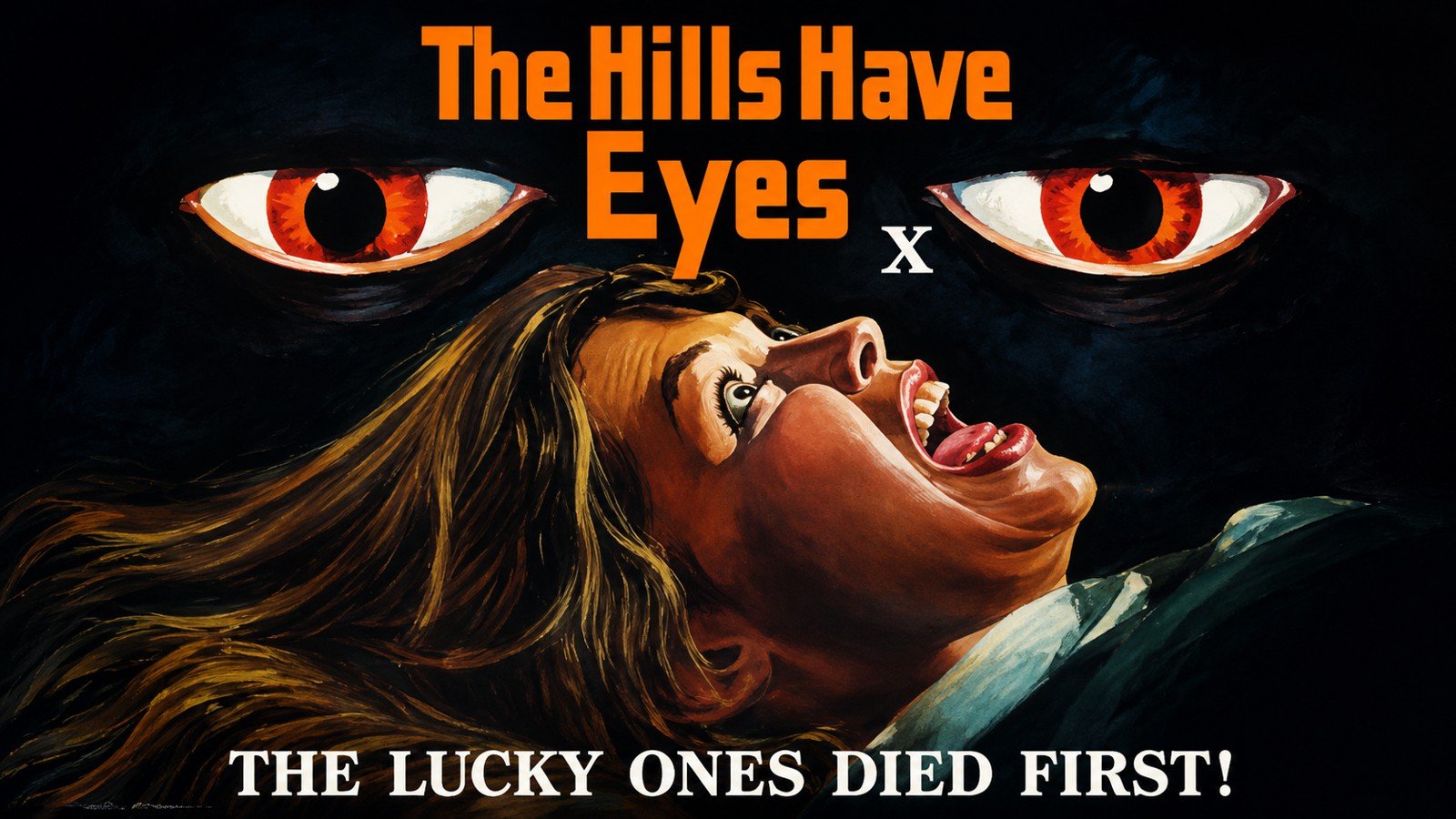
Hills Have Eyes, The (1977)
Starring: James Whitworth, Susan Lanier, Robert Houston, Michael Berryman, Dee Wallace
Director: Wes Craven
Synopsis: Travelling city folk brutally attacked by a gang of murderous inbred mutants
“a heady mix of ironic allegory and seat-edge tension” Time Out
“pandering plunge into depravity and death” Creature Features
“ghoulishly funny (and suitably gross)” Splatter Movies
“above average – extremely gory, has acquired a cult following” Maltin’s
“efficiently nightmarish shocker” Blockbuster Video
“The Hills Have Eyes is a lean, nasty little thriller.”
— Variety
“A horror film with a strong sense of style.”
— Time Out Film Guide
“One of Wes Craven’s finest films.”
— AllMovie
“Craven’s desert nightmare remains one of the seminal backwoods horror films.”
— Empire
“A brutally effective exercise in sustained terror.”
— Radio Times
“One of the most influential horror films of the 1970s.”
— Slant Magazine
“Gruesome, relentless and genuinely disturbing.”
— TV Guide
“Craven transforms the American desert into a landscape of pure nightmare.”
— The A.V. Club
“One of the grimmest and most uncompromising horror films of its era.”
— The Digital Fix
“The Hills Have Eyes is an efficient, unsettling shocker.”
— Leonard Maltin, Movie Guide
“One of Wes Craven’s finest films.” — AllMovie
“Craven’s desert nightmare remains one of the seminal backwoods horror films.” — Empire
“A brutally effective exercise in sustained terror.” — Radio Times
“The Hills Have Eyes is a lean, nasty little thriller.” — Variety
This early Wes Craven shocker firmly established the director as one of the leading figures in the new wave of gritty, realistic horror that followed Night of the Living Dead. The film quickly gained notoriety for its brutality and unflinching violence and, somewhat remarkably, managed to escape inclusion on Britain’s infamous Video Nasties list of banned “obscenities”—a distinction that only enhanced its reputation amongst horror fans. The film became a sizeable cult success and Craven rather unwisely followed it up with a decidedly inferior sequel. Blood-hungry gore fans eager for another helping of the raw violence of The Last House on the Left found plenty to savour in Craven’s savage tale of murderous desert hillbillies.
The storyline recalls another landmark of gritty American horror, The Texas Chain Saw Massacre, in that it follows an ordinary family who stray into the wrong corner of rural America and discover that civilisation has been left far behind. This time a respectable middle-class family is heading for California in search of sunshine and relaxation. Patriarch Bob, a retired Cleveland police officer forced into early retirement by a troublesome heart condition, is travelling with his devoted but rather vacant wife, their grown-up children, a son-in-law and infant grandchild, together with teenage Bobby and his younger sister.
Bob decides to make a detour to visit an abandoned mining settlement where he believes there may once have been valuable silver deposits. The diversion proves disastrous. The family lose their bearings and end up stranded in a bleak desert wasteland used by the military for nuclear testing and aerial exercises. Tempers fray, nerves begin to crack, and after Bob suffers a panic attack when fighter jets scream overhead, he crashes the family station wagon and trailer into the rocks, leaving them hopelessly stranded in the middle of nowhere.
Unfortunately, being marooned in the desert is the least of their worries. They have wandered onto territory occupied by a clan of deranged cannibalistic hill people with names such as Papa Jupiter, Mama, Mars, Mercury and Pluto, each more charming than the last.
The first victim is one of the family’s beautiful German Shepherds. Poor Beauty is savagely slaughtered before Bob himself suffers a terrifying heart attack and is then set alight while still alive. The violence escalates rapidly as the mutant clan attacks the helpless family, murdering without mercy and kidnapping the infant as a potential evening meal. Slowly, when all appears lost, the surviving family members summon the courage to fight back, aided magnificently by Beast, the remaining German Shepherd, who proves to be considerably more resourceful than many of his human companions.
Craven once again demonstrates just how naturally suited he was to horror filmmaking. Much like The Last House on the Left, the film benefits enormously from its rough, low-budget aesthetic, which lends events a documentary-like realism that makes the violence all the more unsettling. Whereas Last House often became almost unbearable because of its relentless realism, The Hills Have Eyes possesses much the same gritty quality while remaining slightly more accessible. The grotesque desert clan never quite achieve the mythic status of Leatherface and company, but they are disturbing enough in their own right.
The eerie electronic score, combined with Craven’s own sharp editing, creates a constant atmosphere of dread and unease, while the tedious attempts at comic relief that occasionally undermined Last House have thankfully disappeared altogether. One also begins to notice Craven’s fascination with elaborate booby traps—a device he would return to repeatedly, not only here but also in the climaxes of The Last House on the Left and later A Nightmare on Elm Street.
The acting is perfectly respectable for such a modestly budgeted production, with Dee Wallace, Robert Houston and, perhaps most impressively of all, the two German Shepherds providing the strongest performances. Yet it is the film’s uncompromising violence and the unforgettable appearance of Michael Berryman that linger longest in the memory. Beneath all the bloodshed, Craven is also making a simple but effective point: strip away the comforts of civilisation, and ordinary, respectable people are capable of every bit as much savagery as the monsters they find themselves confronting.