
The Hot Spot Rating
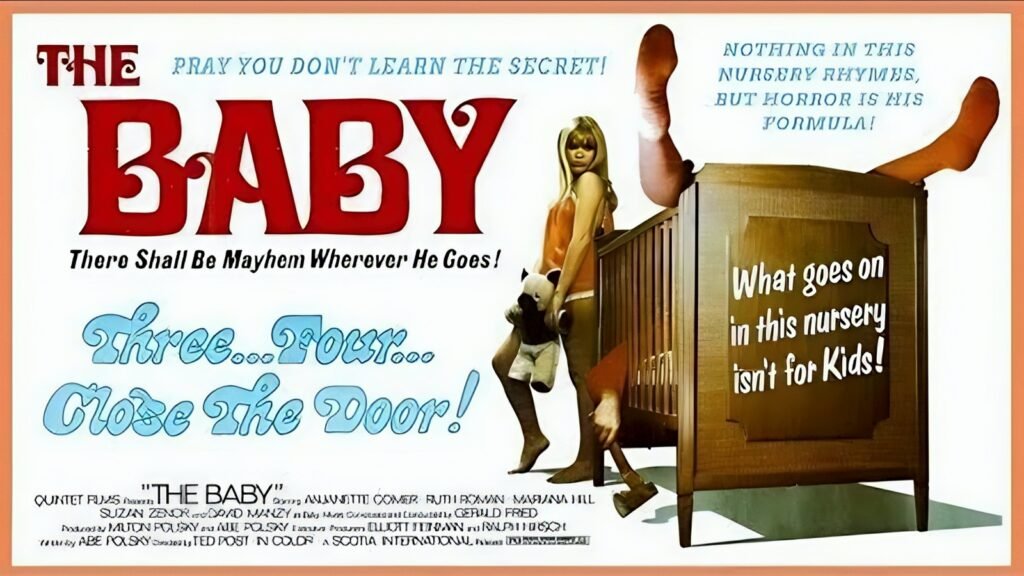
Baby, The (1972)
Cast: Ruth Roman, Mariana Hill, David Manzy, Anjanette Comer
Director: Ted Post
Synopsis: Bizarre, warped tale of a highly sick family
Reviewed by: Omar Khan
Indeed, the weird and wonderful 1960s — along with the hedonistic spillover into the early ’70s — produced more than their fair share of bizarre cinema, as boundaries and taboos were constantly being challenged and shattered.
The Baby, directed by Ted Post, is quite possibly one of the strangest mainstream theatrical films we have encountered in decades of avidly pursuing the bizarre. For a film featuring proper actors, solid production values, and a legitimate studio release, this is about as twisted as mainstream cinema ever dared to become.
The subject matter is so deeply warped and demented that the film almost demands multiple viewings simply to process what exactly is unfolding. If the intention was some kind of feminist statement, with gender roles and family dynamics grotesquely exaggerated to make a point, then much of that meaning becomes buried beneath the sheer delirious weirdness of the proceedings.
One of the film’s great pleasures is seeing Ruth Roman — remembered by many as the timid, mousey girlfriend from Strangers on a Train — revealing an entirely different side to her acting persona. She is magnificently monstrous here as Baby’s mother, delivering a gloriously unhinged performance aided by a raspy smoker’s voice that perfectly complements the character’s grotesque instability. In this form, she could easily have given Betsy Palmer’s Mrs. Voorhees from Friday the 13th a serious run for her money.
Another welcome presence is the always-enjoyable Mariana Hill, who instantly achieved cult status within our gloriously madcap household thanks to her fabulous appearances in the swinging 1960s Batman television series. She was unforgettable as Cleo, the dim-witted but irresistible assistant to King Tut — and naturally hopelessly smitten with Batman. Really, which woman wouldn’t have fallen for the glorious Adonis that Adam West was in his prime?
Hill turns in a suitably demented performance here as Baby’s deeply disturbed sister. As the film progresses, matters become increasingly psychotic and surreal. The entire experience is so bizarre that at times it borders on the genuinely indigestible.
The final twist is an absolute scream — outrageous, disturbing, and somehow perfectly appropriate for such an extraordinary film.
David Manzy delivers what can only be described as a miraculous performance in the title role. He commits himself with astonishing sincerity to a character so absurd that one almost feels sorry for the poor man having to perform it at all. It is perhaps not entirely surprising that Manzy never became a major star afterwards; one suspects Hollywood may never quite have known what to do with him following this unforgettable turn.
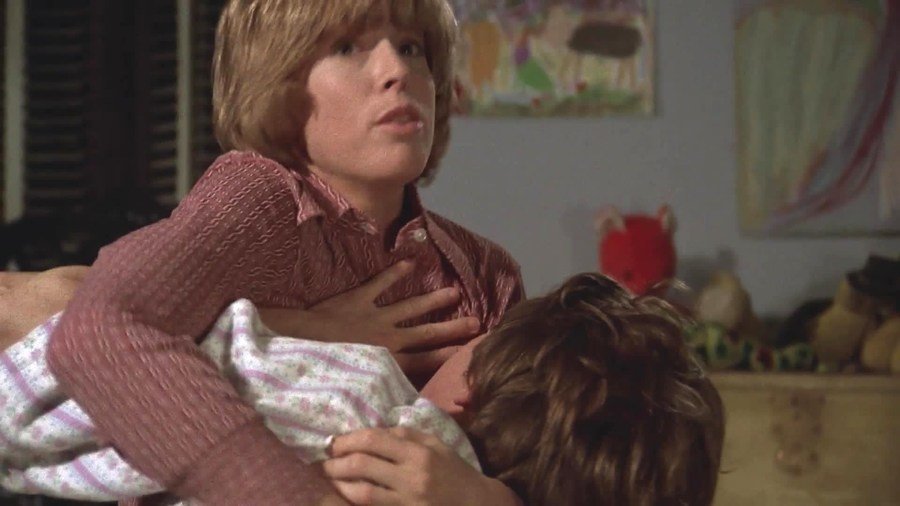
The story centres on a demented mother and her two daughters, whose pride and joy is “Baby” — a fully grown man who is treated as though he were an infant. He sleeps in a crib, gurgles, coos, and behaves like a one-year-old child. The sight is grotesque beyond words. Into this nightmare enters a determined social worker who develops a strong interest in the family and in Baby’s horrifying condition. Eventually she succeeds in abducting him from the household, but dark and deeply unexpected developments lie just around the corner.
Particularly noteworthy is the wonderfully discordant, violin-heavy score, strongly reminiscent of What Ever Happened to Aunt Alice?. A glance at the credits reveals that Gerald Fried composed both scores, confirming that he truly was one of the great unsung masters of macabre film music.
Beneath all its grotesque insanity, however, there is a deeper psychological undercurrent at work. The film quietly explores the ways in which people empower themselves by rendering others helpless and dependent upon them. For all its outrageous exploitation elements, there is considerably more going on beneath the surface of The Baby than first meets the eye.
It remains a perverse little wonder of a film — utterly unique, deeply unsettling, and impossible to forget.