
The Hot Spot Rating
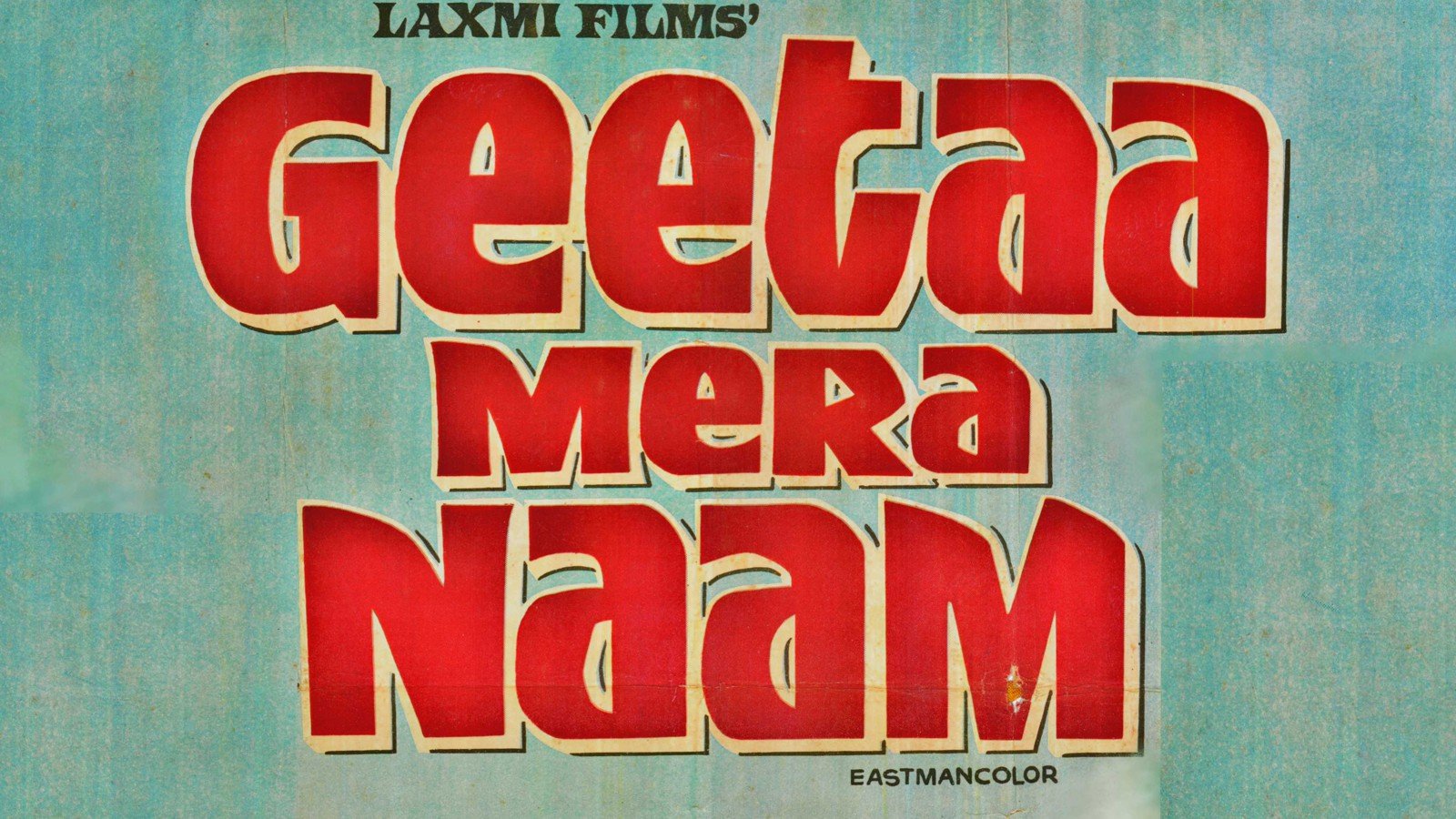
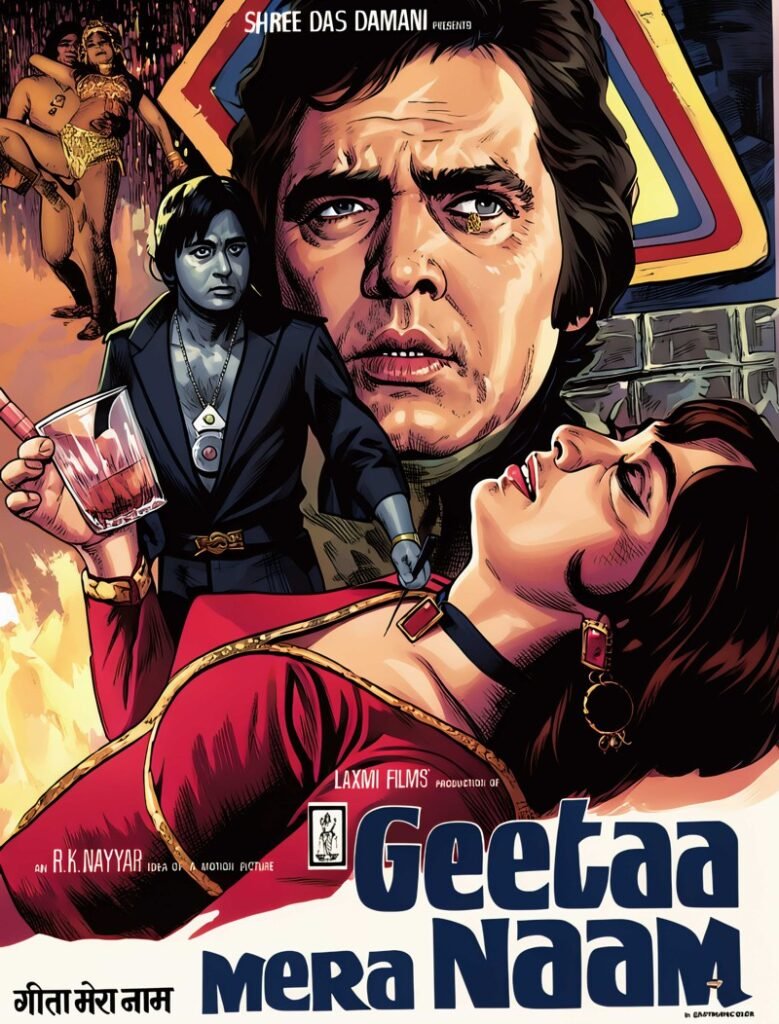
Geeta Mera Naam (1974)
Cast: Sadhana, Sunil Dutt, Feroz Khan, Helen, Ramesh Deo, Achala Sachdev
Director: Sadhana Nayyar
Music: Laxmikant Pyarelal
Nutshell: Sadhana tucks into her swansong from an idea her husband had that is 70s Masala of epic proportions.
“Kinky, trashy, sappy, kitschy and pulpy in fine measure,” wrote Todd Stadtman in Funky Bollywood, neatly capturing the delirious tone of Geetaa Mera Naam.
Geeta Mera Naam opens with one of the oldest and most gloriously reliable devices in all of Bollywood cinema:
the fatal trip to the mela.
As generations of Indian moviegoers already know perfectly well, no good ever comes from taking children to a fairground in Hindi films. The mela exists primarily as a giant vortex of emotional destruction where mothers lose children, brothers lose sisters, and entire families are violently torn apart by destiny before spending the next three hours wandering separately through life awaiting miraculous reunion.
Naturally, this particular mela proves no exception.
A lone mother takes her four young children to the fair only for chaos to erupt almost immediately. One child disappears into the crowd, and before panic can properly set in, a gang of dacoits storms the area causing total mayhem. In the confusion, the terrified mother flees into the forest with her daughters, eventually collapsing unconscious and inadvertently abandoning yet another child to fate.
Thus begins one of the great “lost-and-found” extravaganzas of 1970s Bollywood.
Years later, the scattered siblings have all grown into wildly different adults, each occupying their own absurd corner of the cinematic universe.
Most remarkable of all is Johnny, one of the lost brothers, who has blossomed into a criminal mastermind of staggering eccentricity. Johnny now rules over a gigantic underground lair that appears to have directly inspired entire sequences from the Austin Powers: International Man of Mystery films decades later.
This villainous headquarters is truly something to behold.
Johnny entertains multinational crime syndicates in a lavish subterranean conference chamber where, at the push of a button, unfortunate guests are suddenly dumped through trapdoors into bubbling acid pits before being transformed moments later into grisly wax effigies.
It may genuinely be one of the most inspired villain lairs in the history of Indian cinema.
And Johnny himself is no less extraordinary.
Played with magnificent flamboyance by Sunil Dutt, Johnny is a bizarre cocktail of criminal genius, emotional instability, and outright dementia. He constantly clutches a furry toy ape that serves as a sentimental reminder of the tragic day he became separated from his beloved family at the mela.
For relaxation, meanwhile, Johnny enjoys sessions of outright sadomasochism, employing a leather-clad henchman to whip him enthusiastically across the back until covered in welts.
This is not your average Bollywood villain.
Elsewhere, another lost sibling has grown into an upright but somewhat nerdy police inspector, while sister Geeta has matured into the beautiful and virtuous schoolteacher Sadhana — though unfortunately her adoptive parents are eagerly planning to cash in on her beauty by effectively selling her to the highest bidder.
When one particularly revolting suitor attempts to assault her, Geeta fights back fiercely — only for the would-be attacker to suddenly wind up dead at the hands of Johnny himself, who apparently has unrelated business grievances with the man.
Poor Geeta is nevertheless arrested for murder and carted off to prison.
And just when matters already seem sufficiently chaotic, the film introduces a modernised lookalike double role version of Geeta emerging from jail after serving time for petty crimes.
Thus, within a relatively short span, the film successfully introduces:
- four separated siblings,
- a psychotic underworld kingpin,
- torture sessions,
- wax murder chambers,
- attempted rape,
- dacoits,
- prison drama,
- double roles,
- and enough melodrama to power several television serials simultaneously.
All that remains now is for destiny to spend the next two hours orchestrating the inevitable family reunion in the most outrageous ways imaginable.
The plot itself is gloriously old-fashioned even by 1970s standards, yet the film attacks its material with such conviction and enthusiasm that it somehow becomes utterly irresistible.
Sadhana directs the film with surprising energy and confidence, transforming what could easily have become routine masala nonsense into something genuinely memorable. The project was specifically designed by her husband R. K. Nayyar as a star vehicle to revitalise Sadhana’s fading career, giving her not only the lead role but a lavish double-role showcase tailor-made for maximum screen domination.
Remarkably, audiences embraced it wholeheartedly.
Against expectations, Geeta Mera Naam became one of the year’s major commercial successes and provided Sadhana with a fittingly extravagant late-career triumph after already establishing herself as one of the defining Hindi film actresses of the 1960s.
The excellent soundtrack by Laxmikant–Pyarelal certainly helped matters considerably, contributing heavily toward the film’s eventual Silver Jubilee success.
Meanwhile, Sunil Dutt repeatedly threatens to steal the entire picture through sheer force of bizarre villainous charisma, though Sadhana understandably remains the true centre of attention throughout.
Ultimately, Geeta Mera Naam represents Bollywood hokum at its most gloriously excessive — ridiculous, melodramatic, wildly implausible, and endlessly entertaining.
A strange, wonderful, gloriously overstuffed cult classic that fully deserves the affection it continues to inspire.
And really, films do not acquire “cult classic” status quite this enduringly without doing something very special indeed.