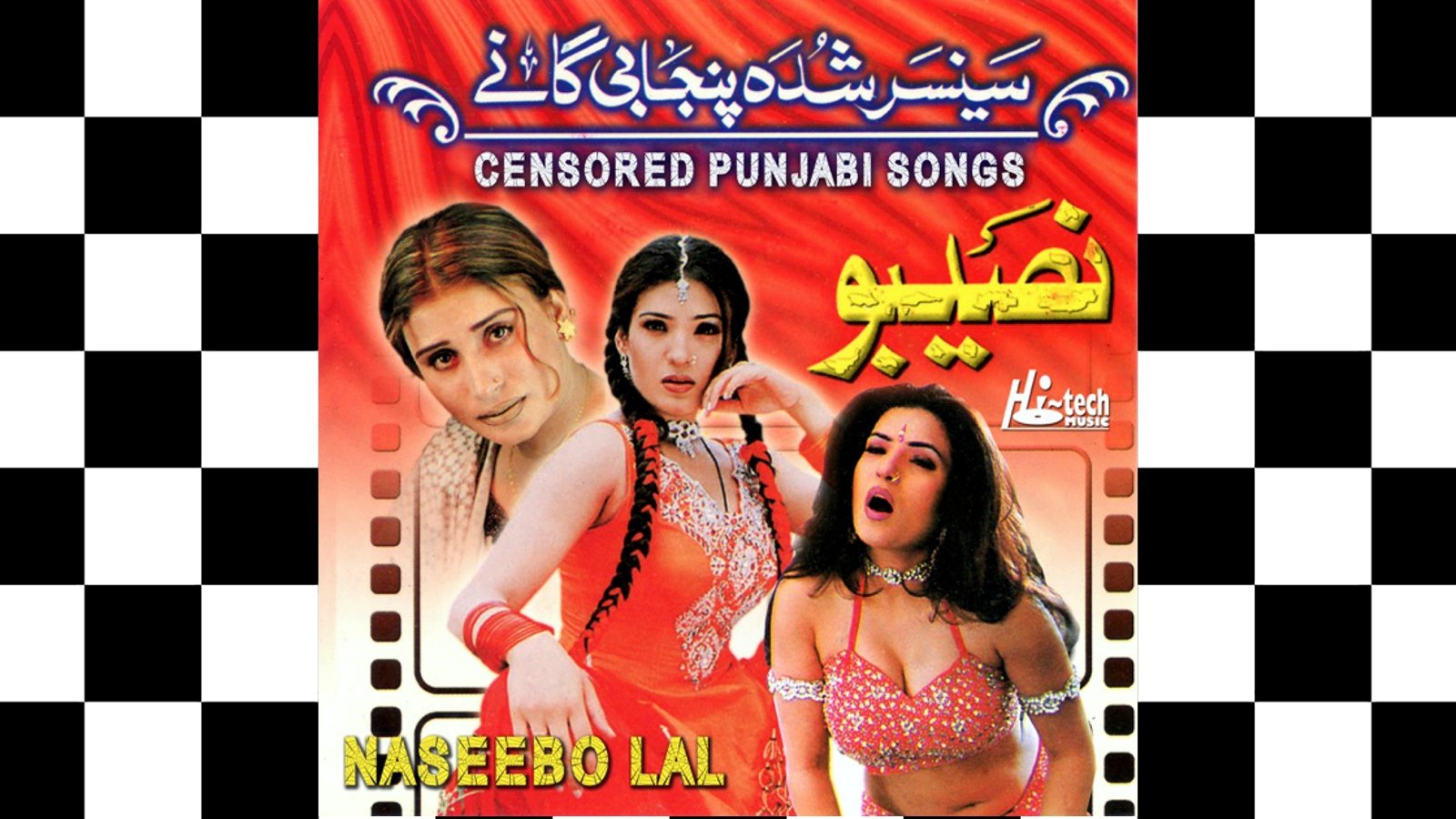
Naseebo Lal is, by a considerable distance, one of the most popular singers Pakistan has produced over the last few decades. For years she outsold many of the polished, corporate-backed pop stars who dominated television screens and elite social circles, and she achieved her success almost entirely through sheer vocal power and connection with ordinary audiences. In many ways, she emerged as the only truly worthy successor to the throne once occupied by Noor Jehan — the undisputed queen of Pakistani popular music.
Unlike so many beneficiaries of inherited privilege and the ever-reliable Old Boys’ Club, Naseebo Lal rose through talent alone.
Which perhaps explains why she became such an easy target.
At the height of her success, cases were lodged against both Naseebo Lal and her sister Nooran Lal accusing them of promoting “obscenity, vulgarity, and coarseness.” Suddenly, one of Pakistan’s greatest living vocalists found herself dragged toward the courts to defend not crimes, but songs.
And one could not help but wonder:
why exactly should a singer be prosecuted for performing lyrics she did not even write?
Surely, if anyone was supposedly responsible for corrupting public morality through endless references to ripe melons, frothy cream, fresh butter, juicy mangoes, and other gloriously transparent Punjabi double entendres, it was the lyricists themselves.
Yet somehow, amidst a nation buckling beneath corruption, intolerance, terrorism, injustice, illiteracy, and violence, enormous energy was reserved for pursuing a singer because a handful of men apparently found themselves too morally fragile to survive exposure to songs about thirst-quenching fruit.
It was all profoundly absurd.
And profoundly revealing.
What made the entire spectacle even more surreal was the sheer hypocrisy underpinning it. Pakistan has long celebrated figures such as Noor Jehan, whose catalogue contains countless songs every bit as flirtatious, suggestive, and gloriously cheeky as anything ever recorded by Naseebo Lal. The same applies to Naheed Akhtar, whose unforgettable Lollywood hits from the 1970s and 1980s remain overflowing with innuendo.
Should we then exhume Noor Jehan and drag her remains before the courts as well?
Punjabi film music has always operated through metaphor and double meaning. For decades, Lollywood lyricists have written songs involving overflowing milk, ripened fruit, churned butter, blossoming twigs, and all manner of culinary symbolism so unsubtle that even children understood perfectly well what was being implied.
This was not some sudden moral collapse.
It was part of the cultural fabric of Punjabi commercial cinema itself.
And yet suddenly, in an increasingly paranoid and self-righteous climate, such songs were being treated as existential threats to civilisation.
Meanwhile, genuine obscenity flourished everywhere else completely unchecked.
One could stroll into Karachi’s infamous Rainbow Centre or countless pirated DVD shops across Pakistan and easily obtain the vilest pornography imaginable — often sold openly by children who already possessed disturbingly adult vocabularies involving rape, violence, and exploitation. Pakistan, despite its endless performative outrage, consumed staggering quantities of pornography while simultaneously pretending public morality was being destroyed by a few playful folk lyrics.
That contradiction sat at the heart of the issue.
Ours is, after all, a society deeply addicted to public piety and private hypocrisy.
The same people loudly denouncing “vulgar songs” often had no difficulty consuming far darker material in private while ignoring genuine obscenities surrounding them daily:
- bonded labour
- honour killings
- corruption
- inequality
- lack of educational investment
- institutional injustice
- violence carried out in the name of righteousness itself
Compared with these realities, a few suggestive Punjabi songs seemed laughably trivial.
And once censorship begins expanding into subjective territory such as “offence” or “vulgarity,” where exactly does one draw the line?
At melons?
At apples?
At Nazia Hasan singing:
“Dil ko dil, badan ko badan, har kisi ko chahiye tan ka milan”?
Was that truly any less suggestive than Naseebo Lal’s earthy Punjabi metaphors?
Does it even matter?
The deeper problem lies in the impossibility of consistently defining obscenity in a society built upon contradictions and selective outrage. Ban one song and the slippery slope begins immediately. Eventually, entire traditions of folk music, poetry, cinema, literature, and humour become vulnerable to suppression by whichever self-appointed guardians of morality happen to be shouting loudest at the time.
Meanwhile, the truly dangerous forces continue operating untouched.
Ironically, around the same period, respected British label Finders Keepers Records released a compilation celebrating vintage Pakistani film music, including songs by Noor Jehan and Naheed Akhtar once considered too risqué for polite society at home. The collection received rave reviews internationally and was even nominated for major music awards abroad.
Thus, while Pakistan debated whether Naseebo Lal represented moral collapse, foreign audiences were busy celebrating the very cultural richness we ourselves seemed desperate to suppress.
There was, of course, a practical solution available all along:
classification rather than censorship.
Adult-oriented material could simply be labelled appropriately, as happens throughout much of the world, while allowing grown adults the freedom to decide what they wished to watch or hear without state interference.
But such nuance rarely thrives in climates dominated by hysteria and moral grandstanding.
The truth remains that penalising Naseebo Lal for performing popular Punjabi songs would not strengthen morality in any meaningful sense. It would merely further institutionalise hypocrisy, double standards, and the steady capitulation to increasingly intolerant forms of social control.
Talent should be celebrated, not persecuted.
And if Pakistan continued moving toward a climate where artists could be dragged through courts over folk-song innuendo while genuine social rot remained ignored, one could hardly blame talented people for eventually seeking societies more interested in nurturing creativity than policing it.
Ironically, despite all the outrage and court cases, Naseebo Lal’s music continued spreading everywhere regardless — from roadside buses to wedding halls to international streaming platforms.
Which perhaps says something important about culture itself:
people ultimately gravitate toward what genuinely speaks to them, regardless of how loudly the gatekeepers protest.
A final personal note remains impossible to ignore. The weekend this article originally appeared, I unexpectedly received a call from the office of Punjab Chief Minister Salman Taseer. Fully expecting condemnation, I instead found myself listening to Taseer warmly thanking me for writing the piece.
It was deeply unexpected.
Years later, Salman Taseer was assassinated by a hardline Islamist after publicly defending Asia Bibi, who had herself been persecuted under Pakistan’s blasphemy laws.
His killer was subsequently celebrated as a hero by large sections of society and now has a shrine not far from where I live today.
And perhaps nothing illustrates Pakistan’s tragic contradictions more clearly than that.