
The Hot Spot Rating
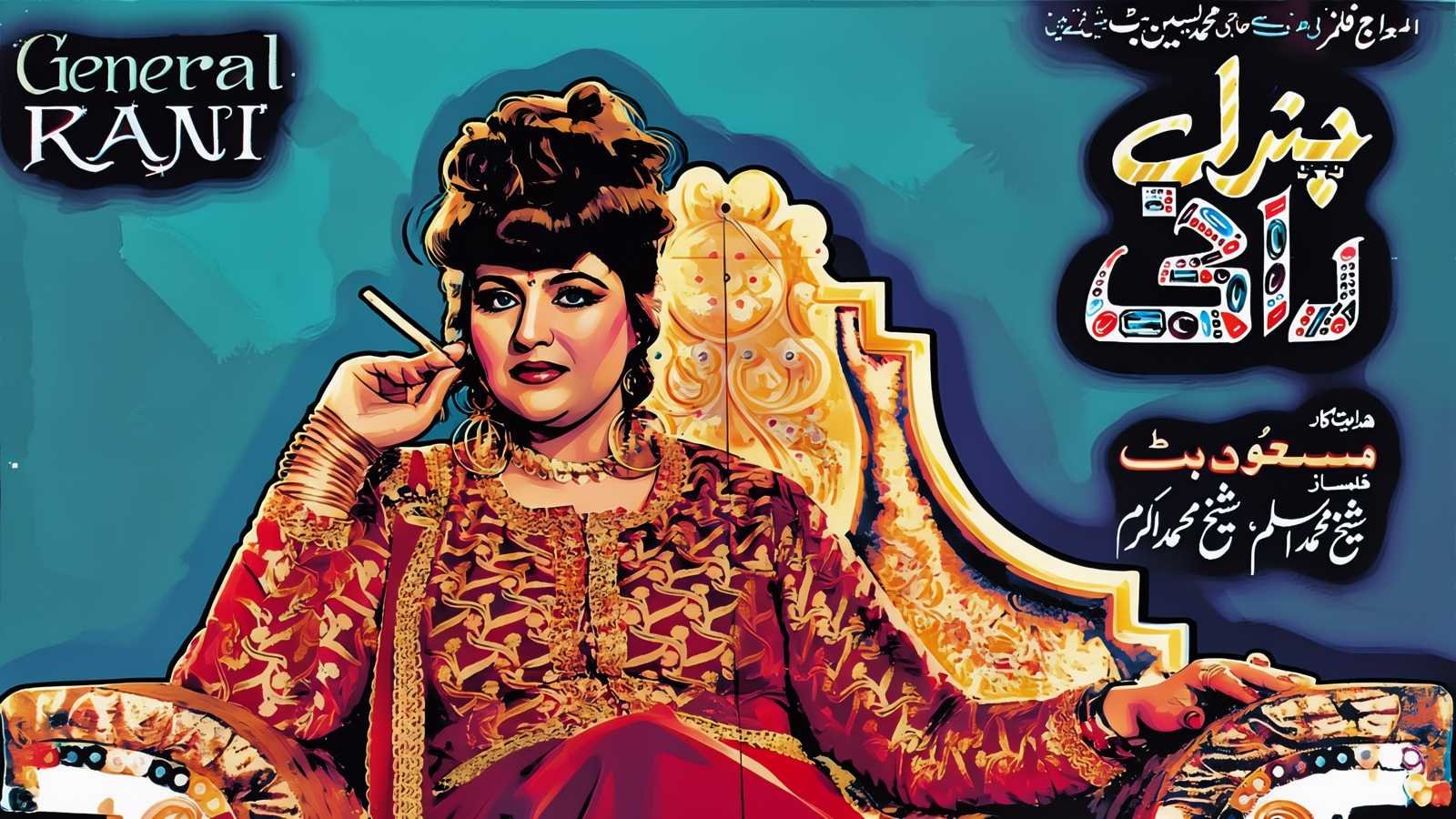
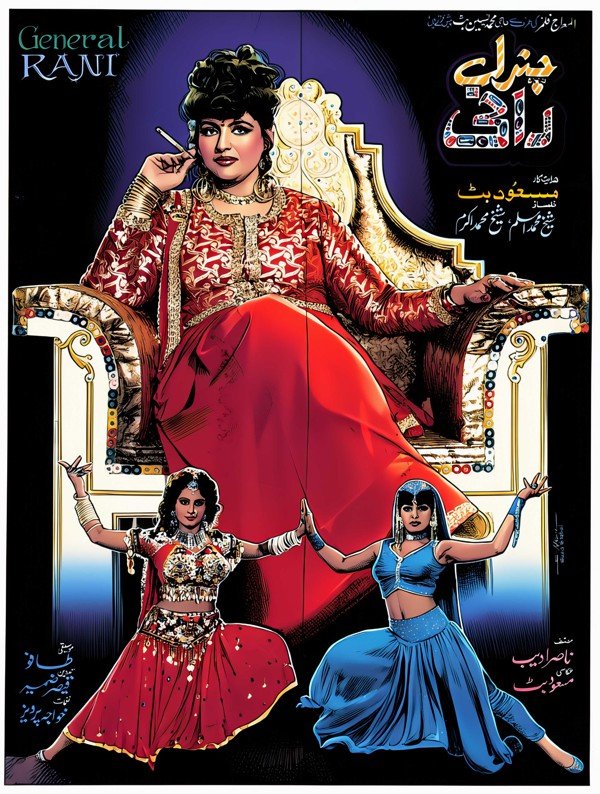
General Rani (1995) AKA Madame Rani
Cast: Anjuman, Nadeem, Sultan Rahi, Ghulam Mohiuddin, Reema, Jan Rambo
Director: Masood Butt
Nutshell: Controversial film about General Rani – from Burqa-clad housewife to Brothel Madame and “the most powerful woman in Pakistan”.
“Loosely inspired by General Rani.” — retrospective discussions of the film’s subject matter
“One of the most politically sensational Punjabi films of the 1990s.” — retrospective Lollywood commentary
“A flamboyant blend of political scandal, revenge drama and Punjabi action cinema.” — cult Pakistani cinema write-up
“Anjuman dominates the film with fierce screen presence.” — Lollywood retrospective commentary
“A feverish fictionalisation of Pakistan’s most notorious socialite myth.” — retro Pakistani cinema writing
“The film turns political gossip into full-blooded melodrama.” — Lollywood retrospective discussion
General Rani — born Aqleem Akhtar and later known to many younger generations primarily as the grandmother of Adnan Sami — remains one of the most fascinating, controversial, and mythologised figures in Pakistani history.
Much has been written about her extraordinary rise. According to countless stories and interviews over the years, she began life as the archetypal subservient, burqa-clad wife of a police officer before eventually deciding she had endured enough of the role society had assigned her. Throwing convention to the wind, she reportedly walked away from both her marriage and the suffocating expectations surrounding her.
What followed was the transformation of Aqleem Akhtar into “General Rani” — a woman who learned quickly how power truly functioned in a deeply male-dominated society and who decided, quite ruthlessly, to exploit those weaknesses for herself rather than remain crushed beneath them.
And exploit them she certainly did.
General Rani allegedly built a thriving empire servicing the appetites of Pakistan’s elite political, military, and business circles. According to numerous accounts, she surrounded herself with actresses, starlets, escorts, fixers, and influential patrons, operating at the very highest corridors of power. Her association with powerful generals — and particularly with the presidency itself — earned her the infamous title “General Rani.”
Men reportedly fell at her feet, while she rewarded loyalty with access to the film world, parties, women, and influence. She allegedly accumulated enough secrets and compromising material to keep many important people firmly under her control.
Eventually, however, power shifted.
As political winds changed and allegiances evolved, General Rani allegedly became less useful and considerably more dangerous. The Bhutto government eventually moved against her, placing her under restrictions and implicating her in various drug-related allegations that many believed were politically motivated.
Like so many figures who rise through proximity to power, she discovered that those once eager to enjoy her hospitality could quickly become eager to silence her.
Which brings us to one of the most extraordinary episodes in Lollywood censorship history.
In 1995, a film titled General Rani starring Anjuman was submitted to Pakistani censors for certification — and panic immediately erupted.
Even before the content itself had been fully examined, authorities objected to the title.
The word “General” was considered unacceptable.
In Pakistan, where civilian governments have often resembled decorative stage props while real power operates elsewhere entirely, even indirect references to the military establishment have historically been treated with extraordinary sensitivity. Calling a spade a spade can become a hazardous occupation very quickly.
Thus, a film centred around a morally ambiguous female power broker associated with generals and the political elite was clearly viewed as dangerous territory.
The censors demanded that the word “General” be removed entirely and replaced with “Madame.”
Every dialogue containing the word “General” reportedly had to be dubbed over. Posters, publicity materials, trailers, and promotional campaigns all required redesigning and alteration at considerable expense.
Ironically, the censorship controversy ended up providing the film with enormous publicity.
Suddenly the public knew this was a film the authorities were nervous about.
And that alone guaranteed curiosity.
The average cinema audience, however, was far less interested in political symbolism than in pure entertainment. The cast was packed with beloved Lollywood heavyweights including Sultan Rahi, Ghulam Mohiuddin, rising superstar Reema Khan, and the wildly popular comic nuisance Jan Rambo.
Towering above them all, however, was Nadeem, portraying the upright moral crusader standing firm against corruption, sleaze, compromised politicians, and a rotten system.
Meanwhile, Anjuman dominates the film completely in the title role.
And she is magnificent.
With her booming laughter, icy menace, and sheer star power, Anjuman transforms “General Rani” into a larger-than-life criminal queenpin — part gangster overlord, part political fixer, part tragic victim of circumstance. She spends much of the film manipulating politicians, criminals, and businessmen while orchestrating violence and corruption from behind the scenes like some Punjabi-cinema version of Griselda Blanco.
Yet beneath the cold exterior lies hidden pain and buried trauma that eventually surfaces through a series of increasingly melodramatic confrontations with Nadeem’s righteous patriot.
Naturally, speeches about morality, Quaid-e-Azam, the Pakistani flag, and saving the nation from corruption soon follow.
This being Lollywood, subtlety was never really invited to the party.
The fascinating frustration of the film is that while clearly inspired by the real Aqleem Akhtar, it only cautiously flirts with the actual history. Any serious attempt to portray the real General Rani accurately would almost certainly have provoked outrage from surviving political dynasties, military circles, and influential families whose names continued to matter enormously in Pakistan.
Thus, the film retreats into safer masala territory.
Instead of a genuinely probing political biopic, General Rani ultimately becomes a highly entertaining but heavily fictionalised political melodrama featuring:
- corruption,
- patriotic speeches,
- nightclub dance numbers,
- gunfights,
- family massacres,
- betrayals,
- reform arcs,
- Dubai references,
- and plenty of Sultan Rahi chaos.
And somehow it all works.
Combined with the censorship controversy, the political atmosphere of 1995, Reema’s rising popularity, and Anjuman’s enormous screen presence, the film became a major box-office success.
A follow-up attempt titled Golden Girl arrived later using many of the same ingredients but failed to achieve similar impact.
Ultimately, General Rani remains a deeply fascinating film precisely because of what it doesn’t say.
As a masala entertainer, it succeeds brilliantly.
As a truthful portrait of one of Pakistan’s most extraordinary and controversial women, however, it barely scratches the surface.
One constantly senses the real story lurking just outside the frame — too dangerous, too politically sensitive, and too uncomfortable to fully confront.
And perhaps that very hesitation says as much about Pakistan as General Rani herself ever could.