
The Hot Spot Rating
Zindagi Tamasha
Cast: Arif Hassan, Eman Suleman, Adeel Afzal, Nadia Afgan
Director: Sarmad Khoosat
Nutshell: An excellent film on how society’s very fabric of tolerance is beyond threadbare. A truth that the State refuses to allow in Pakistan because we can’t digest the grim reality. The State prefers to wean audiences on mindless piffle with insidious reasons.
“A film done right as far as Pakistani cinema is concerned.” — The Express Tribune
“A beautifully melancholic drama.” — Popcorn Reviews
“An exploration of intolerance and ostracism.” — paraphrased from Cinema Escapist
“A well-crafted narrative that has a clear direction and motive.” — Dawn/Icon
“Leaves you with an unexplained sense of agony.” — The Express Tribune
“Painfully tragic and subtly aching.” — Popcorn Reviews
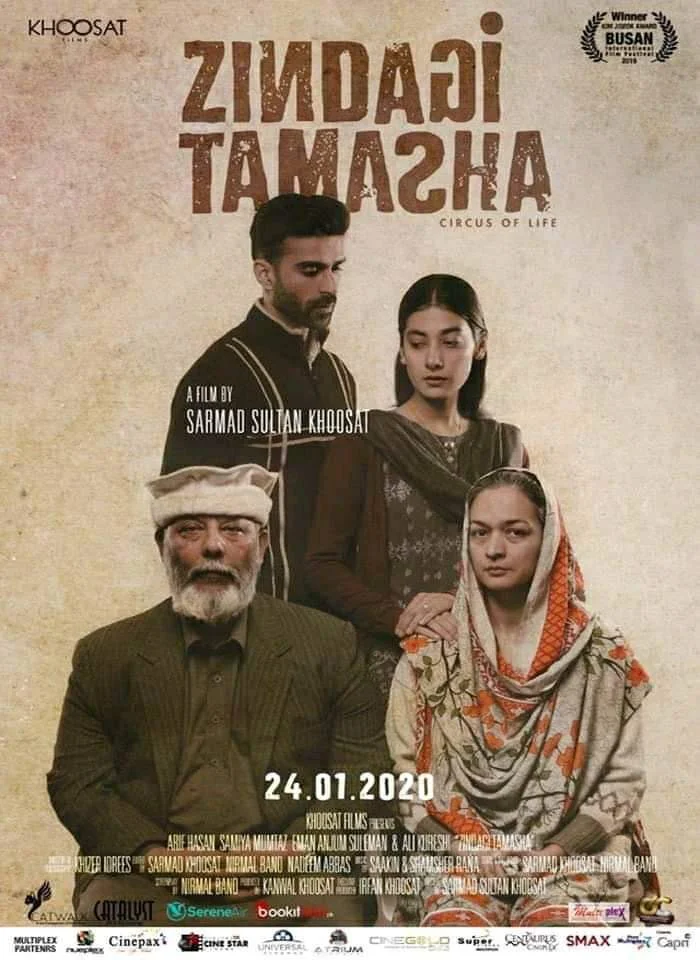
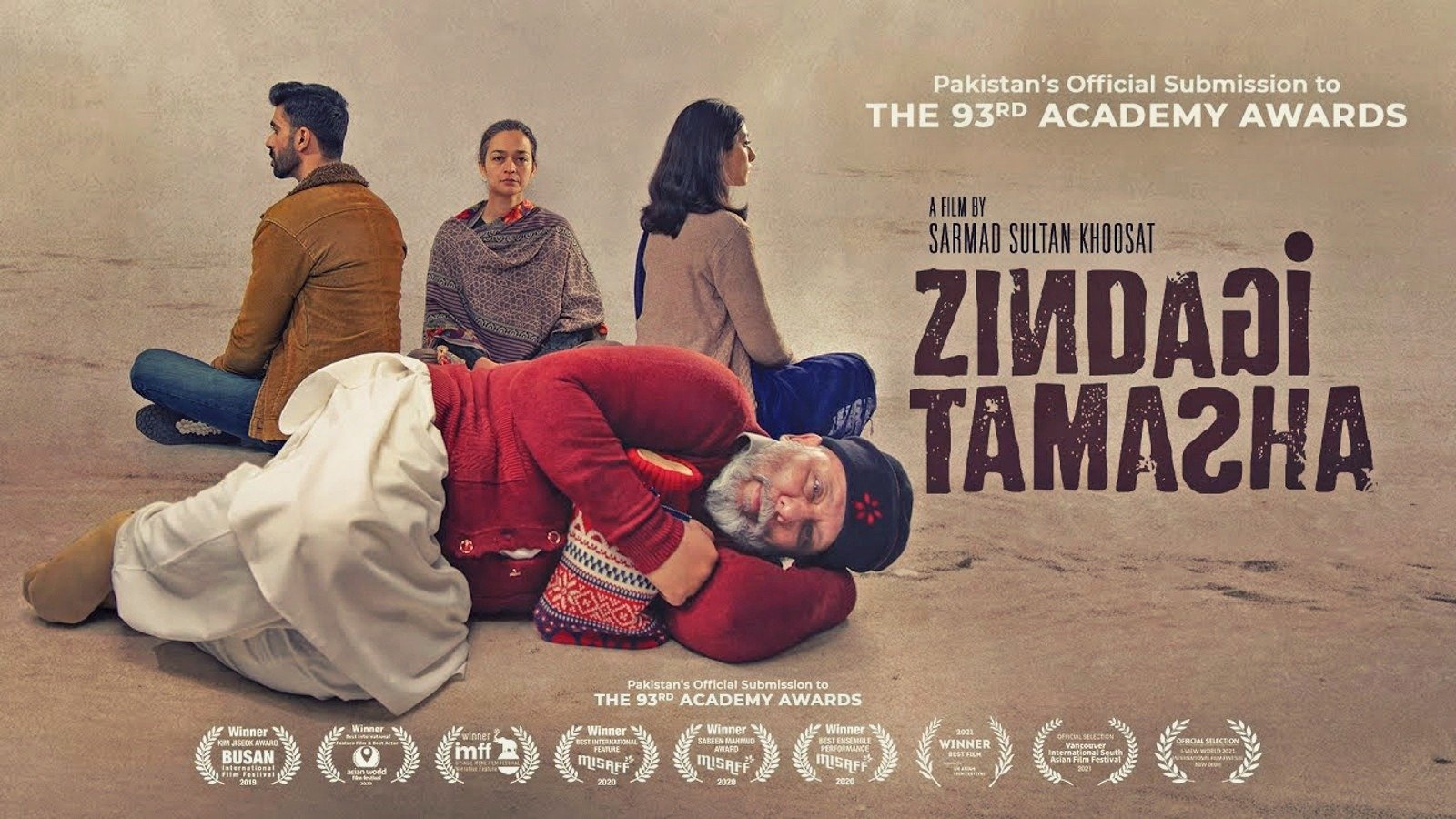
Zindagi Tamasha has clearly struck a nerve — a nerve so sensitive that the State seemingly decided it would be safer if the public simply never saw the film at all. Out of sight, out of mind. Instead, audiences are too often force-fed a diet of brain-dead piffle that reflects a deep contempt for intelligent thought. A passive, unquestioning population is far easier to control than one encouraged to think critically or ask uncomfortable questions. Propaganda is packaged as patriotism, while films addressing genuine social realities are swiftly sidelined or suppressed.
Sarmad Khoosat once again takes us into the same suffocating social landscape explored in Joyland — a world where patriarchy reigns supreme and self-appointed custodians of morality wield religion as both shield and weapon despite often being as morally compromised as the rest of society. Just as the Catholic Church has endured repeated scandals involving systemic abuse, Pakistan too has long struggled with deeply uncomfortable truths regarding exploitation and abuse carried out under the protection of religious authority. Yet questioning such realities remains almost taboo, especially in a society conditioned to place clerics on impossibly elevated pedestals.
The film opens during a festive gathering where the widely respected Khwaja Sahib, a celebrated reciter of naats, is coaxed by old friends into dancing. Reluctantly, and slightly awkwardly, he agrees. One friend jokingly suggests he perform to an old filmi tune, and what follows is little more than a harmless, clumsy, faintly comic dance among friends.
Yet even in the moment, there is an uneasy sense that not all the laughter surrounding him is entirely affectionate.
Soon enough, the mood shifts dramatically.
A video of Khwaja Sahib’s dance surfaces online, and the righteous recoil in horror at the sight of this supposedly disgraceful and ungodly display. Almost overnight, his standing within the community collapses. Friends become accusers. Respect turns to condemnation.
His newly married daughter — herself host of a painfully vapid morning television show — is mortified by the scandal and begins distancing herself from the father she once idealised. The shame cuts far deeper than any public humiliation ever could.
As the social ostracism intensifies, Khwaja Sahib is eventually pressured into recording a public apology video in the presence of a prominent cleric. The scene is quietly devastating: a dignified old man reduced to grovelling for forgiveness simply because he dared to experience a fleeting moment of joy at a family celebration.
In today’s Pakistan, even an awkward dance at one’s daughter’s wedding can apparently become grounds for moral execution.
The exclusion soon spreads to every aspect of his life. Everywhere he turns, the self-righteous close ranks against him. Whenever he attempts to defend himself or push back against the hysteria, he is immediately cut down and humiliated further. Yet perhaps the greatest wound of all is his daughter’s disappointment and shame.
Gradually, the hatred surrounding him becomes suffocating.
What makes Zindagi Tamasha so powerful is that it captures with painful accuracy a society that increasingly seems to have lost the ability to simply live and let live. Joy itself becomes suspicious. Harmless expression becomes scandalous. Individuality becomes dangerous. Those who posture most loudly as guardians of morality often prove the most cruel, intolerant, and hypocritical of all.
And of course, such people are hardly unique to Pakistan.
Though the subject matter is profoundly depressing, the film itself is a major artistic accomplishment and another hugely important step forward for Pakistani cinema. Alongside Joyland, it perfectly captures a mindset that is unforgiving, relentlessly judgmental, joyless, and consumed by performative righteousness.
Khoosat depicts this world with remarkable honesty, warmth, and compassion.
The film also quietly highlights countless contradictions that everyone already recognises but few openly discuss — our performative outrage over some global injustices while conveniently ignoring others closer to home; our routine condemnation of “Western corruption” while happily embracing Western consumer culture at every opportunity. Some hypocrisies seem permanently woven into the national fabric.
Yet films like Zindagi Tamasha and Joyland prove beyond doubt that Pakistani cinema is capable of producing work of genuine courage, intelligence, and emotional depth despite enormous resistance from reactionary voices determined to suppress anything remotely challenging.
The performances throughout are exceptional, the cinematography is rich with quietly striking imagery, and the editing keeps the film moving with enough sharpness to avoid slipping into television-drama territory.
With Zindagi Tamasha and Kamli, Sarmad Khoosat has firmly established himself as one of the most important filmmakers currently working in Pakistan — a director willing to portray society with unflinching honesty while still retaining empathy, humanity, and warmth.
Pakistan ought to be proud of him.
Whether it is willing to admit it or not.