The Hot Spot Rating
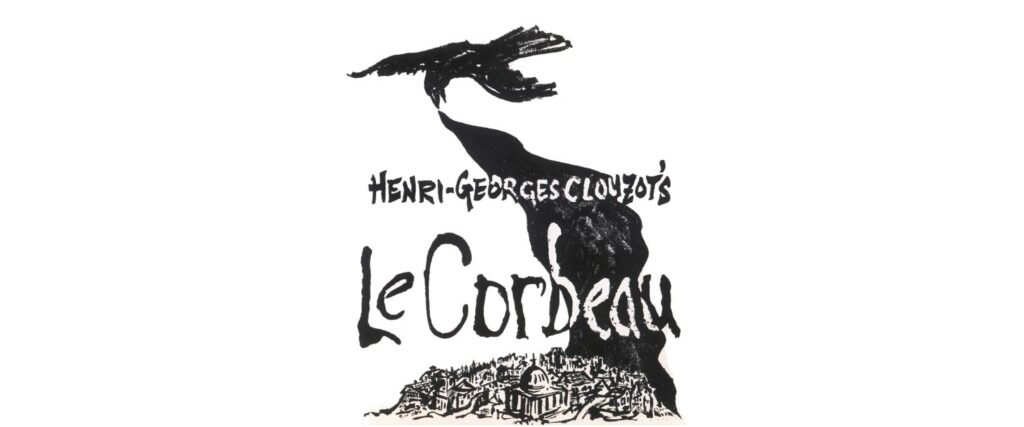
Le Corbeau (1943)
Cast: Pierre Fresnay, Ginette LeClerc, Micheline Francey, Helena Manson, Jeanne Fusier-Gir, Sylvie
Director: Henri- George Clouzot
Nutshell: a village in an anonymous community, “Anywhere”, is besieged with suspicion and mistrust as a series of letters bring various dwellers’ darkest and ugliest secrets to light. Fear grows hand in hand with a wave of hatred and intolerance as the suspects are narrowed down one by one.
Los Angeles Times: a “true film maudit…that made all elements of the French power structure cringe,” thanks to its portrayal of societal paranoia under Occupation archive.org
Dennis Grunes (WordPress): Clouzot’s film is “a critical reflection of the bourgeois mindset…back‑stabbing, jealousy and gossip,” exposing collaborationist tendencies criterion.com.
Slant Magazine (Ben & Dan): “Le Corbeau may be far from trite, but it is just as far from profound…an exercise in style drawing heavily on American noir” themoviedb.org
SBS What’s On: “Short, dense and meticulously plotted, Le Corbeau is a fever‑dream of dread” sbs.com.au.
Criterion Collection & Amazon Blu-ray blurb: “brilliantly captures the spirit of paranoid pettiness and self‑loathing that turns an occupied French town into a twentieth‑century Salem” criterion.com
CineSavant: “Later on, some English critics classified the show as a horror film. It’s certainly creepy enough” en.wikipedia.org
The Guardian (Observer): “a superb noir thriller…about the corrosive effect of poison‑pen letters in small French town” during the Occupation era en.wikipedia.org
Senses of Cinema quoting Alan Williams: “an essential work for world film history, if only because its meanings are still being debated” sensesofcinema.com.
Le Corbeau, directed by Henri-Georges Clouzot, provoked outrage upon its original release in wartime France and swiftly became one of the most controversial films of its era. Condemned by both Right- and Left-wing factions during the Vichy period, the film was repeatedly withdrawn, while Clouzot himself was initially banned from filmmaking for life.
Such was the perceived danger of the film.
Over time, however, passions cooled and Le Corbeau gradually came to be recognised not as an act of subversion, but as one of the great masterpieces of French cinema and among the finest works Clouzot ever directed. Intellectuals and artists such as Jean-Paul Sartre and Jean Cocteau defended the film passionately, recognising in it not political propaganda but a devastating portrait of paranoia, suspicion, and moral collapse within a frightened society.
Indeed, Le Corbeau captures with frightening precision the atmosphere of distrust deliberately cultivated under totalitarian systems. Anonymous accusations, whispered rumours, denunciations, and fear become weapons capable of poisoning entire communities. The vulnerable suffer most while ordinary people, terrified for their own survival, quickly turn upon one another with astonishing cruelty.
The film’s title — “The Raven” — refers to an anonymous poison-pen letter writer whose malicious correspondence slowly infects a small provincial town like a spreading disease. Fingers are pointed, gossip intensifies, and the social fabric begins disintegrating under the strain of fear and suspicion.
Clouzot presents this collapse with extraordinary control and precision.
The film is taut, gripping, and magnificently photographed, functioning simultaneously as:
- film noir,
- psychological thriller,
- social commentary,
- and moral autopsy.
As the anonymous accusations spread, the town itself seems to rot from within. Petty grudges, hidden resentments, jealousy, hypocrisy, and self-preservation rise steadily to the surface until neighbour turns against neighbour in a horrifying frenzy of blame and paranoia.
The film’s power lay precisely in how closely it mirrored reality.
At a time when Europe was living under occupation, surveillance, denunciations, and political terror, Le Corbeau struck nerves governments would rather have left untouched. Its portrait of fear-corrupted society felt dangerously recognisable, and authorities no doubt sensed the film implicitly questioned not only human weakness but the methods through which authoritarian systems maintained control.
Ironically, the very controversy that nearly destroyed Clouzot’s career ultimately helped cement his reputation as one of cinema’s great masters.
Fortunately, the ban against him was eventually lifted, allowing him to continue directing extraordinary films such as The Wages of Fear and Les Diaboliques — works that would later earn him comparisons to Alfred Hitchcock and the enduring nickname:
“The French Hitchcock.”
Yet Le Corbeau remains perhaps his most politically dangerous and psychologically unsettling achievement.
It is not merely a suspense film.
It is a study of social decay under pressure.
A portrait of collective hysteria.
A warning about how fear and suspicion can corrode entire communities from within.
And viewed today, its themes remain disturbingly modern.
Essential viewing not only for admirers of classic film noir, but also for historians, political observers, and anyone interested in how cinema can reflect the darkest anxieties of its time with terrifying accuracy.