
The Hot Spot Rating
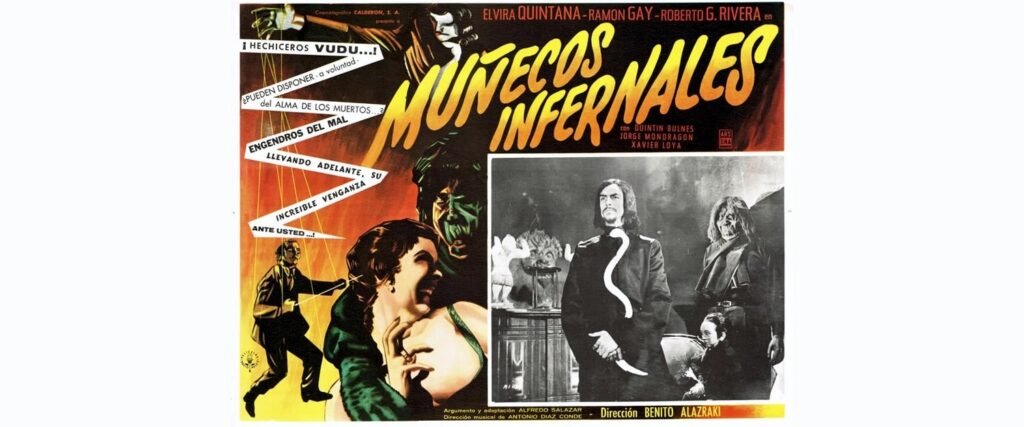
Curse of the Doll People, The (Los Munecos Infernales) (1961)
Cast: Ramon Gay, Elvira Quintana, Quintin Bulnes, Roberto Rivera, Luis Aragon
Directors: Benito Alazraki, Paul Nagle
Synopsis: An eerie little chiller involving a sinister voodoo curse and murderous killer dolls.
Cool Ass Cinema described it as “not perfect … a few silly, even incongruous moments here and there,” yet still worth a watch. coolasscinema.com
Jonathan Lewis (Mystery File) praised it as “strange … actually successfully pulls off the whole ‘evil dolls come to life’ without once slipping into self‑parody or light comedy.” mysteryfile.com
Cinema Sojourns lauded its “eerie, atmospheric art direction” and unsettling doll movements, despite pacing problems and laughable dubbing. cinemasojourns.com
Amazon user blurb summed it up as relying on a “vague kind of voodoo curse,” with its uncanny atmosphere more than compensating for thin plot. dvdtalk.com
DVD Talk praised the transfer quality, calling it “sharp” and “pretty decent” for both the Mexican and U.S. cuts. dvdtalk.com
Wikipedia (via Peter Dendle) dismissed the U.S. version as “incoherent,” while Glenn Kay termed it “a strictly by‑the‑numbers exercise that must have elicited more giggles than gasps.” en.wikipedia.org
Curse of the Doll People is yet another reminder that Mexico developed one of the richest and most distinctive horror cinema traditions anywhere in the world. Long before many countries fully embraced fantasy and macabre cinema, Mexican filmmakers were already producing gloriously atmospheric nightmares such as The Brainiac and this eerie little gem steeped in voodoo curses, superstition, and murderous doll-like monstrosities.
The film operates within one of horror cinema’s oldest and most reliable formulas:
ancient mystical traditions colliding violently with the smug certainties of the modern scientific world.
A group of archaeologists travel to the sacred grounds of Coombas where, displaying the sort of cultural sensitivity typically guaranteed to awaken supernatural wrath, they casually steal an ancient stone deity and haul it home as a decorative souvenir.
Unsurprisingly, the furious tomb keeper responds by placing a murderous curse upon them.
The group later consults the shapely Dr Karen, an expert on ancient rites and superstitions, along with her physician fiancé. Karen is visibly appalled when she learns the men shamelessly looted a sacred relic merely to decorate their home. Unlike the others, she understands that certain ancient beliefs are perhaps best left undisturbed.
The men, however, remain thoroughly unconcerned.
According to the enraged tomb keeper, the curse is supposed to strike by midnight that very evening — and with only five minutes remaining, the group begins congratulating itself on surviving the ordeal.
Naturally, this proves premature.
At the exact moment of their smug celebration, thunder crashes violently outside, lightning flashes across the sky, the electricity fails, and suddenly those final five minutes begin feeling alarmingly long indeed.
The first victim appears to suffer a sudden seizure.
Soon, however, it becomes horrifyingly clear that the archaeologists are being stalked by murderous zombie dolls — tiny shambling creatures armed with deadly needles that not only kill their victims but eventually transform them into additional doll-like servants of the curse.
And from that point onward, the film becomes wonderfully eerie.
The sight of these murderous little figures creeping silently through darkened corridors remains genuinely unsettling even today. The atmosphere throughout is thick with shadows, strange rituals, ominous music, and beautifully gothic imagery. The film immediately recalls Devil Doll in its use of miniature human figures transformed into instruments of supernatural vengeance, though this Mexican production arguably possesses even greater visual atmosphere.
The “dolls” themselves — essentially murderous midgets shambling about under the curse — are tremendously effective:
creepy,
unnerving,
and strangely tragic.
The film’s atmosphere compensates generously for its shortcomings elsewhere.
The acting occasionally veers into delicious overstatement, while the English dubbing on many available versions is often hilariously mismatched and awkward. One performer in particular channels strong echoes of Bela Lugosi in White Zombie, chewing scenery with magnificent abandon.
Yet none of this damages the experience.
If anything, it enhances the strange dreamlike charm of the film.
Visually, the movie is remarkably elegant for such a modest production. The black-and-white photography is rich with shadow and atmosphere, while several sequences achieve a genuinely haunting quality despite the complete absence of gore or explicit violence.
This is horror built on:
- mood,
- superstition,
- creeping dread,
- and eerie imagery.
And it works beautifully.
The film moves briskly, remains consistently intriguing, and contains enough memorable sequences to linger in the mind long afterward. Fans of old-school supernatural horror, voodoo cinema, and especially creepy doll movies will find plenty to admire here.
Those who appreciated the marvellous Devil Doll should warm immediately to this wonderfully atmospheric Mexican cousin.
Despite the occasionally overwrought performances and awkward dubbing, Curse of the Doll People remains:
stylish,
highly creepy,
beautifully photographed,
and deeply enjoyable.
A splendid little slice of vintage Mexican horror that fully deserves rediscovery among lovers of classic supernatural cinema.