

Title: The Beast Within
Cast: Ronny Cox, Bibi Besch, Paul Clemens, Don Gordon, R.G. Armstrong
Director: Philippe Mora
Nutshell: A twisted metaphor on the nightmare of rape? Maybe not, but a fun twist on the usual werewolf routine with a showstopping transformation scene. Whacky and uneven but compelling.
Reviewed by: Omar Khan
"Silly shocker" - Blockbuster Video
"Dark, Moody atmosphere" - Creature Featurs
“One of the more bizarre horror films of the early 1980s.”— retrospective cult-horror assessment
“A deeply unpleasant but undeniably memorable monster movie.”— horror review commentary
“The film’s final transformation sequence is astonishingly grotesque.”— Fangoria-era retrospective
“A southern-fried nightmare drenched in sweat, religion and mutation.”— cult cinema review
“Equal parts body horror, rural gothic and fever dream.”— modern reassessment
“The Beast Within succeeds through sheer atmosphere and weirdness.”— horror retrospective commentary
“The cicada-inspired monster effects are both ridiculous and disturbing.”— creature-feature review
“An outrageously strange blend of puberty horror and backwoods grotesquerie.”— exploitation-film appraisal
“A horror movie so preposterous that it occasionally becomes entertaining.” - Vincent Canby, New York Times
“Sickening.” - Leonard Maltin
A dark, stormy Mississippi night back in 1964, and a pair of newlyweds are manfully attempting to reach their honeymoon destination, though making precious little headway. Their battered old car has clearly seen better days and is struggling to cope with the driving rain and howling winds. Before long, disaster strikes when the vehicle skids off the road and becomes hopelessly bogged down in a quagmire of sticky mud in the middle of nowhere.
Nearby, the audience is introduced to a shackled, hairy beast that suddenly breaks free from its restraints and lumbers ominously into the surrounding forest.
Ronny Cox, as husband Eli McCreary, trudges off into the rain in search of help, leaving his wife, played by Bebe Besch, alone in the car. Their dog suddenly bolts into the darkness, and Bebe gives chase, only to watch in horror as the animal is savagely mangled and tossed aside like a piece of rubbish before her very eyes. The Beast is about to set upon her when she makes a desperate run for it. She makes reasonable progress until crashing headlong into a tree branch and losing consciousness. The Beast strips her clothes before brutally raping her as she lies unconscious. Eli arrives moments too late, finding his wife barely alive, but manages to get her to hospital in time to save her life.
Seventeen years later, the same couple are once again at a hospital, this time because their son Michael's health has deteriorated so badly that he is barely being kept alive by artificial intervention. While drifting in and out of consciousness, Michael repeatedly dreams of approaching the same derelict house with its mysterious basement, as though some unseen force is summoning him home.
Realising that Michael was conceived as a result of the horrific rape all those years earlier, his parents return to Mississippi in search of answers. They hope to discover whether there is some hereditary illness or congenital condition connected to his biological father. However, they quickly discover that the local sheriff and much of the town establishment are far from pleased to see them asking awkward questions. The townsfolk have spent seventeen years burying the truth about what happened on that fateful night, how justice was dispensed and exactly who—or what—was responsible. The McCrearys' return stirs up secrets long left to fester beneath the surface of otherwise tranquil Noiba, Mississippi.
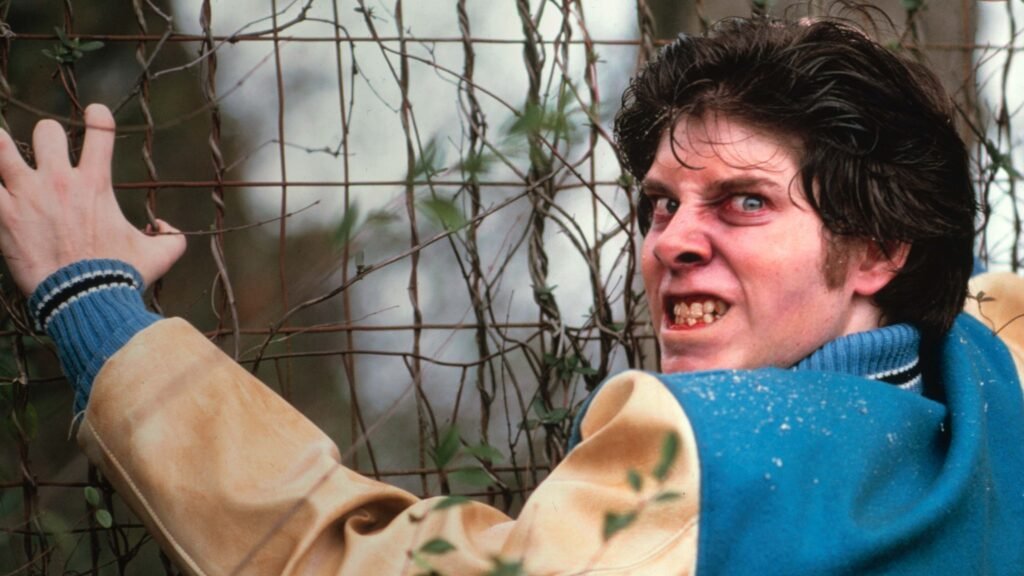
As Michael's condition steadily worsens, his dreams become increasingly vivid and his behaviour increasingly disturbing. Drawn by an irresistible killer instinct, he discovers an overwhelming bloodlust that must somehow be satisfied. One by one, members of the thoroughly unpleasant local community begin arriving at the morgue in ever more gruesome condition—disembowelled, mutilated and with their throats torn open. Curiously, after each savage killing, Michael's health improves dramatically, only to deteriorate once again until the next irresistible urge overtakes him.
The inevitable moment of truth arrives when Michael desperately struggles to resist murdering his own girlfriend. His humanity fights valiantly against the monstrous instinct consuming him, but the craving for blood proves almost impossible to suppress.
Finally, strapped to a hospital bed like Regan in The Exorcist, Michael undergoes a truly grotesque physical transformation. His face balloons into something resembling an unfortunate cross between Donald Trump and Kim Il-sung suffering from an especially virulent case of mumps. It is unquestionably the film's show-stopping climax and, for its time, represented one of the earliest attempts to stage an elaborate physical transformation using prosthetic makeup rather than traditional stop-motion animation.
The Beast Within arrived at a fascinating moment in horror cinema. Special-effects makeup had suddenly become the genre's newest obsession, with realistic on-screen transformations replacing the older stop-motion techniques that had served monster movies for decades. Earlier in 1981, The Howling had astonished audiences with Rob Bottin's groundbreaking werewolf transformation, effectively setting a new standard for practical effects. Barely six months later, An American Werewolf in London, boasting a substantially larger budget and the extraordinary talents of Rick Baker, raised the bar yet again. In both cases, the transformation sequence was the film's principal attraction—the trump card audiences came to see.
The Beast Within therefore had formidable competition. While its effects are undeniably rougher around the edges than those of its celebrated predecessors, they are sufficiently outrageous and imaginative to hold their own in the spectacle stakes. If that were not enough, the film also delivers a splendid decapitation to satisfy the increasingly demanding gore audiences of 1982.
By this point, the horror boom ignited by Halloween and subsequently fuelled by Friday the 13th was beginning to show signs of creative exhaustion. Original ideas were becoming increasingly scarce, and many productions relied heavily upon increasingly elaborate makeup and visual effects to distinguish themselves from an ever-growing crowd of slashers. It would not be until A Nightmare on Elm Street arrived a couple of years later that the genre would receive the genuinely fresh jolt of imagination it so desperately needed.
Although initially marketed as a werewolf picture, complete with suggestive references to full moons and man-to-beast transformations, The Beast Within is anything but a conventional werewolf movie. Written by Tom Holland, whose horror credentials would soon become firmly established, the film ultimately emerges as a reasonably satisfying and agreeably gruesome horror romp. Unfortunately, it suffers from a distinctly meandering middle section that frequently borders upon the tedious. Thankfully, the outrageous transformation finale almost rescues proceedings through sheer audacious goofiness.
The Beast Within may never rank among the truly memorable horror films of its era, but it deserves considerable credit for steering away from the endless procession of interchangeable slasher films dominating cinema screens in 1982. Instead, it offers audiences a gloriously eccentric pseudo-werewolf movie in which the werewolf has effectively been replaced by a giant cicada.
The opening half-hour is atmospheric, well-paced and genuinely engaging. The middle section loses momentum rather badly, but the deliriously over-the-top climax more than compensates, ensuring the film concludes on an enjoyably bizarre high.
Not a great horror film, nor a particularly frightening one, but an important curiosity from a period when practical transformation effects were revolutionising the genre. More importantly, it offered something refreshingly different at a time when audiences were rapidly growing weary of the endlessly recycled slasher formula.

0 Comments
Leave a Comment