
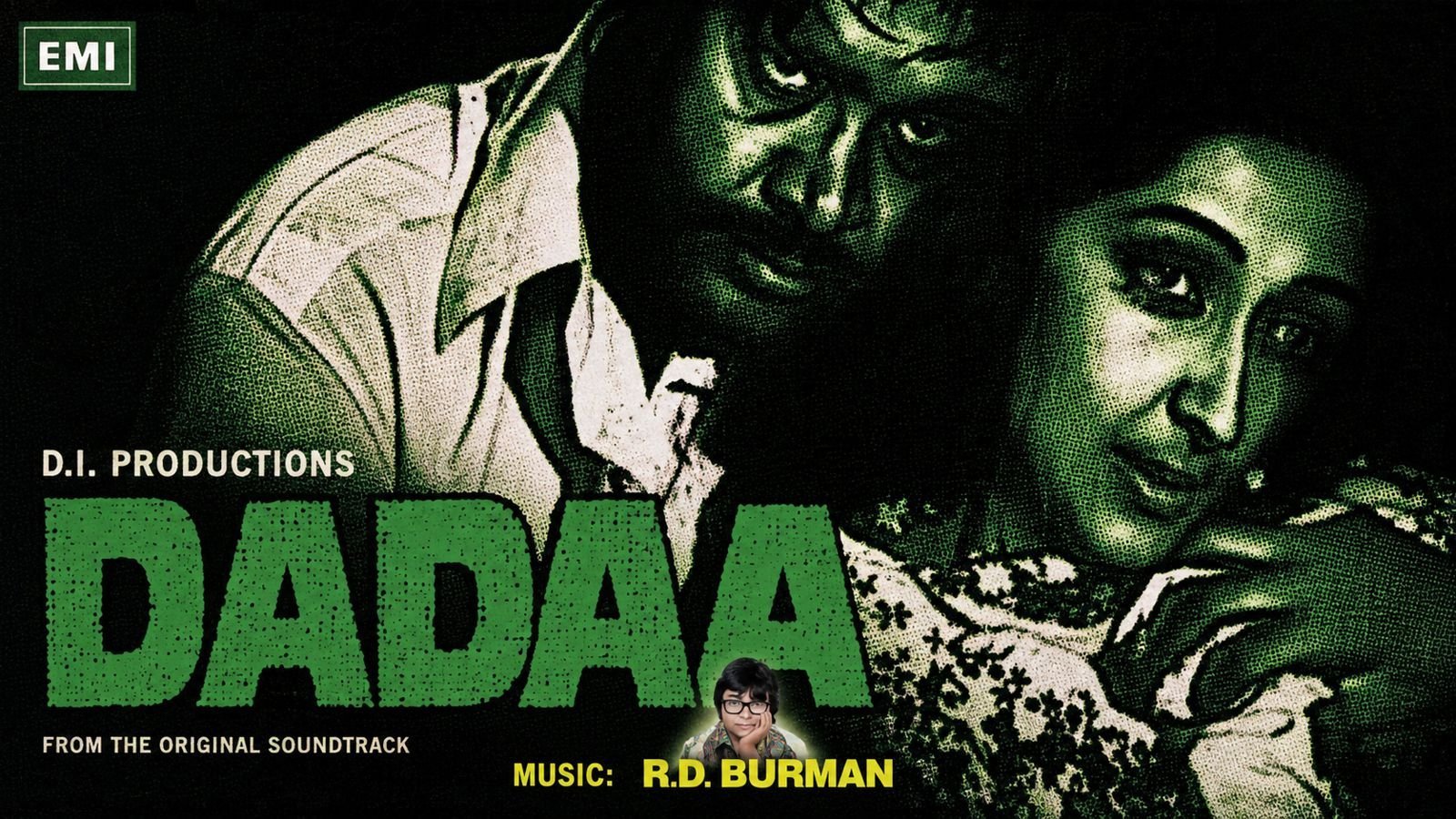
Dada (1977)
Cast: Sultan Rahi, Najma, Nabila, Anita, Talish, Mustafa Qureshi, Bahar, Adeeb
Director: Daud Butt
Synopsis: A massive clash of the city’s most prominent crime kingpins is staple Lollywood fare.
Reviewed by: Omar Khan
Dada was made in 1977, in the pre-Zia era of glorious democratic debauchery and pliable censor boards. We were drooling pools in anticipation of watching Thunder Thighs Anita do her thing, as she had been given prime fourth billing in a cast full of megastars like Rahi, Najma, Talish, Nabeela, Bahar, and Mustafa Qureshi, among others.
Our excitement at the prospect of viewing super siren Anita was frustrating, as the movie ended without a glimpse of an inch of those divine thighs or hint of her intoxicating moustache. We eventually concluded that the censors must have excised ALL of Anita’s scenes for being too heavy. Therefore, one yearns to watch the completely uncensored version of Dada, even if that prospect is a distant dream.
The film itself begins with a laughable confrontation of typically be-paunched and fabulously moustached goons, who throw themselves at each other with typical vigour in a battle of the most hardened street goons of Lahore city. The most unlikely gangster in town happens to be the elderly and extremely loud and arrogant Dada Badmaash—played with suitable vigour by the otherwise respected Agha Talish. He is supported in his Gangland wars by his son and grandson, played by Sultan Rahi.
The lives of these hereditary Gangsters (Khandaani Badmaash) involve a daily routine of contract killings, and morning feasts of gallons of milk followed by pure desi butter, which the badmaash family down without even a tiny burp! (As mentioned in one of the fantastic dialogues from the film).
Meanwhile, the family’s matriarch is as demented as the men folk in her clan. She, more than anyone, relishes throwing bundles of cash around in an attempt to notch another contract killing to her impressive tally. The plot is relatively simple because it involves a series of gangland battles and skirmishes with the law. Very much the usual thing, but this time we are spared the switched babies scene, the typical rape and revenge scenario, and shockingly even the almost obligatory “peeo-da qatil” (father’s murderer) syndrome.
Here the plot is an utterly stripped-down fight for the top dog between the family of the great Dada Badmash, and his clan against the upstart clan headed by the admittedly fearsomely moustachioed and impressively paunchy, Ilyas Kashmiri, along with his similarly wellmuscled goons.
The twist comes when a double wedding in the Dada Badmaash family occurs. Sultan Rahi, the grandson Badmaash, is married off to the ditzy Najma, while Najma’s brother (Mustafa Qureshi) is married off to Dada’s daughter Nimmo. Though there is much joy at first, things fall apart when it transpires that Mustafa Qureshi was not the crown prince of crime as he had pretended to be but, in fact, DSP Sher Bahadur, who planned his marriage to Dada’s daughter, only so that he could infiltrate and incarcerate the clan one by one.
Dada
Dada is shattered to find that the DSP sends his precious daughter packing after he enjoys one night of marriage with her.
Gradually, it becomes payback time for the Dada clan; one by one, they suffer for their past crimes, much to the delight of the opposition clan of Ilyas Kashmiri. However, the Dada clan doesn’t go down without a fight. Nabeela, despite being shot to oblivion, finds the resources to rise from the earth once again, a la Michael Myers of Halloween, and arrive with a double barrel in hand to blow away some of the opposition before she bites the dirt once more.
One by one, Mustafa Qureshi succeeds in decimating Dada’s clan. In approximately the twenty-fifth shoot-out, he obliterates generations of The Badmaash lot.
Finally, in a final scene of heavy Lollywood symbolism, Dada Badmaash strides towards the Police firing shots into the air rather than at his deceitful son-in-law. The film is about as crass as any Punjabi film we have yet come across, and that’s mighty crass!
Daud Butt is the director of this farce and shows himself to be a master behind the lens with his excellent use of the Dutch angle camera technique. Time and again, he tilts the camera one way and the other. Some viewers might end up with severe sea sickness due to this avant-garde technique of cinematography, invented and then perfected into a subtle art form here in Lollywood known as the “impect shot”.
The film is carried on the shoulders or rather paunches of its sizeable cast. Talish does a splendid job and shows remarkable versatility as an actor—here, taking on the typically loud, bellicose persona of a Lollywood Badmaash. Sultan Rahi does his thing, and Najma leaps around during her two or three songs. She has nothing else to do, not even a death speech being granted this time. The film, at least the version we saw, has been shorn of its filth factor by the exclusion (entirely) of Anita’s role, who isn’t on screen for even a second and is yet featured prominently in the cast.
The film is so awful and bereft of even an iota of class or style that it is a shocker. Alas, one feels it would have been a mini-masterpiece of el-cheapo sleaze had the censored stuff been allowed. Even the dazzling Madame Noor Jehan song “Kuch Phiss Gaee Hae, Thodi Phaat Gaee Hae…meri Wayl di kameez aaj phaat-gaee hai” was far too suggestive even for the censors back in ’77. The lyrics were forcibly changed for the film, which, despite its filth factor, failed to do decent business at the Box Office—despite guest appearances by Lollywood “Sax Kittens” Ishrat Chaudhry and Amrozia.
Some songs have been chopped off as the film’s running time was half an hour short of the standard running time. It’s a genuinely dire film, but we say that positively rather than negatively. One will have to watch out for similarly horrendous cinematic atrocities from director Daud Butt—a man of earthy, gritty, dubious talent. One memorable scene speaks volumes about how this society views women in general. Najma, Sultan Rahi’s wife, has a baby. When it is announced joyously that the baby is male, the in-laws proudly proclaim that had the baby been a girl, they would have gotten their son a replacement wife, which unfortunately does happen in reality here. Dada is a shocker, recommended for dedicated purveyors of pure Grade “A” crap.


0 Comments
Leave a Comment