
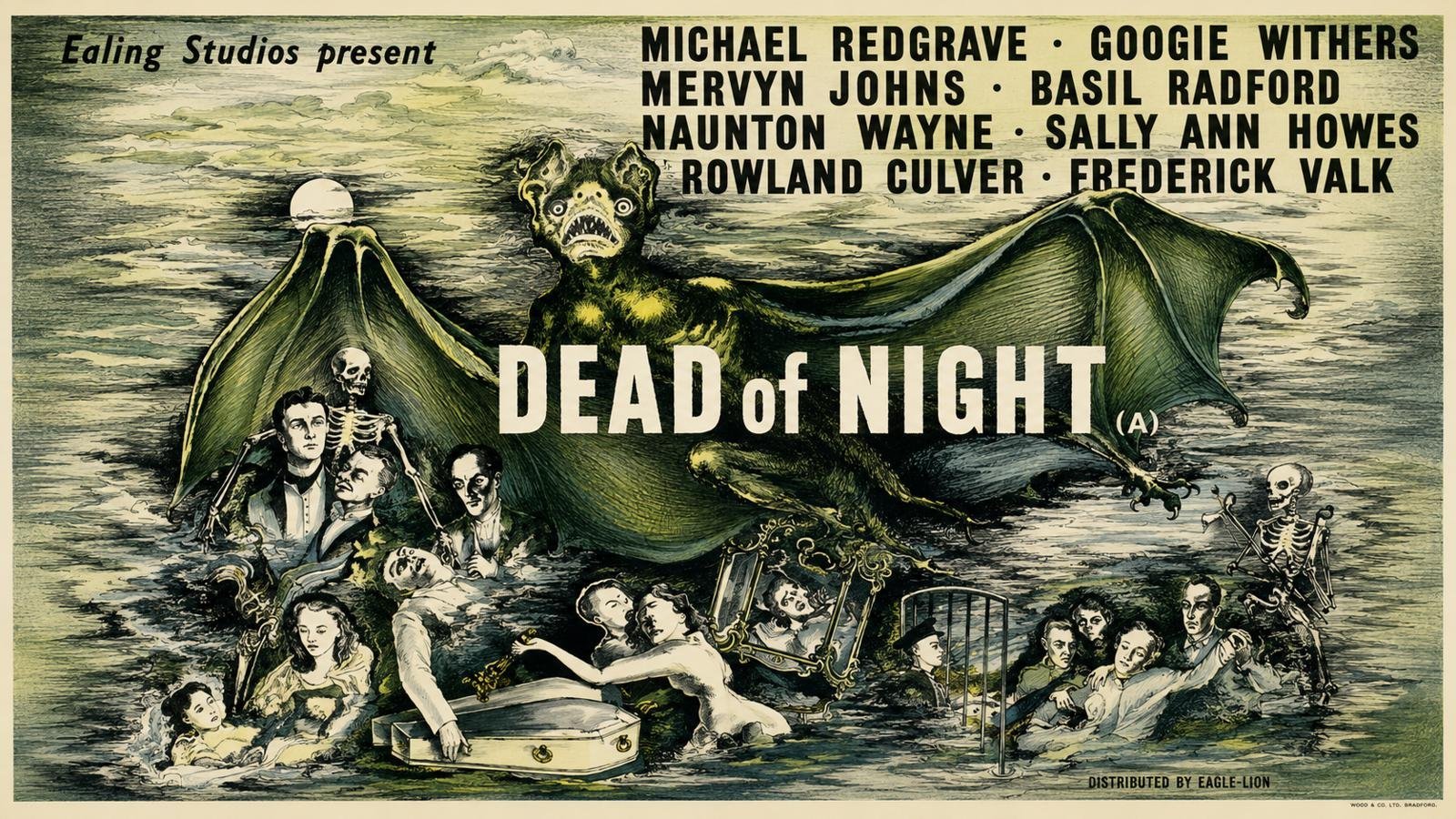
Dead Of Night (1945)
Starring: Mervyn Johns, Michael Redgrave, Frederick Valk, Googie Withers
Directors: Robert Hamer, Basil Dearden, Charles Crichton, Alberto Cavalcanti
Synopsis: Superlative compendium of horror stories
Reviewed by: Omar Khan
"still spooky after all these years... this chiller is most effective, see it with a friend" Time Out
"superlative anthology... possibly the most influential horror film of the 40's" Creature Features
"classic scary treat" Blockbuster Video
"classic chiller... a knockout" Maltin's
An architect arrives at a remote country estate for a consultation, only to be gripped by a profound sense of déjà vu. He insists he has met each of the six guests before, despite their complete denial, and claims to have visited the house many times in recurring dreams, even though he has never set foot there nor ventured anywhere near this part of the country. Among those present is a sceptical psychiatrist who attempts to rationalise the increasingly bizarre events unfolding around him, while the other guests begin recounting their own strange encounters with the supernatural—some amusing, others deeply unsettling, but all tinged with an unmistakable sense of the macabre.
The result is arguably the greatest horror compendium ever made.
Each of the stories has something to recommend it, although not all are equally effective. The golfing ghost story, intended as comic relief, is the one obvious weak link, but it is more than compensated for by the extraordinary final stretch of the film. The ventriloquist episode remains one of the most celebrated horror stories ever committed to film, its influence stretching across decades to later classics such as Magic, Devil Doll and Dead Silence. There is an unnerving psychological tension running through it that recalls a condensed version of Hitchcock's Psycho, and the relationship between the tormented ventriloquist and his sinister dummy, Hugo, remains every bit as chilling today as it must have been in 1945.
What makes Dead of Night so ingenious, however, is not merely the individual stories but the way they are woven into the larger nightmare unfolding around them. The architect's terrifying premonitions hang over the proceedings from the outset, creating an overwhelming sense of impending doom. The audience knows that something dreadful awaits just around the corner, but neither the characters nor the viewer can be entirely certain what form that horror will eventually take.
When the inevitable climax finally arrives, it is both startling and immensely satisfying, bringing the film full circle in a surreal, dreamlike finale that lingers long after the closing credits. It is little wonder that Dead of Night, produced at Ealing Studios, has endured for more than eighty years as one of the cornerstones of British horror cinema.
The film is admittedly a little uneven, but it is never less than fascinating. Its influence on the anthology horror format is immeasurable, and while Amicus came remarkably close two decades later with Tales from the Crypt—particularly the superb Father Christmas story, the unforgettable episode set in the Home for the Blind, and Peter Cushing's magnificently tragic Grimsdyke segment—Dead of Night still retains the crown.
A genuine classic, and to this day the finest horror anthology ever made.
0 Comments
Leave a Comment