
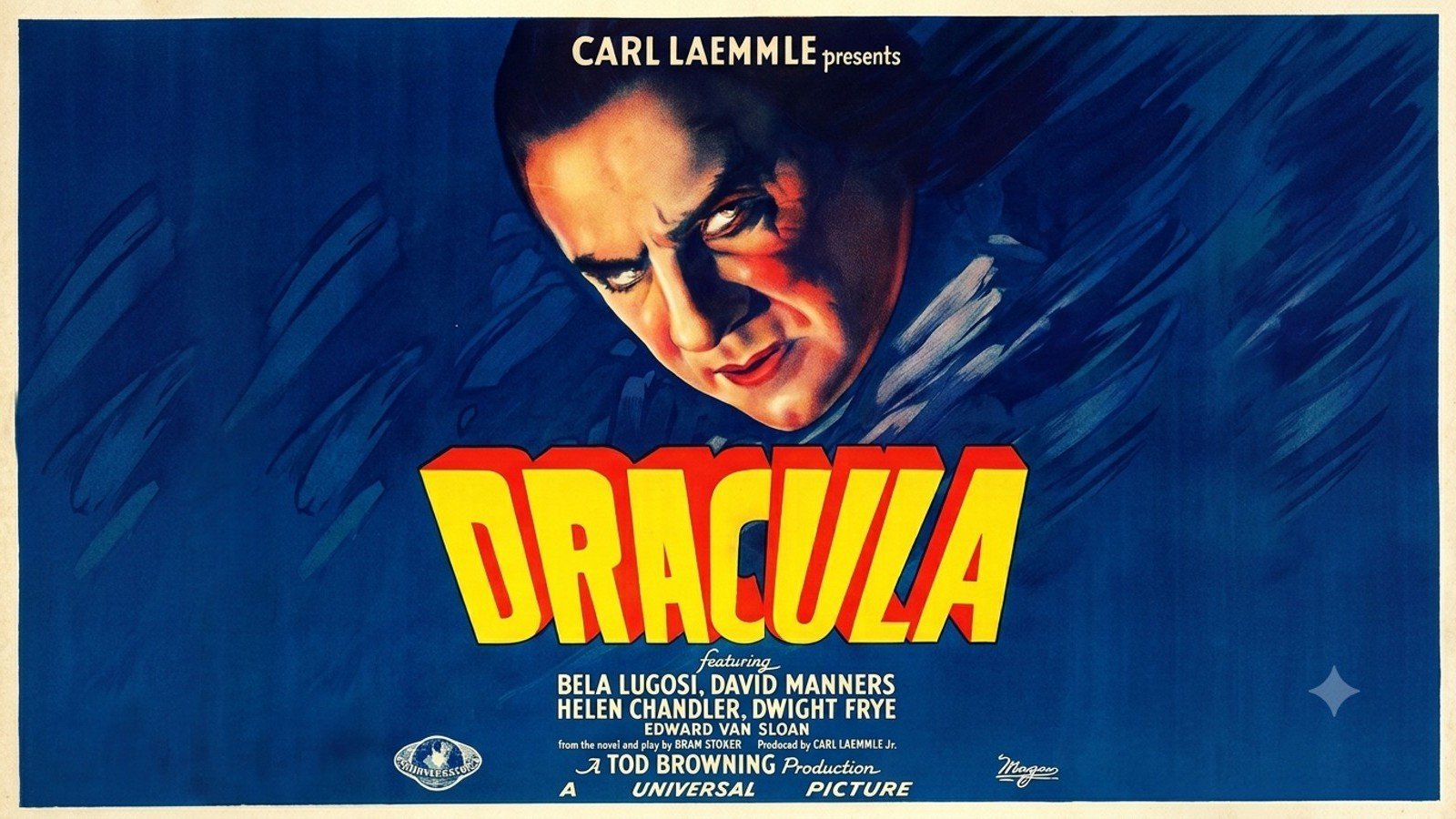
Dracula (1931)
Starring: Bela Lugosi, Helen Chandler, David Manners
Director: Todd Browning
Synopsis: One of horror's timeless classics... made a star out of Bela Lugosi
Reviewed by: Ali Khan
"brilliant moments" Time Out
"stuffy and stilted" Creature Features
"classic horror film" Maltin's
"atmospheric" Blockbuster Video
Universal's rendition of the Dracula story introduced audiences to a Count Dracula far removed from the grotesque Nosferatu image that had gone before it. Universal's Dracula remained the definitive version of Bram Stoker's classic novel until Hammer reinvented the character in the late 1950s and throughout the 1960s. However, the Universal version carries with it the advantage of following Stoker's novel far more closely than Hammer ever did. Extensive quotations from the book lend the film a welcome stamp of authenticity.
As mentioned, the storyline follows that of the novel quite closely. Dracula makes his way from Transylvania to London, where he succeeds in preying upon the city's inhabitants until his nemesis, Dr Van Helsing, finally confronts the great vampire.
Tod Browning, who also directed the excellent Freaks, was brought on board to helm Dracula for Universal. The film is tightly directed, and the first half in particular is wonderfully photographed, with the stark black-and-white imagery creating a striking visual contrast that perfectly complements the film's themes. In particular, look out for the first appearance of Dracula descending the staircase of his castle while Renfield has his back turned towards him.
The film is replete with atmosphere. There is very little musical score, but the swirling mists, shadowy figures and the wonderfully realised Castle Dracula combine to provide all the requisite ingredients of a fine vampire film. In contrast to many later interpretations, we even catch a glimpse of the Count's anguish when he remarks how "glorious it would be to be dead." The film moves along at a steady pace, although the climax is undeniably abrupt and rather disappointing.
Bela Lugosi is, at least for the first half of the film, a majestic Count Dracula. Far removed from the hideous visage of Max Schreck's Nosferatu, Lugosi's interpretation is suave, aristocratic and almost charming. As the film progresses, however, he begins to overplay the role, at times bordering on a parody of the character that would later become so familiar. Nevertheless, Dracula remains compulsive viewing and, until Coppola's adaptation, stood as the most faithful screen version of the Count.

0 Comments
Leave a Comment