
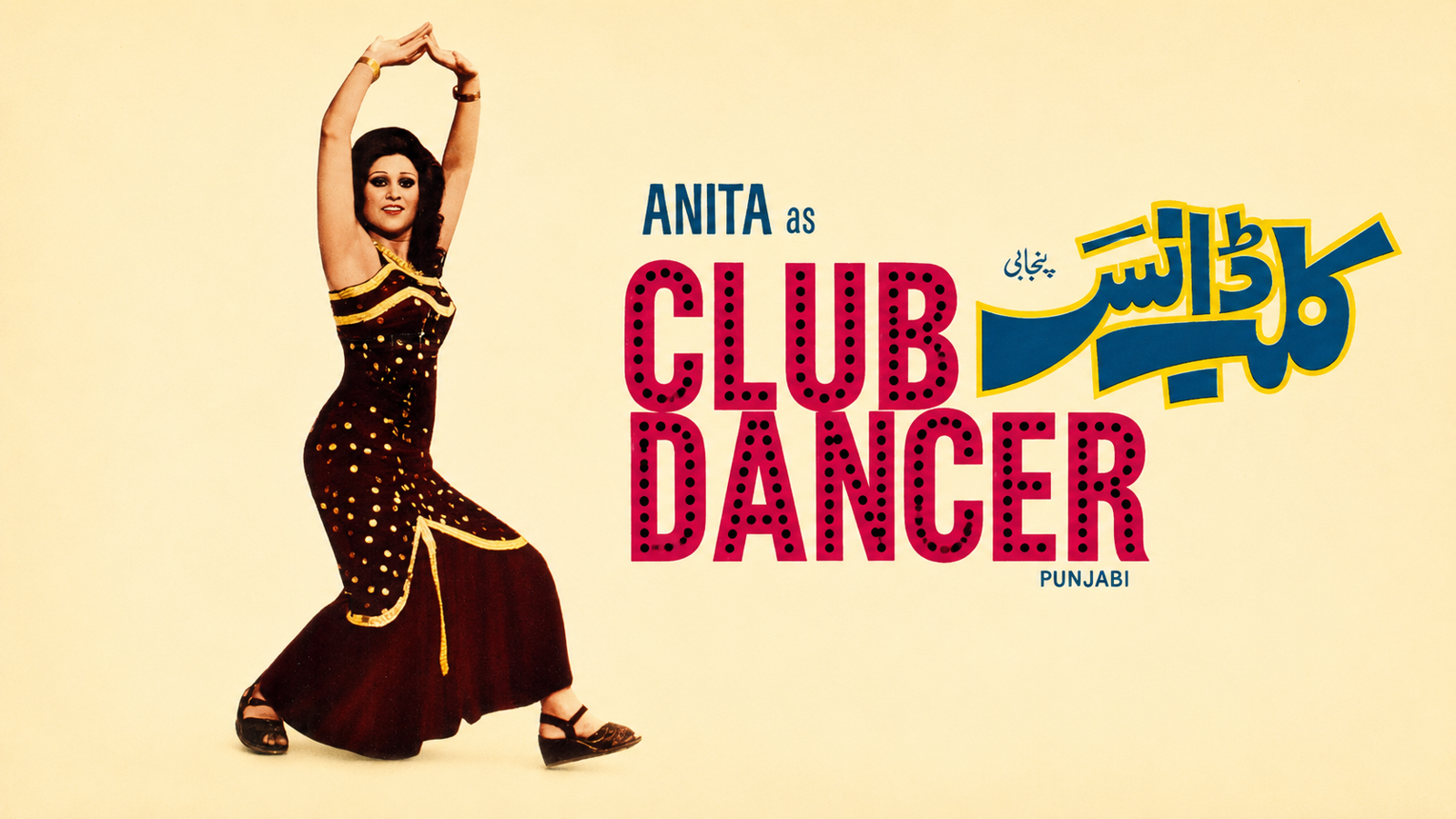
Dukki Tikki Aka Club Dancer (1976)
Cast: Aasia, Shahid, Nazli, Anita, Shahnawaz
Director: M. J. Rana
Synopsis: Comedy of mistaken identities ranks as one of the sleaziest cheap flicks from the sleazy ‘70s.
Reviewed by: Omar Khan
Pindi Wal, Khatarnaak, Khaufnaak, Dulhan Aik Raat Kii, Nawab Zada, Aaj da Badmaash, Malik Zada and Club Dancer rank among the most notorious films ever emerged from Lollywood. These films challenged censors like never before and brought new levels of smut and vulgarity to the forefront of the Lollywood age when the prohibition had not yet set in. The after-effects of the swinging ‘60s still reverberating.
Club Dancer is still in demand due to its famed notoriety, so we didn’t have much trouble getting hold of a copy on VHS. The film begins with the tale of two young sisters, Nimmo and Shummo, whose wicked stepmother is about to sell them off to a randy geriatric for five thousand rupees. They decide to escape the very next morning before the sale. On their way to the big bad city, the sisters are hounded by an ogreous tonga wallah, but rescued when a dashing young man with eye-catching sideburns (Shahid), arrives on the scene and saves the day.
The sisters con their way into getting a free room in a hotel owned by a moron and set about trying to get a job at Rangeela’s theatre. We learn that Shahid is the footloose and fancy-free son of the city’s wealthiest man (is shaher ka har Chhota bachcha jaanta hoon ke main Kaun hoon), the much-revered Chaudhry Manzoor.
One day on her way to work, Aasia gets a lift on the Chaudhry’s tonga, which results in all sorts of confusion—everyone reckons that she is the Chaudhry’s mistress and, thus, the ticket to their fortunes. Rangeela employs Aasia with an eye on cashing in, but little does he know she doesn’t even know who the Chaudhry is, and it’s all one big misunderstanding. However, the junior sister advises Aasia to play along with the story of being the Chaudhry’s muse lest their luck runs out.
Meanwhile, Aasia again comes across Shahid and mistakes him for being the editor of a popular weekly. And so basically, the film is a light-hearted comedy about mistaken identity, which is a formula Lollywood fare, so where does all the controversy and smut fit in?
A parallel subplot has nothing to do with Shahid and Aasia and all that mistaken identity stuff. This shady club is where hardened criminals and villains of the underworld gather nightly for their booze and entertainment. It primarily consists of watching scantily clad beauties thrust and twitch about the place like demented chickens.
One day, while the club’s beauties relax, down a few dozen pegs of VAT 69 and Black Label. Simultaneously puffing on their cigarettes as if their lives depended on it, they realize that one of their top-notch beauties, Anita, appears to be in an overly sombre mood. The Madame of the Club instructs her girls to discover why Anita remains tortured, and after much persuasion, she reveals her dark secrets.
Years ago, her father met with a dreadful fate: brutally murdered, and all his wealth and property usurped right in front of her very eyes. Yet she was so young that she couldn’t even recognize the killer but knew one old servant who certainly would identify the murderer. In an admirable show of solidarity, the girls swear to work together to
Dukki Tikki Aka Club Dancer discover the killer of Anita’s father and bring him to justice. The film director uses this subplot to insert a few sleazy dances along the way and the notorious scenes where the club-dancing babe entices the henchmen of the killers to their deaths, seducing them and slipping them some poison.
There are four enthralling scenes where the audience delights in watching the club dancers seduce a potential victim in their deadly clutches. Before the poison takes effect, she has to comply while he lifts her clothing to reveal her fruit of the looms, gropes and rubs the girl and sort of straddles and climbs all over her. It’s a stunningly lurid and almost gruesome sight watching these women (obvious sex workers) trying desperately to look like they are ecstatic. At the same time, some filthy slobbering mutant feels them up. It is most unedifying, to say the very least, and rather sad.
These sordid interludes aside, the story’s main thrust remains the comedy of errors and mistaken identities involving Aasia, Shahid, Rangeela and company. In contrast, this lame subplot involving the Club dancers is just thrown in to provide the cheapest thrills and some sordid titillation.
However, the most frustrating aspect is that the film ends without the club dancers reaching their aim. They even manage to discover the address of the murderer, which is a significant miracle because they spray their victims with bullets before demanding the information they need. You don’t extract info from your victims after killing them unless you have the intellect of a pea-brained club dancer.
So, the film ends before the club dancers even track down the murderer, and considering that the film’s title is what it is, it is a bit of a disappointment. Meanwhile, the other story involving the light comedy ends as it should be in Lollywood fairy tale style.
The makers of this monstrosity felt they needed to inject some filth into their product to sell it to the masses. They didn’t have enough faith in the comedy/romance element of the film and decided to risk the sleaze factor instead.
The songs are primarily painful, with the producers using the shrillest playback singer (Mala). Where was Madame Noor Jehan? The climax song (“kive guzray gi saari raat” (how will the whole night be spent?) is particularly foul, though the jungle dream sequence song Choom-Chamaka Bum-Bum-Baaka is poetic. The background score featuring a maniac on some tremendous sounding electronic organ is a fabulously frenzied accompaniment for events on screen.
Alas, it’s a rotten film, whichever way you view it. Still, it does retain a significant curiosity value and remains a landmark film in the history of Lollywood for all the wrong reasons.
Aasia does a reasonable job as Nimmo, while Shahid’s hairstyle and sideburns completely dominate his performance. No one else would stand a chance if there were an Oscar for Best Sideburns.
Anita is striking as the vengeful club dancer and is fabulous at the art of sleazy Lollywood gyrating. The other club dancers also impress, especially during the karate fight sequences, where they beat the crap out of some goons with consummate ease.
It is not a film to watch with the family, but one you must endure as a dedicated purveyor and admirer of the perversion known as the Lollywood “Saxy Type” film. One of the most glorious sub-genres was sadly obliterated with the arrival of General Zia’s hypocrisy-laden regime. These films were to thrive again after the infamous exploding mangoes did the dirty, and Pashto movies expanded into smut of the most incredible kind through the gloriously smutty 1990s.

0 Comments
Leave a Comment