
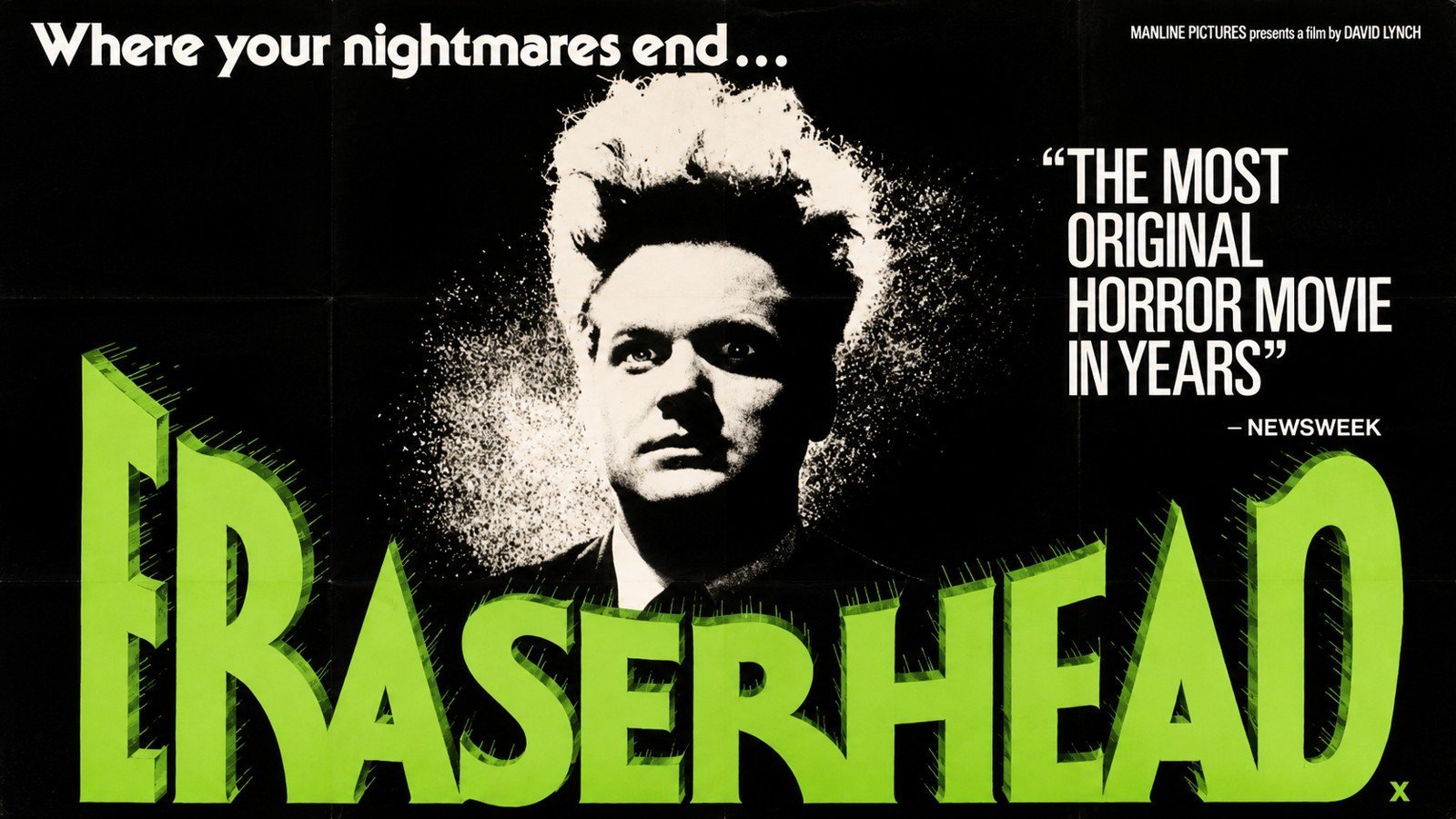
Eraserhead (1978)
Cast: Jack Nance, Charlotte Stewart, Jeanne Bates
Director: David Lynch
Synopsis: Along with Badlands, the most stunning debut film ever!
Reviewed by: Zeeshan Mahmud
“A dream of dark and troubling things.” — David Lynch
Without a moment's doubt, Eraserhead is one of the most original works in cinema. Jack Nance stars as Henry, a troubled man living a hellish nightmare, possibly post-apocalyptic, conceived by David Lynch. The world of Eraserhead is a terrifying, dreadfully bleak landscape bordering on surrealism and the darkest recesses of the imagination. Beneath its nightmarish surface, however, the film is fundamentally about the fears of fatherhood and the inability to cope with the responsibility that accompanies it.
Ever compliant, Henry scarcely utters more than a simple "yes" after his girlfriend informs him of her pregnancy and asks him to marry her. The marriage quickly begins to disintegrate once the baby is born. It is almost impossible to describe the infant, but imagine an enormous skinned and grotesquely deformed lamb-like creature. The baby is so hideous and so profoundly unsettling that, even decades later, few films have produced a screen monster more disturbing than the one Lynch created. It scarcely stops its agonising cries and, just as the audience is gradually driven to distraction by its incessant wailing, so too is Henry.
Descending slowly into intolerance and apathy, Henry finds that all of his nightmares have become reality, while his dreams transport him to a strange heaven where a woman sings, in a hauntingly emotive voice, "In Heaven, everything is fine."
Lynch demonstrates that true horror is not a man in a hockey mask or some undead beast. Real horror lies in doors left slightly ajar, pregnant with terrifying possibility; in cries that make even a banshee sound almost soothing by comparison; and in the overwhelming sense of dread radiating from something as ordinary as a radiator. Lynch taps into something utterly unknown and profoundly alien, creating an atmosphere in which anxiety and unease become almost instinctive. The film does not simply present isolated moments of terror but, in several extraordinary sequences, reveals the astonishing breadth of Lynch's cosmic imagination.
Eraserhead is deeply atmospheric, intensely unsettling and, at times, alarmingly beautiful. Lynch has never truly equalled the tour de force he accomplished here. Art students in particular should seek out Eraserhead, if only to study its extraordinary visual design. The lighting alone gives the film remarkable depth, with Lynch constantly playing foreground against background to create hauntingly layered compositions.
When the lights finally come up and the film's last phantasmagorical image has faded, you will almost certainly be left wondering what it all meant. Yet perhaps solving the intricate riddle of Eraserhead is less important than simply witnessing a uniquely gifted artist at work. Interpretations have always varied and Lynch himself famously refused to explain the film. In many ways, that mystery is precisely what makes Eraserhead so enduring.

0 Comments
Leave a Comment