
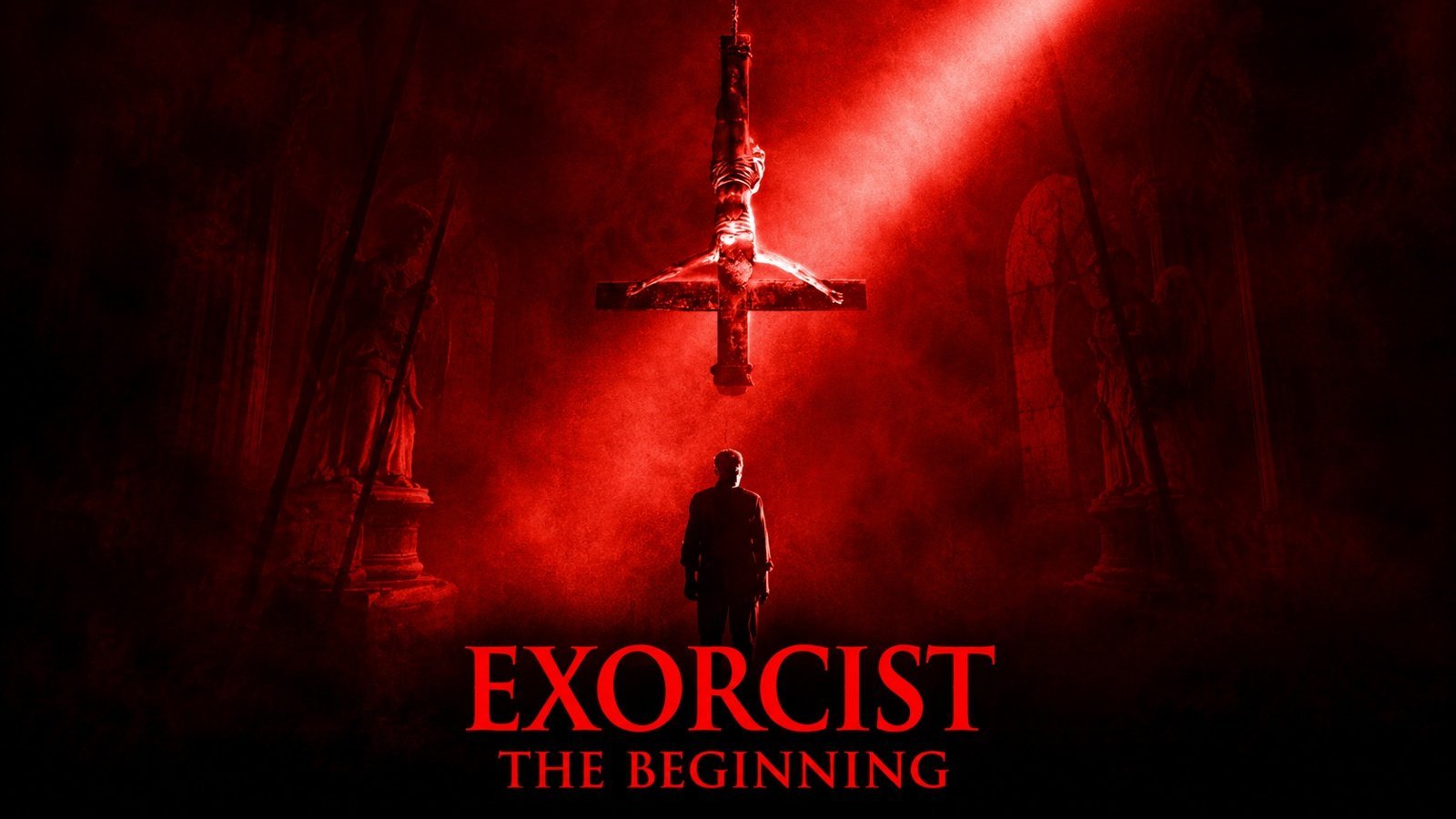
Exorcist: The Beginning (2004)
Starring: Stellan Skarsgård, Izabella Scorupco, James D'Arcy, Alan Ford, Julian Wadham, Andrew French, Eddie Osei, Ben Cross, Patrick O'Kane
Director: Renny Harlin
Synopsis: Morgan Creek feels the need to make millions from their Brand but hasn’t a clue how to go about it!
Reviewed by: Omar Khan
Morgan Creek, keen—read desperate—to fleece the Exorcist brand for every last dollar, had originally bankrolled a prequel directed by Paul Schrader of Taxi Driver and Hardcore fame. The studio was horrified by the slow-burning, brooding film he delivered, viewing it as box-office suicide. The plug was pulled, the project effectively abandoned, and Renny Harlin of Die Hard 2 fame was brought in to start again from scratch.
The intention was never to do justice to the franchise. It was simply to squeeze as much money as possible from one of horror's greatest names.
Harlin was given free rein to deliver precisely the sort of film the studio believed audiences wanted—more booming voices, more bed shaking, more forked tongues, more spider-walking, more demonic mayhem and enough jump scares to send audiences scurrying back to the cinemas, just as they had done when William Friedkin's original exploded onto screens in late 1973.
The scale of The Exorcist's original success is almost impossible to comprehend today. Looking through an issue of the trade magazine Boxoffice from early 1974 tells its own remarkable story. A film doing solid business would typically receive a rating of around 100. Exceptional performers might climb to 200, 300 or even 400.
The Exorcist?
It received a staggering rating of 1250 – and was a month or two after its initial release.
House records fell wherever the film opened. It became an uncontrollable worldwide phenomenon and remains, in real terms, the most successful horror film ever made. Modern titles such as The Conjuring or The Sixth Sense may appear to rival it once inflation is taken into account, but the cultural impact and sheer scale of The Exorcist's original run remain unmatched.
Morgan Creek understandably looked at those figures and saw dollar signs.
Harlin responded with an expensive-looking supernatural adventure set in Kenya during the Second World War, placing Pazuzu firmly at the centre of proceedings. Spectacle rather than psychology became the order of the day.
Here we find Father Merrin suffering yet another crisis of faith and insisting on being known simply as Mister Merrin. He arrives in Kenya to investigate strange occurrences surrounding an ancient church built directly upon ground long associated with Pazuzu. The original missionaries had apparently believed that erecting a church over the site would suppress the demonic forces beneath it.
Needless to say, they were mistaken.
The surrounding landscape is populated by CGI hyenas, flesh-eating crows and all manner of supernatural horrors. The local Kenyans understand perfectly well what lurks beneath the earth, while the colonial authorities dismiss it all as primitive superstition. Merrin excavates beneath the church and discovers the ancient evil that will eventually become his greatest adversary in Friedkin's original film.
Clearly, these two have history.
As Merrin slowly realises that only renewed faith can overcome the darkness, the film builds towards the inevitable confrontation between sanctity and Pazuzu. Once the finale arrives, subtlety is abandoned altogether. Sandstorms rage, walls shake, demons roar, bodies fly through the air, and every conceivable supernatural effect is hurled at the audience before Merrin finally rediscovers his calling as Father Merrin.
Morgan Creek genuinely believed this was the film that would restore the franchise after two disappointing sequels.
Exorcist II: The Heretic had opened to enormous business purely on the strength of the title before collapsing spectacularly once word spread that audiences were laughing at it rather than screaming. Few major releases in cinema history have suffered such a dramatic second-week collapse. The damage inflicted upon the brand was immense.
Although Exorcist III was by far the worthier successor to Friedkin's masterpiece and William Peter Blatty's intended continuation of the story, it too arrived in a world that had largely moved on. By then, demonic horror had become commonplace, and the ferocious entities of The Evil Dead series had effectively replaced Pazuzu as horror's reigning demon.
There was simply no turning the clock back.
Exorcist: The Beginning recovered much of its considerable production cost thanks to curiosity and the enduring power of the franchise, but it never generated the profits Morgan Creek had hoped for. In an extraordinary twist, the studio then released Schrader's discarded version as Dominion: Prequel to the Exorcist. Critics generally preferred Schrader's more thoughtful approach, but audiences largely stayed away, and that experiment fared little better commercially.
Fast forward another twenty years and the franchise received yet another attempted resurrection.
The Exorcist: Believer proved an even greater catastrophe. Fans and critics united in their disappointment, and Universal's ambitious plans for an entire trilogy were swiftly abandoned.
Now Mike Flanagan has been handed the unenviable task of attempting yet another reboot, currently scheduled for release in 2027.
I wish him luck.
But I wouldn't hold my breath.
The genie escaped the bottle only once.
You can always find another bottle.
You'll never capture that same genie again.

0 Comments
Leave a Comment