
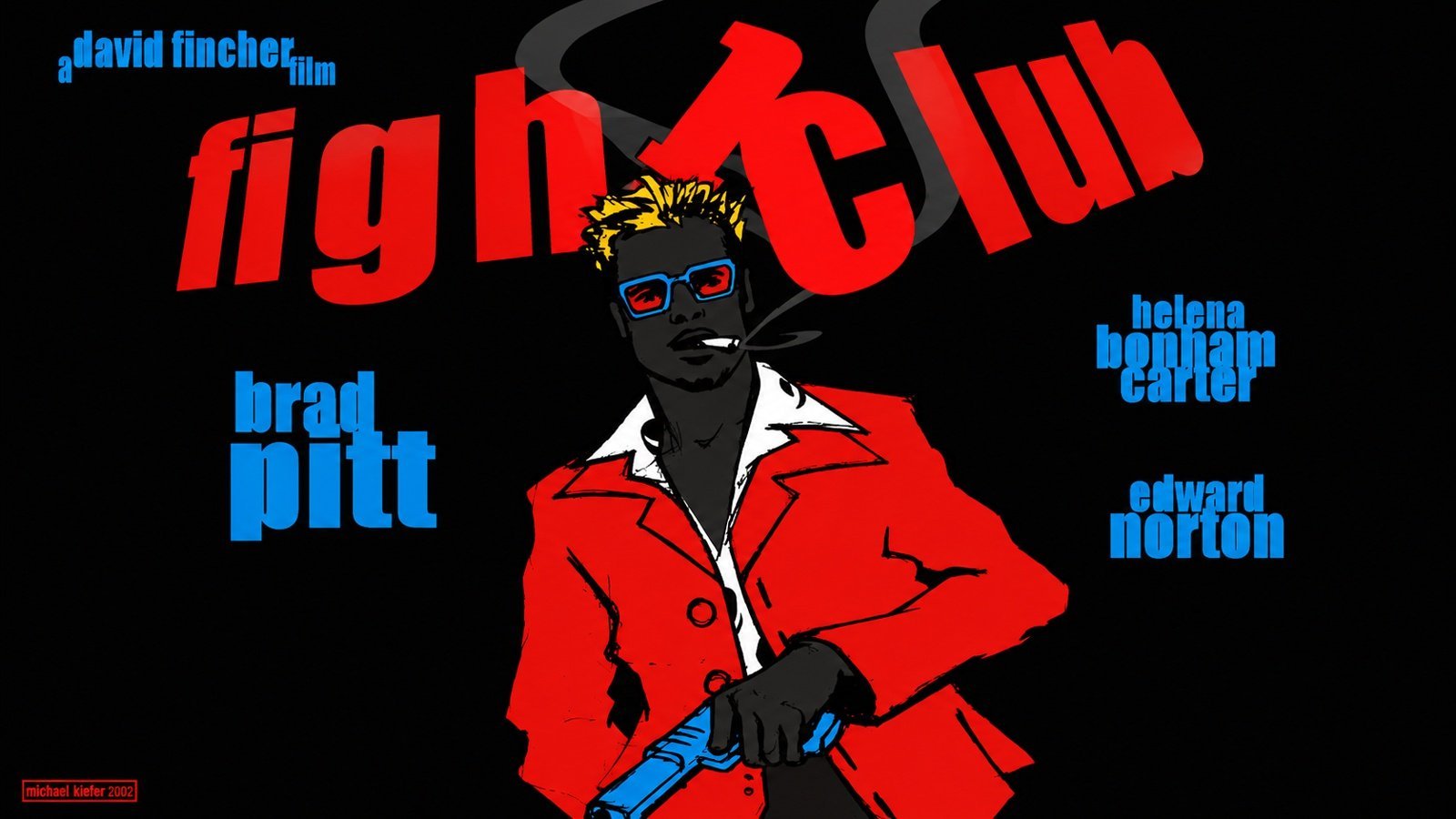
Fight Club (1999)
Cast: Brad Pitt, Edward Norton, Helena Bonham Carter, Jared Leto, Meat Loaf
Director: David Fincher
Synopsis: Best Film Ever? Perhaps, perhaps not....see it now, debate later!
Reviewed by: Zeeshan Mahmud
Based on Chuck Palahniuk's groundbreaking novel of the same name, Fight Club is one of the strongest social statements ever made in cinema. Somewhat the foster child of A Clockwork Orange, Fight Club creates purpose behind every punch thrown and every kick delivered. Where A Clockwork Orange was about Alex and society, Fight Club is about every man and society. If violence is a language, Fight Club speaks it as eloquently as Kubrick's masterpiece. Brad Pitt and Edward Norton deliver performances that would have made Stanley Kubrick proud. Fight Club doesn't have just one message. It is almost a religion for the disillusioned modern man. It doesn't simply bring the house down—it bombs it, then shits on the ruins.
A tormented insomniac finds a bizarre cure for his sleeplessness by attending support groups for the terminally ill. Only after crying alongside strangers can he finally sleep. Seeking contentment and completion, the unnamed narrator (Edward Norton) has devoted himself to furnishing his condominium with every conceivable extravagance, transforming it into the perfect catalogue home. Unknown to him, his attachment to these possessions only deepens his emptiness as he sinks ever further into a consumerism he neither recognises nor understands.
Everything changes when he meets Tyler Durden (Brad Pitt), a charismatic soap salesman he encounters on a flight. Together they create an alternative kind of support group—one where men beat each other senseless. Fight Club grows with each blood-soaked night, evolving into an underground anarchist movement. Caught between Tyler and the emotionally damaged Marla Singer (Helena Bonham Carter), the narrator once again finds himself reduced to a cog in someone else's far grander design.
Fight Club is exactly the sort of film that should never have been made by a major Hollywood studio, and perhaps the only reason it exists is because of the passion that both the actors and David Fincher had for Palahniuk's extraordinary novel. The performances are so riveting that you scarcely dare blink. The humour is so black it leaves third-degree burns. The screenplay is so intelligent that it threatens to turn every schmuck into a philosopher. Yet for all its dazzling visual invention and astonishing set-pieces, the film never allows style to overwhelm substance or performance.
Palahniuk himself was delighted with the adaptation despite the inevitable changes from the novel, and his commentary track on the DVD offers fascinating insight into the process. Just when audiences thought David Fincher could not possibly surpass Se7en and The Game, he delivered the film against which every intelligent psychological thriller since has inevitably been measured.
Few films have produced so many unforgettable lines of dialogue. Long after the credits roll, you'll find yourself quoting Fight Club, only stopping when everyone else has grown tired of hearing them.
The first time you watch Fight Club, you are overwhelmed by its construction and its revelations. The second viewing is even richer as the hidden patterns begin to emerge and Tyler's philosophy becomes darker, funnier and more subversive. Every subsequent viewing uncovers yet another layer.
The only real reservation concerns the ending, which never quite works on every level and differs significantly from Palahniuk's original novel. Some critics claimed that Brad Pitt brought in a script doctor to strengthen Tyler Durden's character but, judging purely by the finished result, one can only be impressed. Whether Fight Club might have become an even greater film with a smaller budget and unknown actors is impossible to answer.
All we can judge is what finally appeared on the screen—and what appeared is one of the greatest films ever made.

0 Comments
Leave a Comment