
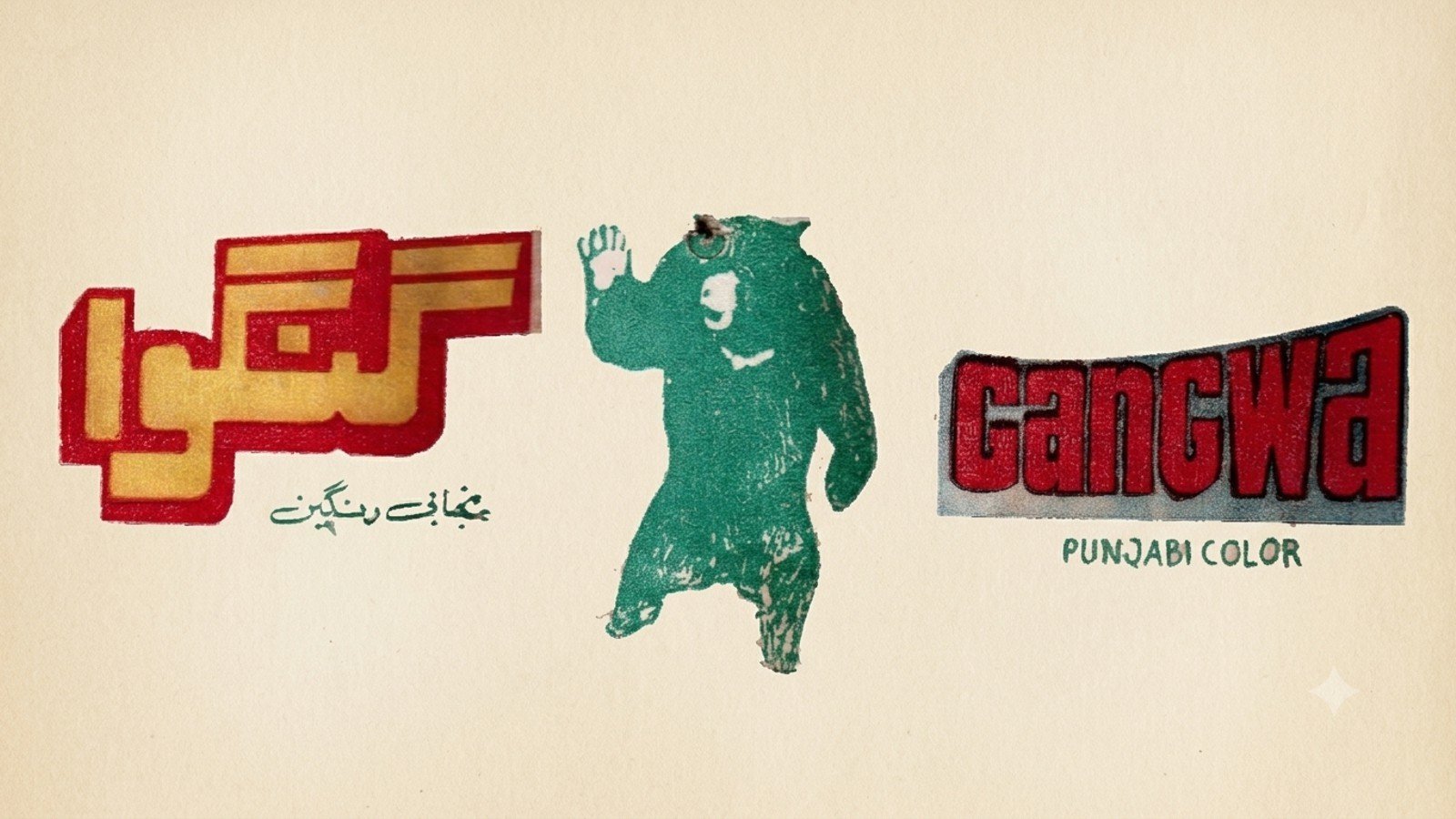
Gangwa (1991)
Cast: Mumtaz, Ghulam Mohiuddin, Tanzeem Hassan, Bahar, Ilyas Kashmiri, Zahir Shah, Nasrullah Butt, Jaggi Malik, Altaf Khan, Iqbal Durrani
Director: Arshad Mirza
Synopsis: Classic D Grade KC Bokadia Classic Teri Mehrebaniyan earns itself a typically demented Punjabi Lollywood version. Utterly diabolical.
Reviewed by: Omar Khan
This movie Gangwa had been on the radar and the “Must watch” list for a while now, especially as it turns out it was a follow-up to the directors’ initial “animal” classic “Chan Heera” featuring a prehistoric chimpanzee.
The film was popular with the ladies due to its heavy emotional content and its heavy emotional scenes. One where the Chimp is sobbing as he gives his human sister’s hand away in marriage is sublime— all rather charming and bewildering, considering how animals are regarded and treated in these parts.
Arshad Mirza, buoyed by the accolades and profit made by Chan Heera egged on by eager financers, signed on to follow the earlier classic with a new animal-oriented film and this time, they would borrow the basic plot and main theme song from Teri Mehrebaniyan which had been a surprise hit in the 1980s, a time when Bollywood was producing either art or crap cinema, with the crap being represented by the Kader Khan brand of movies as well as the hideous “Disco” movies of Mithun, Govinda and co. The Darkest days of
Bollywood were finally rescued by the arrival of Qayamat Se Qayamat Tak, which saved Bollywood from the dregs it had become.
Gangwa stars Ghulam Mohiuddin at his loudest and most boisterous Punjabi mode, along with Mumtaz, who by the 1990s was not the pretty vivacious Brenda Vaccaro-like anti-heroine who had bombed Lollywood with her sexy manner and croaky voice in the early ‘70s. Also in the mix is Malka e Jazbaat, Bahar, once again at her most vociferous Punjabi Crazed vengeful mother mode – a role she could have played in her sleep. It was demanded of her over and over again a million times.
Veteran Ilyas Kashmiri is there shouting as loud as his ageing lungs allow, Zahir Shah, another one known for bombast and booming dialogue delivery, and the usual thugs and villains in Nasrullah Butt, Juggi Malik etc. All familiar Lollywood faces are the kind that plays the same role in every film they appear in.
And so, the scene is that Rangi, a much-loved pillar of the village community and a hardworking, earnest farmer, has just gotten married to his sweetheart. The marriage night fun is interrupted by his beloved pet, Bear Gangwa, who is as devoted as the bear is to him. They are like brothers, much to the irritation of the new wife who yearns for some attention for herself. She is jealous of her husband spending more time with his bear than with her.
One day, driven slightly mad by her unfulfilled sexual desire, she gives her husband an ultimatum: wife or bear? When he refuses to part with his bear, she troops off in a rage and, on the way, is accosted by several brightly coloured and very loud, fat goons. They laugh
Gangwa heartily in typically villainous style for a good five minutes before making their lecherous intentions very clear.
As righteous Punjabi girls do, the wife gives as good as she gets and refuses to budge, but she has no chance when met with brute force. Fortunately, from the skies, like a phantom, arrives Gangwa in full-on beast mode and leaps onto each of the goons, tearing into them mercilessly while the damsel in distress chirps away in delight. After that day, she promises to love and care for Gangwa like her husband.
Life is initially blissful, but the arrival of some more goons from the adjacent village shatters the calm. These thugs have a beef with
Rangi’s lot and aim to usurp their land illegally. So an ugly standoff occurs with the usual posturing and shouting followed by long, drawnout fight scenes, which often involve Gangwa arriving in the nick of time to save the day. Bloodshed and Mayhem follow as Rangi is murdered along with several others, leaving a grieving Bahar with a young child that is subsequently groomed and brought up by Gangwa himself to grow up into the fine upright and incredibly handsome Ghulam Mohiuddin. Like most Pakistani Punjabi films, revenge is on everyone’s mind; it drives and motivates them. It’s the way Lollywood Punjabi films are.
Every person has something or someone to avenge: widows, daughters, sons, pets, mothers, you name it…everybody is out for blood, and they have to shout a hell of a lot to let everybody know just how bloody pissed off they are.
So, the film proceeds with scenarios of goons confronting goons, shouting fancily written, ridiculous OTT vengeful couplets to each other (much like a Rap dissing session), pulling out their guns (which rarely hit their targets) and then pulverising one another to a pulp with Gangwa often arriving to make his presence felt. After this, you will have the village belle with the hots for our young vengeful hero, Ghulam Mohiuddin, springing out of nowhere to sing and dance for a bit before we hit the next confrontational shouting match that leads to a protracted ten-minute fight scene and intervention by Gangwa, another song which is followed by the mother taking up her gun and taking on the goons, then another confrontation, more fights, another song, more fights until you reach the obligatory running time of more than 2 hours and finally the bad guys die and don’t get to walk away for another day.
In between, you have emotionally charged flashback scenes with the angels singing at the top of their voices, reminiscing of days of joy when Rangi, his lovely wife, and Gangwa would frolic together and go out for a picnic and generally hang out together lovingly like the perfect family. The Teri Meherbaniyan song is repeated each time we have these loving flashbacks designed to release a flood of tears from an emotionally charged audience.
After half an hour of the film, you know exactly what’s coming for the remainder. The cycle of song, confrontation, fight, mother shouting scene, song, confrontation, fight, tearful flashbacks, song, quarrel, fight, mother shouting scene, flashbacks goes on until the end, and the torture session is over.
It pretty much sums up this monstrosity of a movie in a nutshell. The other aspect of the film is that it unintentionally highlights the
Gangwa plight of the bears in Pakistan, who are used for the worst form of exploitation and tortured, starved and beaten. Their teeth are removed to perform like idiots and earn money for their captors. It’s the worst indignity and slavery and exploitation and is seen as the norm in our society. Fortunately, things are starting to change. A law in place (which nobody is aware of yet) entitles a criminal case to be made against anyone mistreating animals in Pakistan. Bear baiting is an old subject in Pakistan and these parts. The bears must be left alone to live in their natural habitat, NOT forcibly dragged to villages and cities to be stripped of their dignity and exploited as slaves. Beaten, starved and ultimately discarded to die when they cannot “perform”.
Though Gangwa attempts to depict animals positively, it misses the point by a mile, even if the attempt at showing the bear taking part in a “Dhamaal” somehow tries to justify the bear being manacled and exploited as he is. Not comfortable viewing for somebody concerned about how humans treat animals in society generally. Also, giving them the worst human attributes, such as revenge, is typical of us humans. Animals don’t usually keep grudges; humans do.
There is another thought, why would a film featuring a dog (relatively more compliant and manageable than a bear) be remade as a film with a far less expressive and human-friendly and dangerous animal such as a bear? The answer lies probably in religious norms, and there are differing views on this subject depending on your interpretation of the holy edicts. Dogs in Pakistan have issues; thus, the decision had to be taken to axe the dog and instead have a bear appear as the film’s top star.
A bear with all its teeth forcibly extracted, a bear in manacles, a bear who is beaten and starved until it performs. A bear who has no life at all nor any choice in any matter at all. A bear who is probably better off dead.


0 Comments
Leave a Comment