
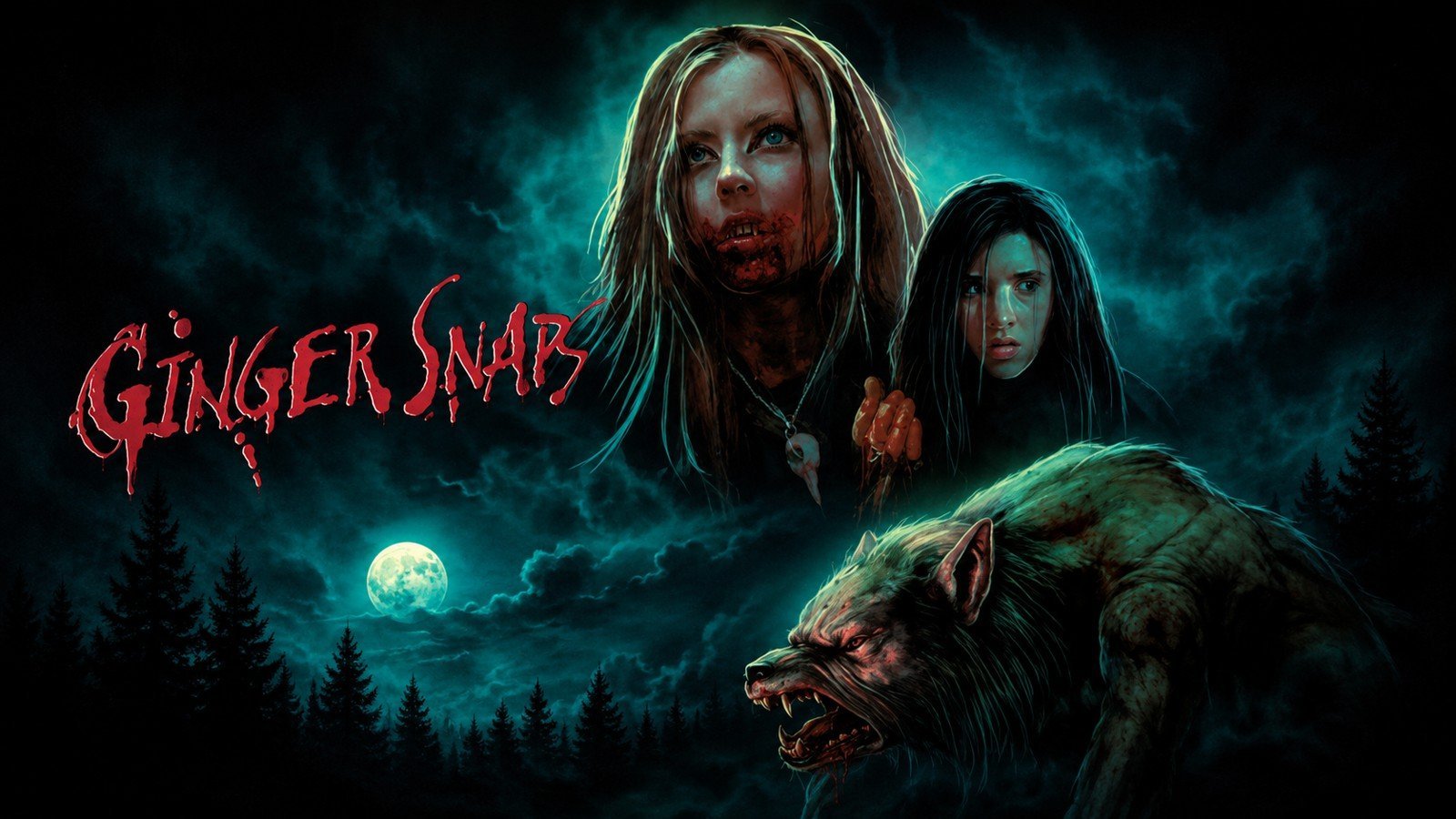
Ginger Snaps (2001)
Starring: Katharine Isabelle, Emily Perkins, Mimi Rogers
Director: John Fawcett
Synopsis: New and vibrant life breathed into werewolf genre
Reviewed by: Omar Khan
The werewolf film had been limping along for years following the remarkable run of lupine classics during the late 1970s and early 1980s. The Howling, An American Werewolf in London and the less celebrated but highly impressive Wolfen had seemingly exhausted the genre's creative possibilities. What followed were increasingly desperate attempts to keep the beast alive, from the wretched An American Werewolf in Paris to the seemingly endless procession of Howling sequels, each one more embarrassing than the last.
The poor old wolf had well and truly lost its bite.
Then along came Ginger Snaps.
Like the Japanese Ring films before it, Ginger Snaps demonstrated that horror could still breathe new life into familiar material through intelligence rather than spectacle.
Brigitte and Ginger are two teenage sisters who exist almost entirely within their own private world. Socially awkward, fiercely intelligent and openly contemptuous of the shallow suburban teenage lifestyle surrounding them, the sisters amuse themselves by staging elaborate photographs of grotesque deaths and suicides, revelling in all things morbid and macabre.
Ginger, the elder of the two, is confident, rebellious and very much the dominant influence upon her younger sister.
Meanwhile, the quiet Canadian town in which they live is being stalked by a savage creature responsible for slaughtering the local dogs.
The sisters' lives change forever when Ginger is attacked by the mysterious beast shortly after experiencing her first menstrual period. Although horrifically wounded, she recovers with astonishing speed. Unfortunately, the healing brings with it a series of deeply disturbing changes.
Hair begins sprouting from her wounds.
A distinctive white streak appears in her hair.
Her teeth sharpen.
Her fingernails harden into claws.
She develops an insatiable appetite for raw meat.
As Ginger's transformation accelerates, Brigitte desperately searches for a cure before her sister loses what little humanity remains.
Director John Fawcett succeeds where so many modern horror filmmakers have failed by updating a classic monster without sacrificing the essence of the legend. Gone are the mist-shrouded forests of Eastern Europe and the lonely English moors, replaced instead by an anonymous Canadian suburb where the supernatural quietly invades ordinary teenage life.
Equally clever is the film's decision to reinterpret traditional werewolf mythology through the language of infection, disease and biology, allowing ancient folklore to coexist naturally within a thoroughly contemporary setting.
Most importantly, the central monster is female.
Rather than relying primarily upon elaborate special effects, Ginger Snaps builds itself around the wonderfully observed relationship between the two sisters. Their affection, dependence and growing emotional separation give the story genuine dramatic weight, making the horror all the more effective when tragedy inevitably arrives.
The decision to parallel Ginger's lycanthropic transformation with puberty proves particularly inspired. Physical maturity, emerging sexuality and bodily change become inseparable from the horror itself, creating one of the most intelligent metaphors the genre has produced in many years.
This is not a film built around constant shocks.
Instead, it burns slowly, generating an atmosphere of mounting unease that lingers throughout before building towards a genuinely powerful and surprisingly moving climax. There is certainly enough blood and gore to satisfy dedicated horror fans, but the real strength of the film lies in its growing sense of inevitability. Like the finest werewolf stories before it, Ginger Snaps ultimately ends not with triumph but with sadness.
Melancholy has always been one of the defining characteristics of the best werewolf films, and this one understands that perfectly.
With Ginger Snaps, the werewolf finally emerged from years of cinematic hibernation.
The beast had rediscovered its teeth.
More importantly, it had once again become something genuinely worth fearing.
0 Comments
Leave a Comment