
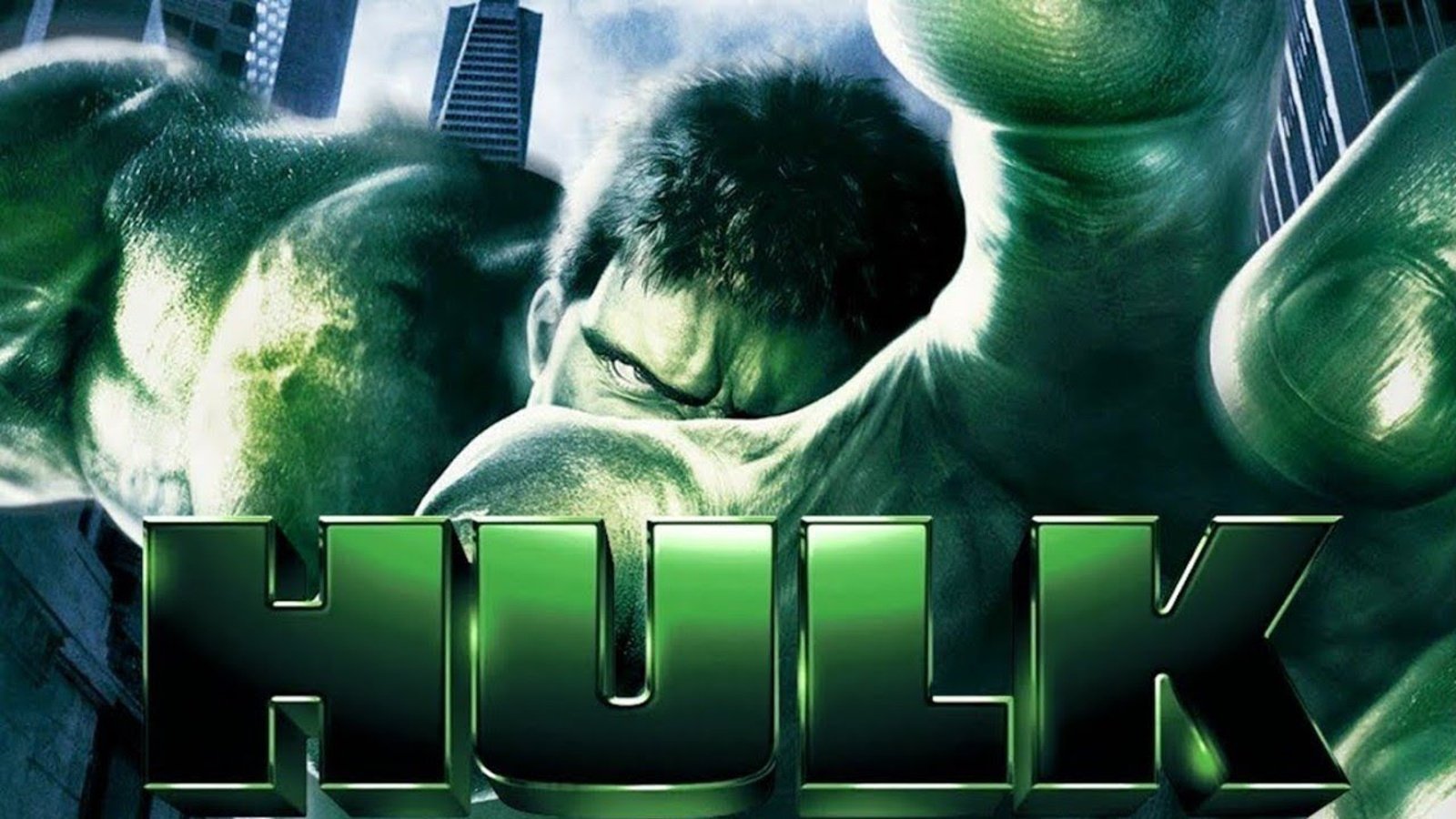
Hulk, The (2003)
Cast: Eric Bana, Jennifer Connely, Nick Nolte
Director: Ang Lee
Synopsis: Marvel comics’ Hulk gets the Ang Lee treatment with disappointing results.
Reviewed by: Ali Khan
Hulk (2003)
Driven scientist David Banner is working on a government-funded project designed to boost the human immune system. Unfortunately, the authorities refuse to sanction human trials, prompting Banner to take matters into his own hands by injecting himself with his untested serum. Months later, he becomes the father of a baby boy who begins exhibiting disturbing signs that his father's mutated DNA has been passed on.
More concerned with the implications of his experiment than with the welfare of his son, Banner gradually descends into madness when the government finally shuts down his research. Something terrible occurs at the base as a direct consequence of Banner's obsession, and the film then leaps forward many years to Banner's son, Bruce, now working as a scientist in an independent laboratory. Along the way we learn that Bruce was placed with another family after the incident and raised believing that both his parents had died in an accident.
As if guided by fate, Bruce finds himself working on an immune system programme remarkably similar to the one his father had devoted his life to. He also suffers from deep emotional scars, haunted by repressed memories of the traumatic events surrounding his childhood. Those buried emotions have played a major role in the breakdown of his relationship with fellow scientist Betty Ross.
Unfortunately for Bruce Banner, matters soon deteriorate further. While saving a laboratory assistant, he is exposed to a massive dose of gamma radiation and subsequently discovers that whenever anger overwhelms him, he undergoes an extraordinary transformation into a gigantic green behemoth known as the Hulk. Matters become even more complicated when his estranged—and highly unstable—father suddenly reappears, while the military, recognising the Hulk's destructive potential, become determined to harness him as the ultimate weapon of mass destruction. Much mayhem, soul-searching and emotional turmoil follow.
When fans first heard that Ang Lee had been chosen to direct Marvel's adaptation of The Hulk, expectations understandably soared. Here was the director of the magnificent Crouching Tiger, Hidden Dragon, a filmmaker capable of marrying breathtaking visual spectacle with genuine human drama. Who better, it seemed, to tackle one of Marvel's flagship characters?
As a comic-book creation, the Hulk actually predates Spider-Man, both characters having debuted in 1962. Stan Lee's creation was essentially a fusion of Dr. Jekyll and Mr. Hyde, Frankenstein and King Kong. Bruce Banner's suppressed rage manifests itself as a colossal creature of immense strength and destructive power. Yet the Hulk is never truly evil. Like Frankenstein's monster, he is a victim, feared and persecuted because of his appearance and abilities, provoking destruction largely because humanity refuses to understand him.
It is precisely this emotional conflict that attracted Ang Lee to the project. Unfortunately, while he attempts to place those psychological themes front and centre, he ultimately achieves the opposite. Rather than enriching the material, the introspection overwhelms it, resulting in a heavy, unwieldy and often ponderous film that takes almost fifty minutes before the audience is finally introduced to the Hulk himself.
Compounding the problem is Lee's determination to juggle an extraordinary number of subplots. There is Bruce Banner's emotional repression and tortured relationship with his father. Then we have Betty Ross and her own estrangement from General Ross. Finally, there is Bruce and Betty's fragile relationship, complicated further by the existence of the Hulk. With so many narrative strands competing for attention, Lee is unable to do full justice to any of them. One can only assume that, buoyed by the artistic success of Crouching Tiger, Hidden Dragon, he simply failed to recognise the structural weaknesses that plague this screenplay.
There is also a surprising absence of humour throughout the film. More importantly, whatever emotional impact should have emerged is dissipated by the clutter of competing storylines. Stan Lee always portrayed the Hulk as the victim, inviting sympathy for a creature relentlessly hunted and misunderstood. Ang Lee never quite captures that essential tragedy. When the military pursue the Hulk, the sequences become little more than large-scale action set pieces. The emotional core is strangely absent.
Perhaps the film's greatest failing lies in its treatment of Bruce Banner and the Hulk as though they were almost entirely separate characters. We spend considerable time inside Bruce Banner's troubled mind, yet barely scratch the surface of what the Hulk himself is feeling. Surely the real fascination lies in the conflict between the two—the monster desperate to escape while the man trapped within desperately tries to regain control. That battle is barely explored.
The visual effects attracted a fair amount of criticism upon release but, compared with the screenplay's shortcomings, they are relatively minor concerns. In truth, the CGI is perfectly respectable, although any fifteen-foot emerald giant is inevitably going to appear somewhat artificial. More importantly, Lee succeeds in conveying the Hulk's overwhelming physical power. The enormous leaps across the landscape are tremendous fun, while the confrontation with the military tanks and the sequence involving the destruction of cars rank among the film's genuine highlights. Unfortunately, two of the major action scenes occur almost entirely at night, making it frustratingly difficult to appreciate exactly what is happening amidst the darkness.
The film also suffers from the absence of a truly worthy antagonist. The Hulk spends much of the running time battling soldiers and military hardware rather than an opponent capable of matching him physically or psychologically. One suspects that the inevitable sequel would address that problem by introducing a more formidable nemesis.
Performance-wise, Eric Bana is somewhat handicapped by the screenplay. Bruce Banner and the Hulk feel like two disconnected entities rather than two sides of the same tormented personality, leaving Bana unable to fully explore the role's dramatic potential. Jennifer Connelly, however, brings intelligence, warmth and understated beauty to Betty Ross, emerging as the film's strongest asset. Nick Nolte throws himself wholeheartedly into the role of David Banner, making the most of a fascinating character, even if the screenplay ultimately fails to deliver the emotional payoff that his performance deserves.
Sam Raimi approached Spider-Man by remaining faithful to the comic's spirit while constructing an entertaining and emotionally satisfying origin story. Ang Lee, by contrast, has overcomplicated the Hulk's origins and produced one sprawling, rather muddled spectacle. Even younger audiences are likely to become impatient with the lengthy stretches of introspection and the relative shortage of action.
In the final analysis, Hulk emerges as one of the weakest entries in Marvel's modern cycle of comic-book adaptations—a hugely ambitious film that mistakes weight for depth and introspection for drama. It is an expensive misfire. Let us hope that the inevitable sequel manages to salvage what Ang Lee could not.
0 Comments
Leave a Comment