Psycho (1959)
Starring: Anthony Perkins, Janet Leigh, Martin Balsam, Vera Miles
Director: Alfred Hitchcock
Synopsis: Arguably the greatest ever horror film
Reviewed by: Shaharyar M Khan
If Vertigo was Hitchcock's masterpiece, Psycho was only a whisker behind and certainly his greatest popular success. Made in black and white, Psycho has since achieved both fame and cult status as the ultimate horror film. Countless books have been written about it, and I have never known an audience gasp so audibly with shock as they do during Psycho.
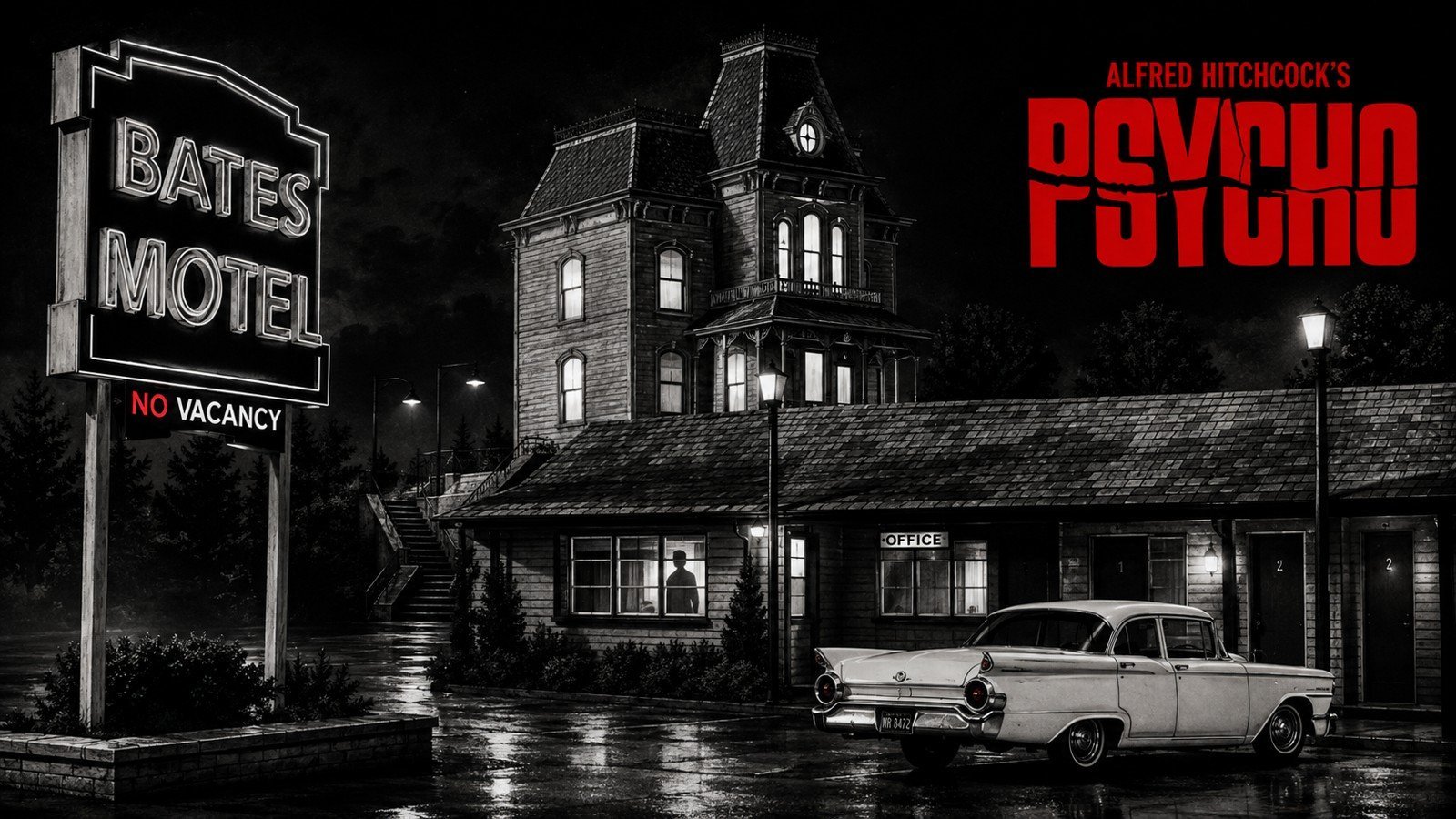
It was a low-budget production, meticulously planned by Hitchcock, who sketched the entire film frame by frame before shooting it in a matter of weeks. Its sets have themselves become cinematic legends, particularly the Bates Motel and the ominous Gothic house overlooking it, both now preserved as enduring icons of film history.
The film has been analysed from every conceivable angle by critics, who have found within it many of Hitchcock's recurring themes—guilt, paranoia, persecution and madness lurking beneath an apparently ordinary exterior. Anthony Perkins gave the performance of his career as Norman Bates, a role so unforgettable that it ultimately typecast him for the rest of his life.
Janet Leigh, Vera Miles and the superb Martin Balsam as private detective Arbogast also deliver performances that have become part of cinematic folklore. The famous shower sequence has long since entered screen history, yet it was the murder of Arbogast that invariably provoked the loudest screams from cinema audiences.
Among the many interpretations offered by critics such as Donald Spoto is Hitchcock's extensive use of mirror imagery, which Spoto regarded as representing the contrast between appearance and reality, reflecting the film's dual personalities and fractured identities. He counted no fewer than 131 shots featuring mirrors throughout Psycho. Spoto also observed Hitchcock's recurring use of birds as symbols of menace and doom. Stuffed birds fill Norman Bates' parlour, his obsession with taxidermy becomes an extension of his disturbed personality, bird imagery decorates the walls, and even the heroine bears the symbolic surname Crane.
The suspense and shock that Hitchcock achieves in Psycho remain virtually unmatched in cinema. He also draws extraordinary performances from his cast, particularly during the unforgettable conversation between Norman Bates and the inquisitive detective Arbogast in the motel office, one of the most perfectly judged scenes Hitchcock ever directed.
Made on a shoestring budget, Psycho became an immediate box-office phenomenon. More than any other Hitchcock film, it made him a millionaire.
At the time of its release, some humanitarian groups criticised the film for its apparent brutality. Yet a closer examination of the famous shower scene reveals just how masterfully Hitchcock manipulates the audience. The horror is created almost entirely through Bernard Herrmann's shrieking score, rapid editing and fleeting images of the knife. The blade is never actually seen penetrating flesh. The violence exists not on the screen but in the audience's imagination.
Psycho was Hitchcock's greatest commercial success and firmly established him at the pinnacle of his profession. It is impossible to imagine another director conceiving and executing this film with such precision and artistry.
In many ways, Psycho remains the ultimate Hitchcock.
0 Comments
Leave a Comment