
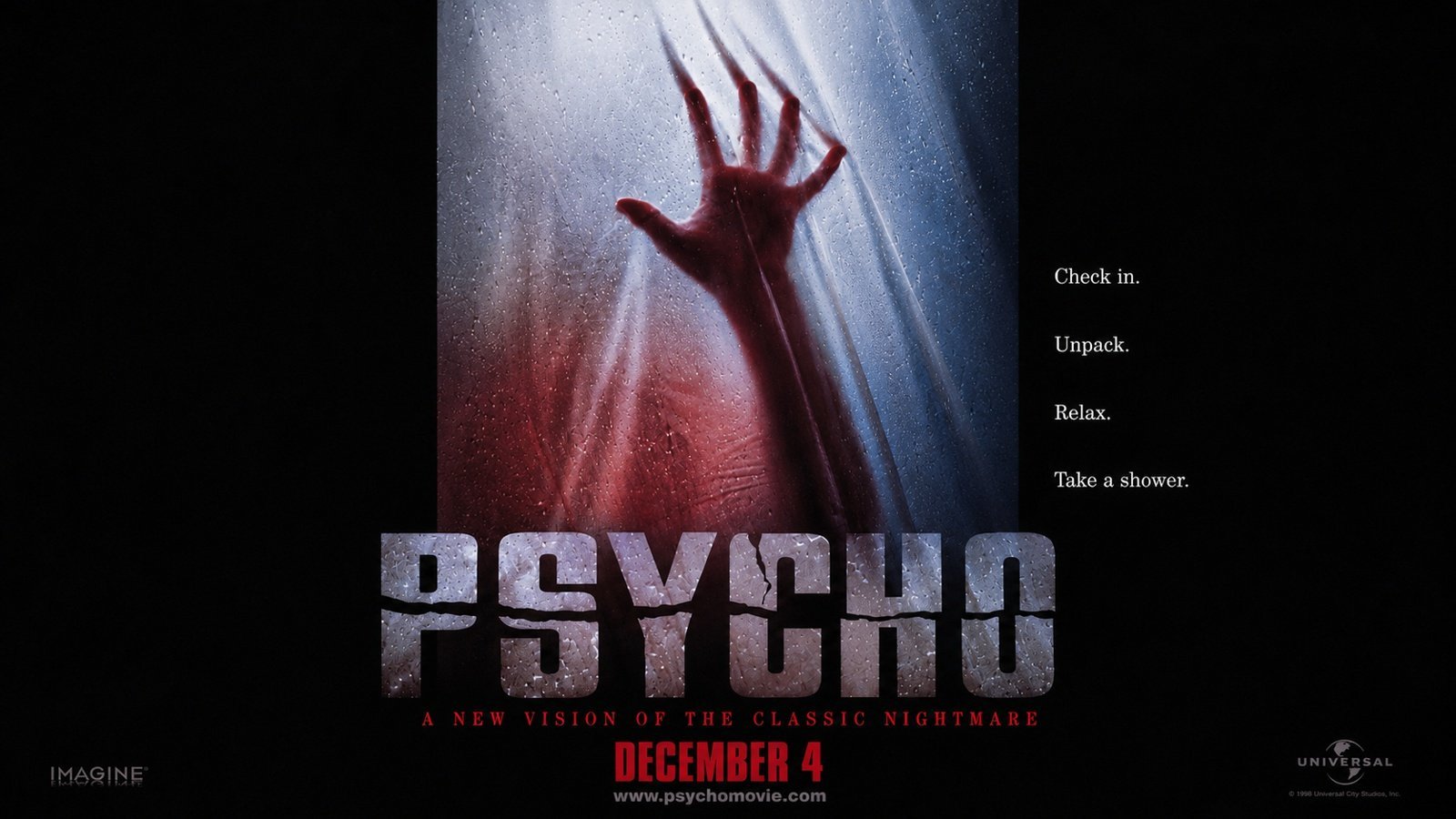
Psycho (1998)
Starring: Anne Heche, Vince Vaughan, Julianne Moore
Director: Gus Van Sant
Synopsis: Needless, pointless, wasteful remake
Reviewed by: Omar Khan
When Gus Van Sant announced that he intended to remake Alfred Hitchcock's Psycho, he antagonised film enthusiasts the world over. How could he possibly expect—even in his wildest dreams—to equal, let alone surpass, one of cinema's most celebrated classics?
Despite these reservations, the film deserves as objective an analysis as possible, though comparisons with Hitchcock's original are simply unavoidable.
It comes as little surprise that the remake fails to improve upon its illustrious predecessor. Indeed, the only elements that truly impress are those inherited directly from the 1960 original. Van Sant relocates the story to 1998 but retains Hitchcock's screenplay almost word for word, making little attempt to modernise the material. As a result, characters such as the car salesman speak as though trapped in a time warp, delivering dialogue that may have sounded perfectly natural in the late 1950s but feels decidedly awkward four decades later.
Van Sant has, however, introduced a handful of changes, the most obvious being the use of colour. Ironically, Hitchcock himself originally intended to shoot Psycho in colour before eventually opting for black and white. In retrospect, it was unquestionably the right decision. The stark monochrome photography beautifully reinforces the film's themes of good and evil, sanity and madness, and the murky territory that lies between them—qualities that the colour remake never manages to capture with the same power.
The director has also altered the opening by incorporating the seamless tracking shot Hitchcock had originally envisaged but lacked the technology to achieve. The camera glides effortlessly across the city before entering the seedy motel room where Marion meets Sam, and it is undoubtedly one of the remake's more successful flourishes.
Less welcome is the addition of Norman becoming visibly aroused while secretly watching Marion prepare for her shower. Even the famous shower sequence has been embellished with a handful of new shots, including a close-up of Marion's eye as it slowly dilates in death. Fortunately, these additions are among the few changes that do not actively detract from the original conception.
The remake suffers most, however, when one compares the performances. To place Janet Leigh, Martin Balsam and, above all, Anthony Perkins alongside Anne Heche and Vince Vaughn—even though the latter perform with admirable sincerity—is almost sacrilegious. None of the new performances comes remotely close to matching the legendary originals.
Ultimately, the film never succeeds in justifying its own existence. It falls flat whenever comparisons are made with Hitchcock's masterpiece and, because the story's famous twists have long since entered popular culture, much of the suspense has inevitably evaporated. The result is a strangely lifeless experience, with the audience merely waiting for the inevitable rather than becoming genuinely involved.
It would surely have made far more sense to reinterpret Psycho than simply imitate it. Why not update the story properly for the 1990s instead of reproducing it almost frame for frame? In attempting to recreate a classic rather than reimagine it, Van Sant not only alienated legions of Hitchcock admirers but also delivered a film that failed both critically and commercially.
0 Comments
Leave a Comment