
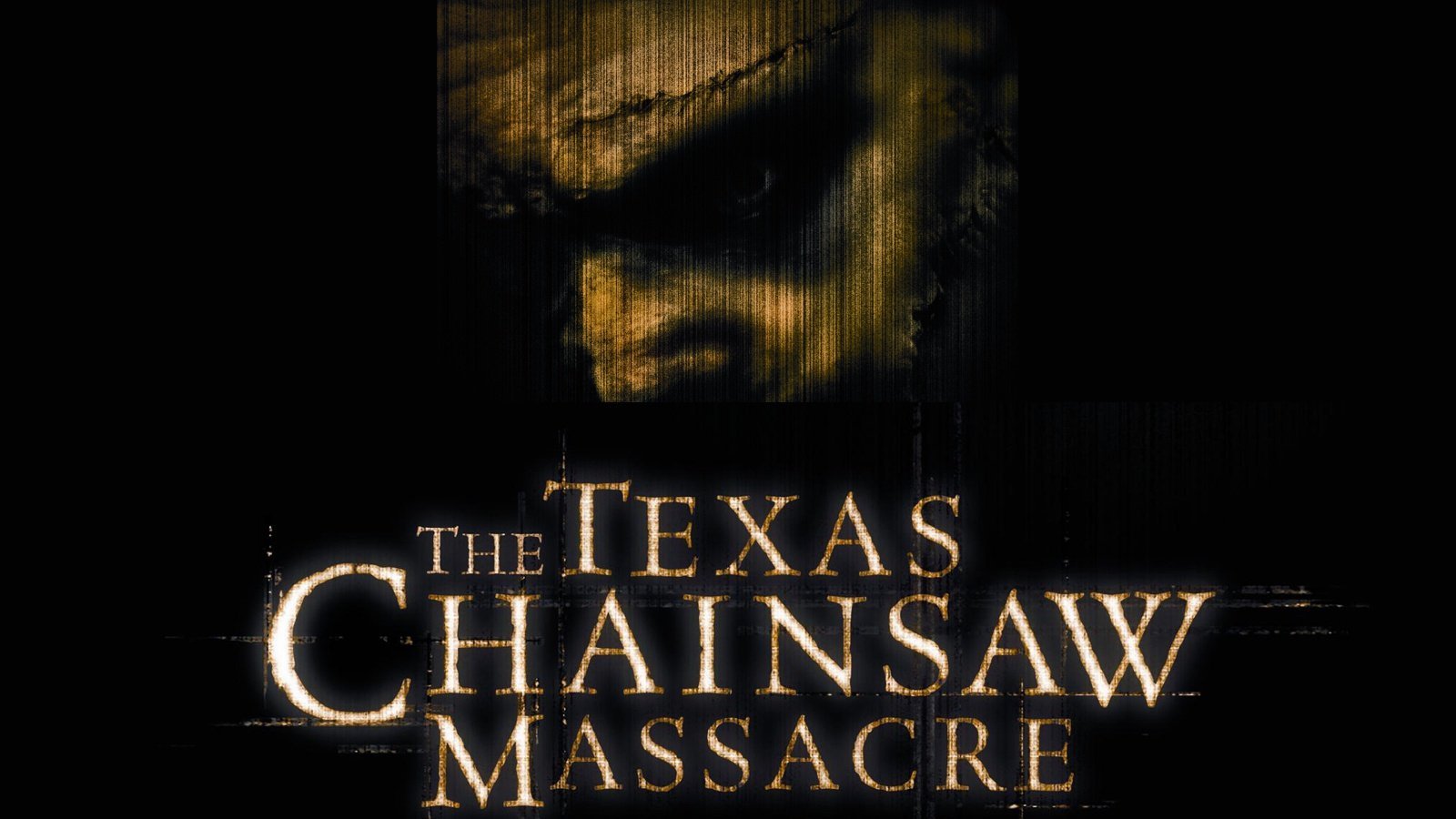
Texas Chainsaw Massacre, The (2003)
Cast: Jessica Biel, Jonathan Tucker, Eric Balfour, Erica Leerhsen, R. Lee Ermey
Director: Marcus Nispel
Synopsis: unwelcome remake turns out to be a pleasantly gruelling experience!
Reviewed by: Omar Khan
There was a collective groan of pain from horror fans everywhere when rumours of a remake of Tobe Hooper's majestic “The Texas Chainsaw Massacre” began circulating earlier in the year. There wasn't much fanfare or blaze of publicity, though. The posters seemed to appear almost overnight as the summer of 2003 drew to a close, while the first trailers surfaced at around the same time that “Freddy vs. Jason” finally hit cinemas.The groan was more than justified, if perhaps a touch hasty. Audiences had still not recovered from the abysmal abomination that was Gus Van Sant's “Psycho”, while the bad taste left by the turgid retreads of “The Vanishing” and “Nightwatch” lingered on. Throw Tim Burton's dismal remake of “Planet of the Apes” into the mix, together with the debacle surrounding “The Exorcist” prequel, and it was easy to understand why there was such widespread disdain for classic films being tampered with.
Such was exactly the reaction when New Line announced “The Texas Chainsaw Massacre” for the MTV generation. Worse still, the film was being produced by ultra-slick, high-octane, brainless action maestro Michael Bay and directed by a music-video director that virtually nobody had ever heard of by the name of Marcus Nispel.
The film was clearly aimed at the DVD generation—audiences who had heard so much about Tobe Hooper's horror masterpiece but had never experienced it on the big screen. The idea was to repackage, update and modernise the original while hopefully retaining its essence—and, of course, to cash in while perhaps kick-starting another horror franchise that looked destined to remain dormant forever, much as New Line had managed with the “Friday the 13th” series...or so it was hoped.
Prejudices were firmly loaded against this updated version, especially since Hooper's original had by now been universally proclaimed one of the greatest horror films ever made—even by many of the critics who had turned all shades of purple and green when it first appeared. The film was banned in the UK for the best part of thirty years—need one say more?
This reviewer was fortunate enough to catch it one late Saturday night in London, where it had been granted a special GLC certificate, and life was never quite the same again. There was simply no way the new version could live up to the brilliance of the original. The only question that remained was just how badly it would tarnish its predecessor's memory—and how unnecessary the whole exercise would prove to be.
Massive initial grudges against the remake were somewhat blown away by the rather excellent trailer that flickered before a bewildered audience gathered to watch “Freddy vs. Jason” at a packed New York cinema in late August. The images looked extremely promising, even though one could already see that changes had been made here and there. It certainly looked slick, and the potential victims possessed suitably MTV-friendly good looks, but there was also a distinct edginess to the imagery—and then there was the glorious sound of that chainsaw.
Having grown up virtually worshipping the original film and idolising Leatherface, one was now determined not to condemn the remake without giving it a fair trial.
The film opens without the famous armadillo shot, replacing it with Lynyrd Skynyrd beneath the unforgiving Texan sun as John Larroquette delivers a slightly more hurried narration than he did all those years ago. Five attractive young people, with sex, drugs and rock 'n' roll on their minds, are travelling through the sticky, sweltering Texas countryside on their way to a concert in Dallas.
Along the way, they pick up a young woman who appears dazed and traumatised, mumbling incoherently about "everyone going to die" and "a very bad man". Before they have time to react, she calmly produces a pistol and blows a bullet through her own brain in spectacular fashion.
Our youngsters now make the fatal mistake of deciding to "sort the matter out" rather than recognising the warning signs and getting the hell out of a thoroughly ominous environment.
The film is beautifully photographed by Daniel Pearl, the very same cinematographer who shot the original. If anything, it is perhaps too beautifully photographed, slightly diluting the raw documentary-like power of Hooper's masterpiece. Once the chainsaw roars into life and Leatherface enters the picture, however, the film gets down to some serious scare tactics, most of which work remarkably well.
Leatherface is once again a suitably imposing presence. His pursuit of one unfortunate victim through rows of hanging laundry is particularly memorable, as is the Blair Witch-style closing image and the unsettling sight of him patiently stitching together a new outfit for himself.
The screenplay introduces several significant changes, some more successful than others. The sympathetic young hitchhiker never entirely convinces, while the Sheriff is given at least one scene too many. Nevertheless, the film remains consistently engrossing, and the altered storyline provides just enough surprises to keep admirers of the original wondering where events will lead next.
The end result is an entertaining and perversely enjoyable rollercoaster ride of splattery terror that delivers its fair share of tension, shocks and genuine scares. Even the slaughterhouse proves every bit as imposing and menacing as one had hoped—and certainly not the disappointment many feared.
Inevitably, comparisons with Hooper's original reveal the remake's limitations. It simply cannot conjure the same almost unbearable, nerve-shredding intensity or the harrowing atmosphere that made the 1974 film so extraordinary.
To its considerable credit, however, the remake moves at a brisk pace and succeeds in recreating much of the rustic charm and edgy atmosphere of its predecessor. The film looks sumptuous and, perhaps most importantly, plays everything completely straight. It genuinely strives to frighten rather than trivialise its monsters, turning them into the self-parody that Freddy and Jason had gradually become.
Fortunately, this horror film goes straight for the gut in true old-fashioned, no-nonsense splatter tradition, leaving the jokes well alone. This is a mean, nasty horror movie that proudly wears its R-rating on its sleeve and, despite being critically savaged by mainstream reviewers, one suspects true genre fans—provided they can stop making constant comparisons with Hooper's classic—will find it a welcome and refreshing step in the right direction for post-millennium horror.
There was something immensely satisfying about hearing audiences grimace, squirm and scream throughout the screening. Equally satisfying was seeing the film turn a profit from its very first day of release and head towards making an absolute fortune.
This new “Texas Chainsaw Massacre” is hardly an exceptional film, but it represents a significant and welcome step forward for post-millennium horror—a move away from the pristine, polite and intellectual scares of the M. Night Shyamalan school towards something altogether more grisly and visceral. It is time to put the teeth back into terror, and Marcus Nispel's “Texas Chainsaw Massacre” is unapologetically determined to do exactly that.
Probably the film's greatest strength is Daniel Pearl's utterly stunning cinematography, while it also boasts one of the most effective trailers seen in many a year. Unlike most remakes, this one can be recommended without reservation and ranks among the finest reinterpretations of a horror classic.
Hats off to Marcus Nispel. One can only hope his next film proves to be another terror ride.
A reviewer for “The New York Times” described the experience as "like watching an autopsy."
Frankly, that sounded like exactly the sort of endorsement one was hoping to read from such a publication.

0 Comments
Leave a Comment