
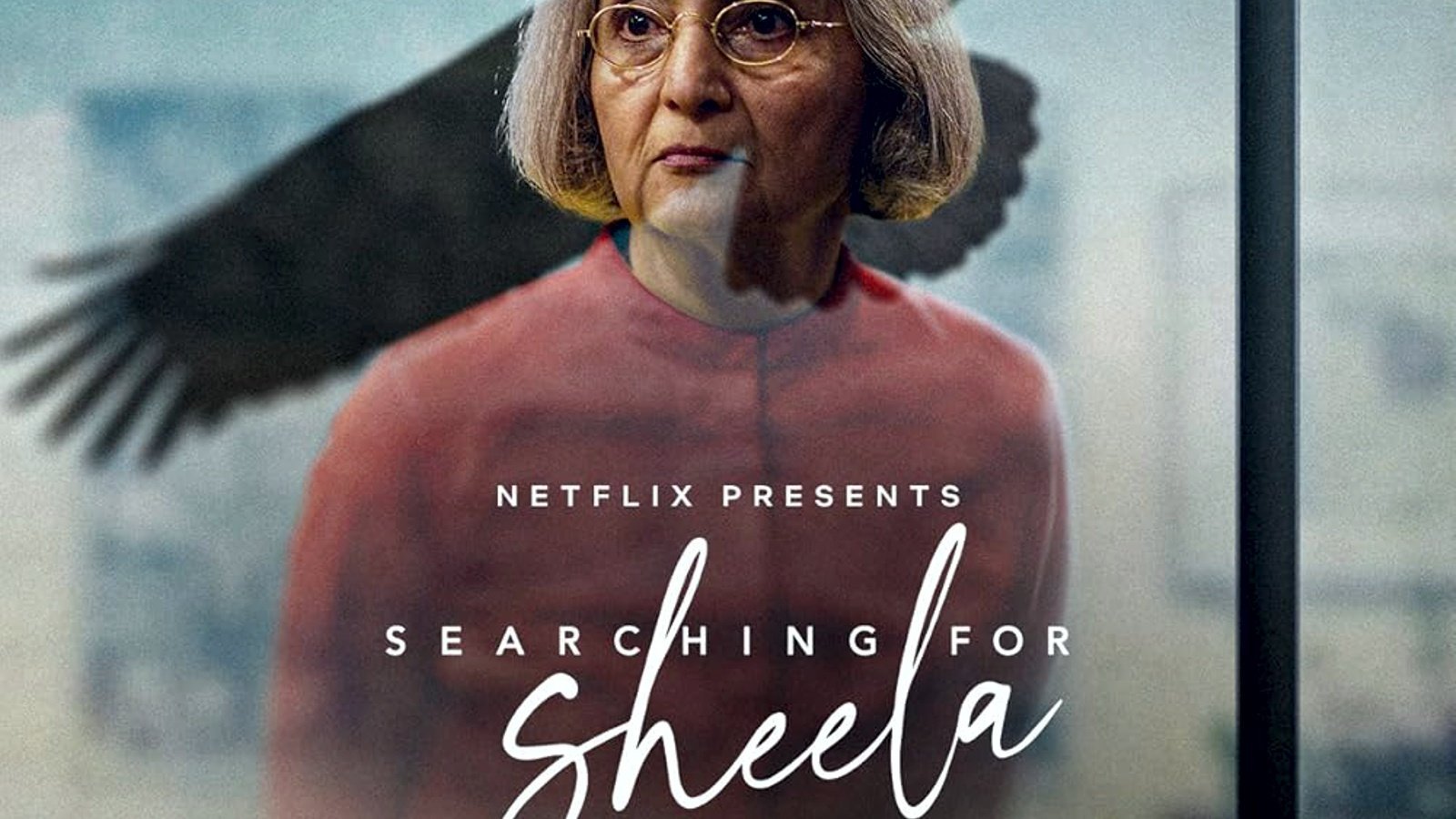
Searching for Sheela (2021)
Director: Shakun Batra
Produced by Dharmatic Entertainment
Synopsis: Karan Johar and Ma Anand Sheela come together for mutual benefit.
Reviewed by: Omar Khan
“A hollow window-dressed shell.” — NDTV
“A crime against journalism.” — Firstpost
“Barely manages to scratch the surface.” — The Hindu
“A bland apologia for an eventful, error-strewn life.” — NDTV
“A rather disappointing Netflix documentary.” — UK Film Review
“The puff piece seeks to project her as an enigma and a survivor.” — Scroll.in
“A surface-level profile of Ma Anand Sheela.” — Hindustan Times
Rajneesh Unravelling
It has been the best part of thirty-five years since the City of Rajneeshpuram began to unravel. Oregon had initially rolled out the welcome mat for these seemingly harmless New Age hippies, but attitudes gradually changed. Locals increasingly decided that the Rajneeshis had brought strange and foreign ways incompatible with their upright Christian morals.
By the mid-1980s, Rajneeshpuram had begun to implode. Bhagwan had fallen silent, withdrawing from public life and communicating with his disciples only through trusted lieutenant Ma Anand Sheela, who claimed to relay his wishes. Meanwhile, the collection of Rolex watches and Rolls-Royces sailed comfortably into three figures as Bhagwan remained cocooned in his increasingly isolated existence and the reins of his empire fell firmly into Sheela's hands.
Tough titties.
The Love Guru
As local suspicion intensified, opportunistic politicians seized upon the growing unease. The spectre of a foreign invasion bringing alien, "un-American" values soon became a powerful political tool. Before long, a determined campaign was underway to remove the Love Guru and his supposedly drug-fuelled, sex-obsessed disciples.
Sheela regarded much of the hostility towards the Rajneesh community as little more than a thinly disguised racist backlash, and she was not entirely wrong. The eagerness with which officialdom attempted to portray Rajneeshpuram as another People's Temple often carried the unmistakable aroma of a witch hunt.
Whitey!
An enraged Sheela responded with a succession of television appearances in which she went spectacularly on the offensive. Unfortunately for the movement, her confrontational style did little to win over public opinion. A more diplomatic spokesperson might have served the community better than the permanently combative Sheela, who appeared to relish both the spotlight and her increasingly notorious public image.
Bhagwan himself projected a rather different persona. Soft-spoken and measured, he cultivated the image of an eccentric but essentially benign love guru rather than another Jim Jones or David Koresh. Sheela, by contrast, seemed determined to fight every battle head-on, often with an attitude that could best be described as "sticking it to Whitey."
The Charlie Manson school of public relations?
Wild Wild Country, Netflix's superb documentary series, reignited worldwide fascination with the Rajneesh phenomenon. Once again, audiences watched an astute Indian guru attracting legions of lost Western souls. More recently, Bikram Choudhury demonstrated that Eastern gurus were still capable of turning the colonial tables rather dramatically.
Following the success of Wild Wild Country, Ma Anand Sheela unexpectedly became something of a folk hero in India, admired by many for having "stood up to Whitey", often with little awareness of the manipulative, authoritarian and deeply divisive figure she had been to many of her contemporaries.
Many former Rajneesh followers have spoken openly about Sheela over the years, and remarkably few have anything flattering to say. Even the directors of Wild Wild Country, whose own parents had once followed Rajneesh, have spoken of their reservations regarding Sheela.
Unfortunately, Searching for Sheela shows little interest in presenting those opposing perspectives. Instead, it largely sidesteps them altogether, abandoning any real sense of balance. There are rarely two sides to any issue here. The documentary increasingly feels like an opportunity for both Sheela—and Karan Johar.
Mutual Benefits
Here we have Karan Johar, ever alert to a topical opportunity. Following Netflix's enormous success with Wild Wild Country, the commercially astute filmmaker clearly recognised that Rajneesh remained a bankable subject.
The arrangement appears mutually beneficial. Sheela is offered the opportunity to "set the record straight", while Johar gains exclusive access to a controversial figure whose public profile has suddenly been revived.
Sheela enjoys a glamorous makeover, a personal stylist and an invitation onto the celebrity circuit. Johar, meanwhile, acquires a ready-made Netflix documentary centred around redemption, reinvention and the supposedly misunderstood Indian woman who dared to fight back.
Everyone wins.
Bombay's Botox Beauties
Bombay's Botox beauties and fashionable socialites quickly embrace Ma Anand Sheela, who suddenly finds herself the toast of the city. Young admirers queue eagerly for selfies as though greeting a visiting celebrity. It may not quite be Beatlemania, but Sheela's popularity among Mumbai's fashionable elite is unmistakable.
Johar happily takes the show on the road through interviews, public appearances and question-and-answer sessions, while the documentary concludes with carefully curated scenes of Sheela tending elderly residents at her nursing home as gentle music does its utmost to tug at the audience's heartstrings.
The rich and famous gather around Sheela and her trademark pixie haircut, while glamorous young admirers pose beside the latest "badass" Indian heroine. Her more questionable actions and highly controversial past seem to evaporate as she revisits her childhood home, wipes away a convenient tear and embarks upon a carefully choreographed journey of redemption—all beautifully photographed by Dharmatic.
For those familiar with Sheela's history, this transformation is difficult to accept. She has rarely been described by former insiders as compassionate or warm, and many who spent years working alongside her paint a very different picture.
Dharmatic clearly wishes to rehabilitate its subject, which is a perfectly legitimate creative choice. Unfortunately, the end result feels less like a documentary than a polished publicity exercise.
Searching for Sheela is not really interested in asking difficult questions. Instead, it presents an affectionate portrait that rarely challenges its subject or scrutinises the contradictions surrounding her remarkable story.
If one word best describes the entire enterprise, it is probably "offensive"—much like Sheela's own autobiography. The film repeats allegations and personal recollections concerning a man who had long since rejected her and who is no longer alive to answer them.
Ultimately, Searching for Sheela comes across less as a serious documentary than as an extended promotional feature built around an undeniably colourful personality. Ma Anand Sheela remains fascinating to watch, just as she was when delivering her outrageous "Tough Titties!" soundbites to American television audiences decades ago.
She is memorable.
She is charismatic.
She is entertaining.
She is also remarkably easy to dislike.
Ma Anand Sheela—born Sheela Ambalal Patel—is undoubtedly one of the most extraordinary personalities ever to emerge from modern India. Whether there really is an angel lurking beneath that combative exterior is something this documentary never convincingly demonstrates.

0 Comments
Leave a Comment