
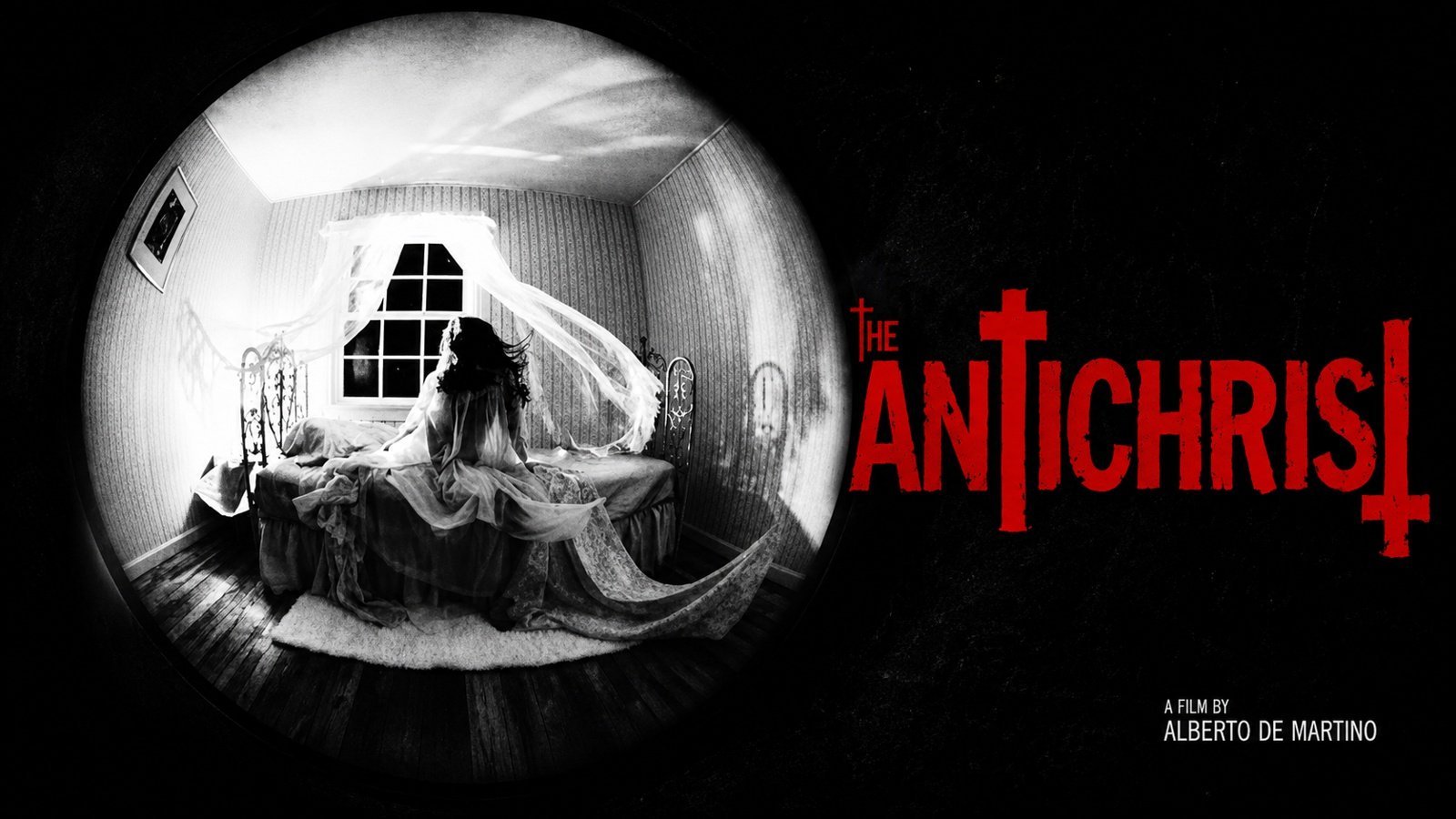
Antichrist, The (El Anticristo) (1974)
Cast: Carla Gravina, Mel Ferrer, Arthur Kennedy, Alida Valli, Umberto Orsini
Director: Alberto de Martino
Synopsis: Puke-spewing Italian rip-off of The Exorcist is a groan-a-minute yawn
Reviewed by: Omar Khan
It took an age for us finally to catch up with this Italian “Exorcist” cash-in (or rip-off, if you prefer) that was unleashed upon British audiences in 1974 as *The Antichrist* and released in the United States under the considerably less imaginative title “The Tempter”.
There is a vague recollection of the film being thoroughly savaged by British critics upon its release, though, to be fair, those worthy gentlemen always tended to declare war on this sort of "horror trash".
“L'Anticristo” was by no means the first of the post-"Exorcist" clones. The fantastically dreadful ”The Devil Within Her” (AKA ”Beyond the Door”, AKA ”Chi Sei? ”) had already arrived in Europe, complete with its mighty "Vibrasound" gimmick. The Blaxploitation entry ”Abby” had meanwhile been unceremoniously strangled by an irate Warner Bros., and before long ”L'Anticristo” appeared, promising audiences yet another helping of demonic mayhem.
The film opens with a bizarre Catholic healing ceremony in which a statue of the Virgin Mary appears to perform miraculous cures for a succession of hopeful sufferers. Among them is poor Ippolita (Carla Gravina), crippled and desperately seeking a miracle of her own. Unfortunately, the only miracle on offer is the spectacular suicide of a raving heretic who hurls himself to his death while loudly denouncing Christ.
Things hardly improve.
Returning to her lavish family home, Ippolita sinks further into depression, frustrated not only by her disability but also by increasingly obvious sexual repression. Fortunately, modern medicine comes to the rescue in the form of an enlightened psychiatrist armed with the latest miracle cure—hypnosis. Apparently, all one needs is some suitably psychedelic lighting and a few dramatic hand gestures.
During her hypnotic sessions, we discover that Ippolita was crippled in the car accident that claimed her mother's life. However, one cannot help noticing that her legs emerge from the wreckage looking remarkably intact. The good doctor then decides to delve even deeper into her subconscious, transporting her back to a previous existence where she appears to have been a witch burned at the stake centuries earlier.
From that moment onwards, things become increasingly deranged.
Her former life gradually begins to consume her, culminating in a lengthy satanic initiation ceremony involving naked revellers, freshly decapitated toads, copious quantities of blood and a thoroughly unpleasant encounter with a demonic goat. As Ippolita embraces her newfound allegiance to the Prince of Darkness, strength mysteriously returns to her legs, while her sexual appetite develops into something altogether more murderous. Before long, she is prowling Rome's streets in search of handsome young tourists to seduce before dispatching them in suitably gruesome fashion.
Her condition deteriorates alarmingly. Her hairstyle goes from merely unfortunate to positively catastrophic, the make-up department completely loses the plot, and before long she is spewing generous quantities of obligatory pea-soup vomit over anyone foolish enough to venture within range. She also develops the mandatory booming masculine voice that every self-respecting cinematic devil apparently possesses. Curiously, Satan always seems to favour a clipped English accent rather than an American one.
There are, naturally, the obligatory levitation scenes, furniture flying around the room, objects hurtling through the air, and all the other familiar clichés borrowed wholesale from Friedkin's masterpiece before a suitably ancient exorcist eventually arrives to save the day.
Everything about ”L'Anticristo” feels stale and contrived. The story is utterly preposterous, the acting is indifferent, the dubbing often borders on the embarrassing, and the special effects are laughably primitive. The levitation scenes are so poor that they could easily have been produced in Lollywood during one of its less inspired afternoons.
The climactic sequence involving Ippolita's wandering arm is staged so amateurishly that it almost justifies sitting through the preceding ninety minutes simply to witness it.
Almost.
The film lumbers from one overlong possession scene to another without generating the slightest hint of suspense, excitement or even unintentional humour. On more than one occasion, I found myself drifting off to sleep, only to rewind the disc afterwards in the hope that perhaps I had missed something worthwhile.
I hadn't.
About the only aspect of the production that escapes complete humiliation is Ennio Morricone's atmospheric score, while Carla Gravina deserves some sympathy for throwing herself wholeheartedly into material that was probably beyond saving. As she descends further into madness, she occasionally even resembles Glenn Close during the latter stages of ”Fatal Attraction”.
Otherwise, this really is the dregs.
Still, one has to thank Anchor Bay for rescuing the film from obscurity and allowing hardened horror fanatics the opportunity to experience it in all its uncut glory...
...goat-inspired orgy and all.

0 Comments
Leave a Comment