
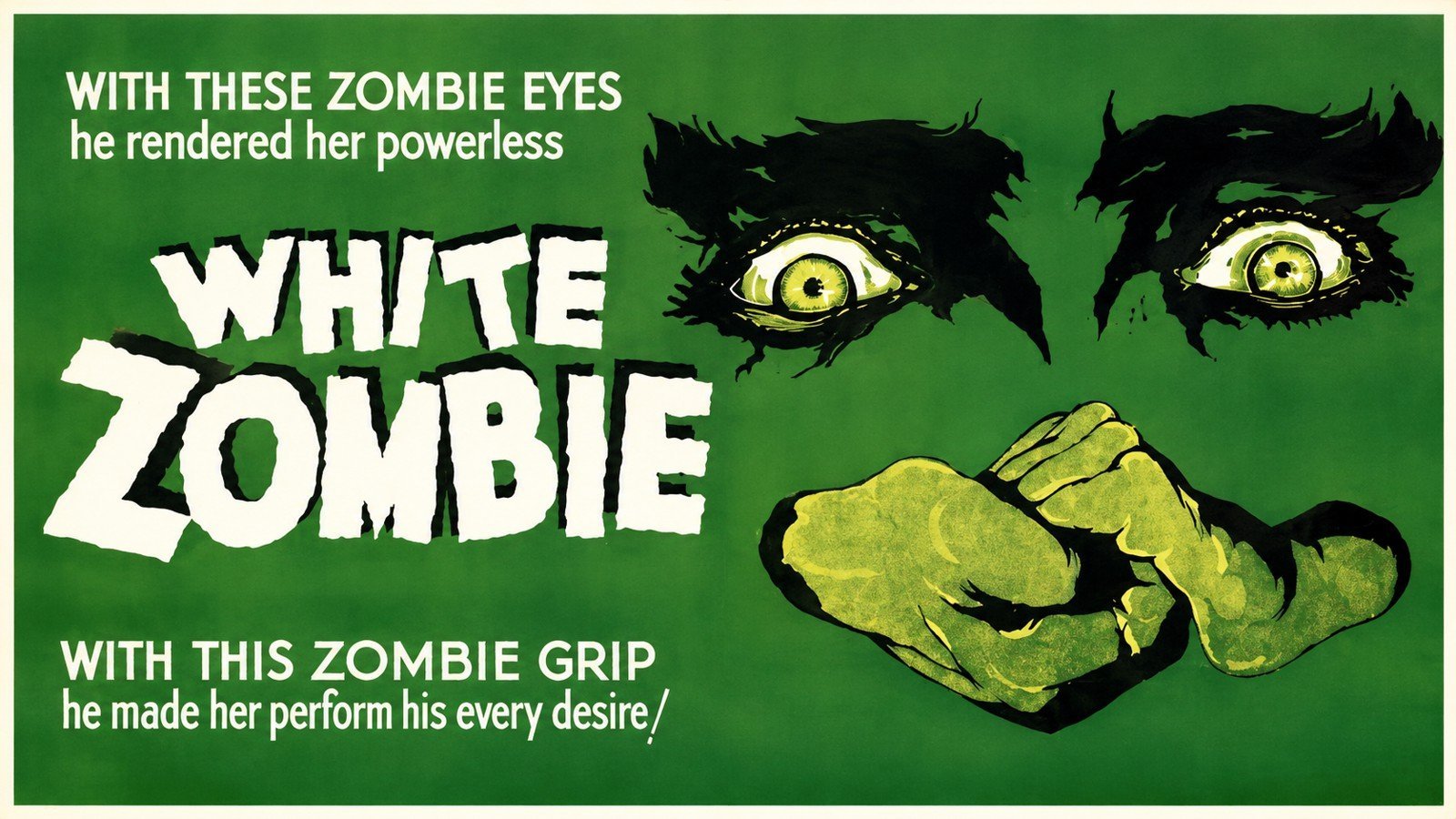
White Zombie (1932)
Starring: Bela Lugosi, Madge Bellamy, Robert Frazer, Brandon Hurst
Director: Victor Halperin
Synopsis: Bela Lugosi turns in a great performance in this classic horror film
Reviewed by: Omar Khan
"unique" Time Out
"creaky and awful... heavy-handed and turgid" Creature Features
"minor masterpiece" Horror Movies
"eerie, unique chiller", Maltin
"one of the great early horror films", Blockbuster Video
"eerie...a minor classic" Video Movie Guide
"exhilarating experience" Caligari's Children
This masterpiece of horror continues to resonate more than seventy years after its release, thanks to the imagination and artistry of its creators. Alongside the finest productions from Universal's golden age, “White Zombie” deserves to rank amongst the greatest horror films of the classic era, filled with haunting images that remain burned into the memory long after the film has ended.
Beautifully photographed by Arthur Martinelli, the film opens with a young couple arriving in idyllic Haiti on the eve of their wedding. Madeline and Neil are hopelessly in love, looking forward to beginning their lives together amidst the exotic surroundings of the Caribbean.
Unfortunately, another man has very different plans.
The wealthy plantation owner Beaumont has become hopelessly infatuated with Madeline and is prepared to go to almost any lengths to prevent the marriage and win her for himself. Sadly for Beaumont, the lovely Madeline has eyes only for Neil. Nevertheless, he succeeds in persuading the young couple to hold their wedding ceremony at his magnificent estate.
Their journey into Haiti immediately takes an unsettling turn. Their carriage is halted by a traditional burial ceremony; the corpse has been interred in the middle of the road to ensure that it can never again return from the dead. As they continue their journey, the terrified coachman points towards ghostly figures slowly shuffling across the distant hills, explaining that they are zombies condemned to spend eternity labouring in the sugar plantations of the mysterious and wonderfully named Murder Legendre.
The role is played magnificently by Bela Lugosi.
Indeed, there are many who regard “White Zombie” as Lugosi's finest performance, surpassing even his immortal portrayal of Count Dracula the previous year—the role for which he will forever be remembered.
The couple soon encounter Legendre themselves when they stop to ask for directions. With nothing more than a look, Lugosi exudes menace. As the carriage departs, he calmly snatches Madeline's scarf from around her neck and pockets it as though already claiming possession of her.
Repelled though he is by Legendre, Beaumont nevertheless turns to him for help in preventing the wedding. Murder Legendre is only too willing to oblige, though his own ambitions extend rather further than Beaumont imagines. Before long, Madeline has been transformed into one of the living dead, while Beaumont himself discovers that bargains with evil seldom end well.
Lugosi is magnificent throughout as the sinister Zombie Master, commanding his silent army of undead servants with chilling authority. They exist not only as slave labour but as his own terrifying personal guard.
The film is remarkable for so many reasons beyond Lugosi's extraordinary performance.
Martinelli's cinematography is simply stunning, while the expressionistic lighting and beautifully designed sets create an atmosphere of creeping dread that rarely lets up. Shadows seem to emerge from every corner of the frame, and many of the compositions possess an almost dreamlike quality strongly reminiscent of “The Cabinet of Dr Caligari”.
One unforgettable image follows another.
Legendre's lonely fortress dominates the landscape as waves crash silently beneath its walls. The zombie labourers slowly shuffling across the distant hills remain one of horror cinema's most haunting sights. Equally memorable is the sequence in which Legendre carves away at his voodoo dolls, slicing chunks from their waxen bodies before holding them over a naked flame as they slowly melt into grotesque instruments of death.
Perhaps the most unforgettable sequence of all takes place inside the sugar mill. The zombies trudge endlessly around the great crushing wheel, condemned to eternal labour without thought or feeling. One unfortunate worker stumbles and falls into the machinery, yet the others continue their relentless march without the slightest acknowledgement, crushing man and sugar cane alike beneath the great wheel. Accompanied by that strange, droning, almost operatic soundtrack, the sequence becomes one of the most haunting and nightmarish moments in early horror cinema.
It remains one of the truly great scenes in the history of the genre—horror at its most chilling and imaginative.
“White Zombie” is a genuine masterpiece: beautifully directed, magnificently photographed and anchored by one of Bela Lugosi's greatest performances. Its influence can still be felt decades later, nowhere more obviously than in Hammer's excellent “Plague of the Zombies”, which borrowed the central premise and transplanted it from Haiti to the English countryside with equally chilling results.
There is one final irony attached to the film's success. It has often been said that Lugosi himself found it difficult to watch because he received a mere $800 for his performance, while the Halperin brothers went on to make a fortune as “White Zombie” became one of the earliest box-office successes in horror history.
Looking at the film today, it is impossible not to feel that Bela Lugosi deserved every bit as much immortality as the remarkable creation he brought so vividly to life.

0 Comments
Leave a Comment