
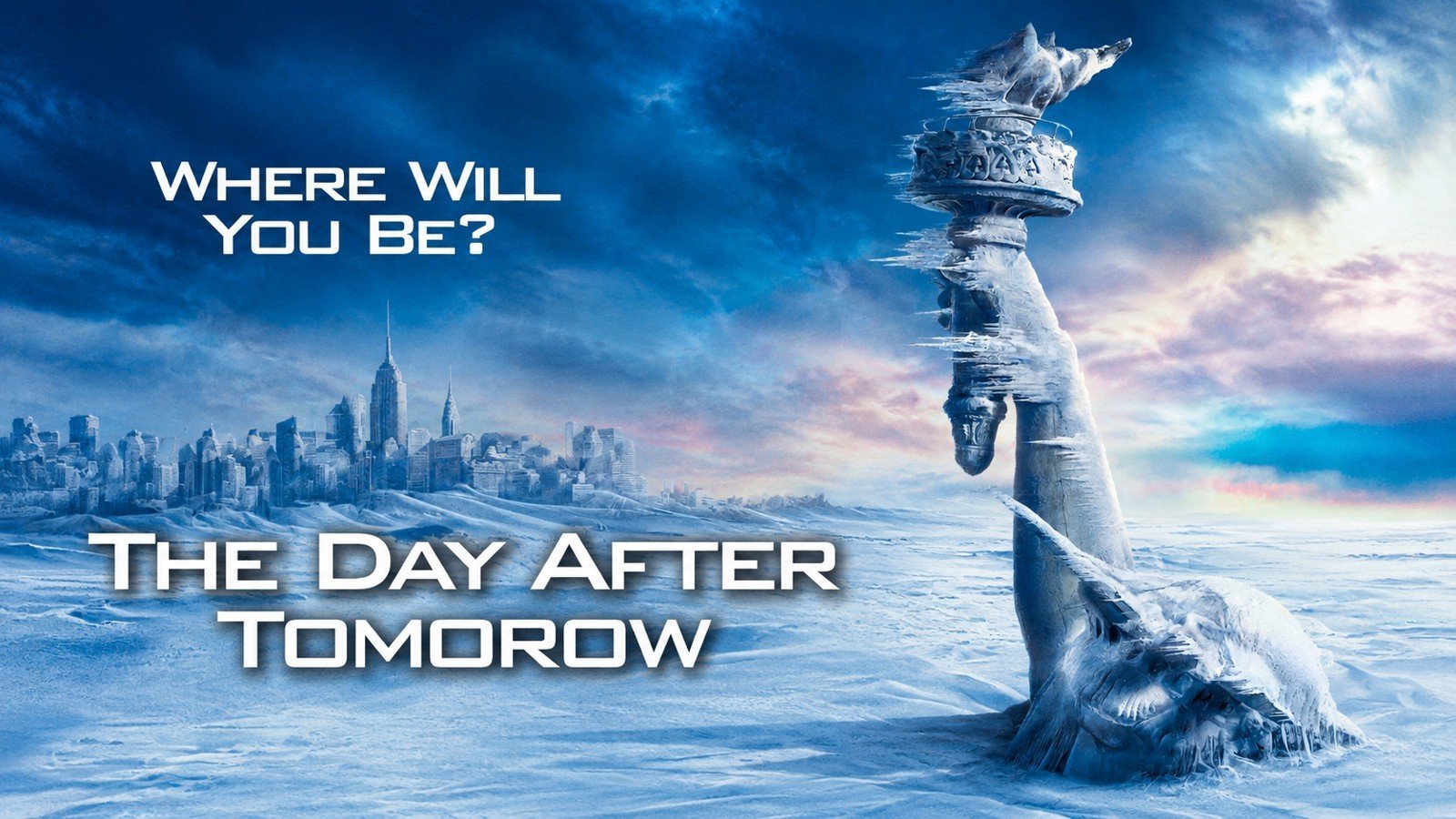
Day After Tomorrow, The (2004)
Cast: Dennis Quaid, Jake Gyllenhaal, Ian Holm
Director: Roland Emmerich
Synopsis: Global warming and its calamitous effects are at the heart of this disaster film
Reviewed by: Faiz Khan
Where are the mice, you may ask?
Why?
The answer is obvious. Roland Emmerich's The Day After Tomorrow is very high on the cheese quotient and rather low on just about everything else. Still, the film does transport one back to an era when The Poseidon Adventure, The Towering Inferno and Earthquake in glorious "Sensurround" were providing audiences with little more than loud, flashy thrills. There is a certain nostalgia attached to those essentially cardboard attempts at entertainment, and The Day After Tomorrow belongs firmly in the same tradition.
Jack Hall (Dennis Quaid) is a climatologist working in Antarctica when an enormous section of the Antarctic ice shelf breaks away, supposedly as a result of global warming. Escaping by the skin of his teeth, he soon finds himself lecturing delegates in Delhi about the catastrophic consequences awaiting the planet if climate change continues unchecked. Before long, the warning signs begin to appear. Snow falls in Delhi, giant hailstones batter Tokyo, and freak weather systems start building over Los Angeles. Everything happens rather too much and far too quickly, but Hall soon concludes that the melting polar ice caps have poured vast quantities of fresh water into the oceans, disrupting the currents and triggering worldwide climatic catastrophe—or, more accurately, catastrophic events centred largely on the United States.
Naturally, nobody pays the slightest attention until it is far too late.
Tornadoes devastate Los Angeles while a gigantic tidal wave crashes into Manhattan, submerging much of New York beneath the water. However, a film cannot sustain itself on special effects alone, so we are also given the obligatory father-and-son subplot. Hall's teenage son Sam (Jake Gyllenhaal) is on a school trip to New York when disaster strikes. Trapped with a group of fellow survivors inside the New York Public Library, Sam receives strict instructions from his father not to venture outdoors because the aftermath of the storms will usher in a new Ice Age, with temperatures so low that exposure means certain death. Jack, meanwhile, embarks on a perilous journey from Washington to rescue his son, hoping not only to save Sam but also to redeem himself for years of neglect as a father.
Roland Emmerich was previously responsible for the enormously successful but thoroughly dreadful Independence Day before inflicting his equally monstrous version of Godzilla upon unsuspecting audiences. The Day After Tomorrow is almost as bad as either of those films, but it survives because Emmerich keeps the pace moving briskly and occasionally delivers some genuinely impressive visual effects—alongside others that border on the embarrassingly unconvincing.
Viewed simply as an old-fashioned B-movie disaster picture, it provides perfectly acceptable, undemanding entertainment, but very little beyond that. Character development has never been one of Emmerich's strengths, and this film does nothing to suggest otherwise.
Dennis Quaid heads the cast with his customary professionalism, although by this stage, he was well beyond the peak of his career. Jake Gyllenhaal provides the youthful appeal, and one suspects the generous pay cheque probably made an attractive change from some of his more adventurous career choices. It is also rather depressing to see an actor of Ian Holm's stature wasted in material such as this, while the abundance of familiar television faces only reinforces the feeling that one is watching an expensive B-picture.
The environmental sermonising merely attempts to lend the proceedings an air of importance, but ultimately it is little more than window dressing. The storm arrives with implausible speed and disappears just as conveniently once it has served its purpose. We are clearly meant to leave the cinema having received a stern warning about the dangers awaiting the planet, but I suspect very few audience members believed for a moment that events would unfold in quite this fashion.
Taken on those terms, however, The Day After Tomorrow is reasonably entertaining. It starts strongly, fuelled by a succession of spectacular natural disasters, but gradually runs out of steam as the spectacle gives way to increasingly routine melodrama.
Treat it for what it really is—a throwback to the old disaster movies of the 1970s—and it passes an enjoyable couple of hours. Expect much more than that, and disappointment is almost inevitable.

0 Comments
Leave a Comment