
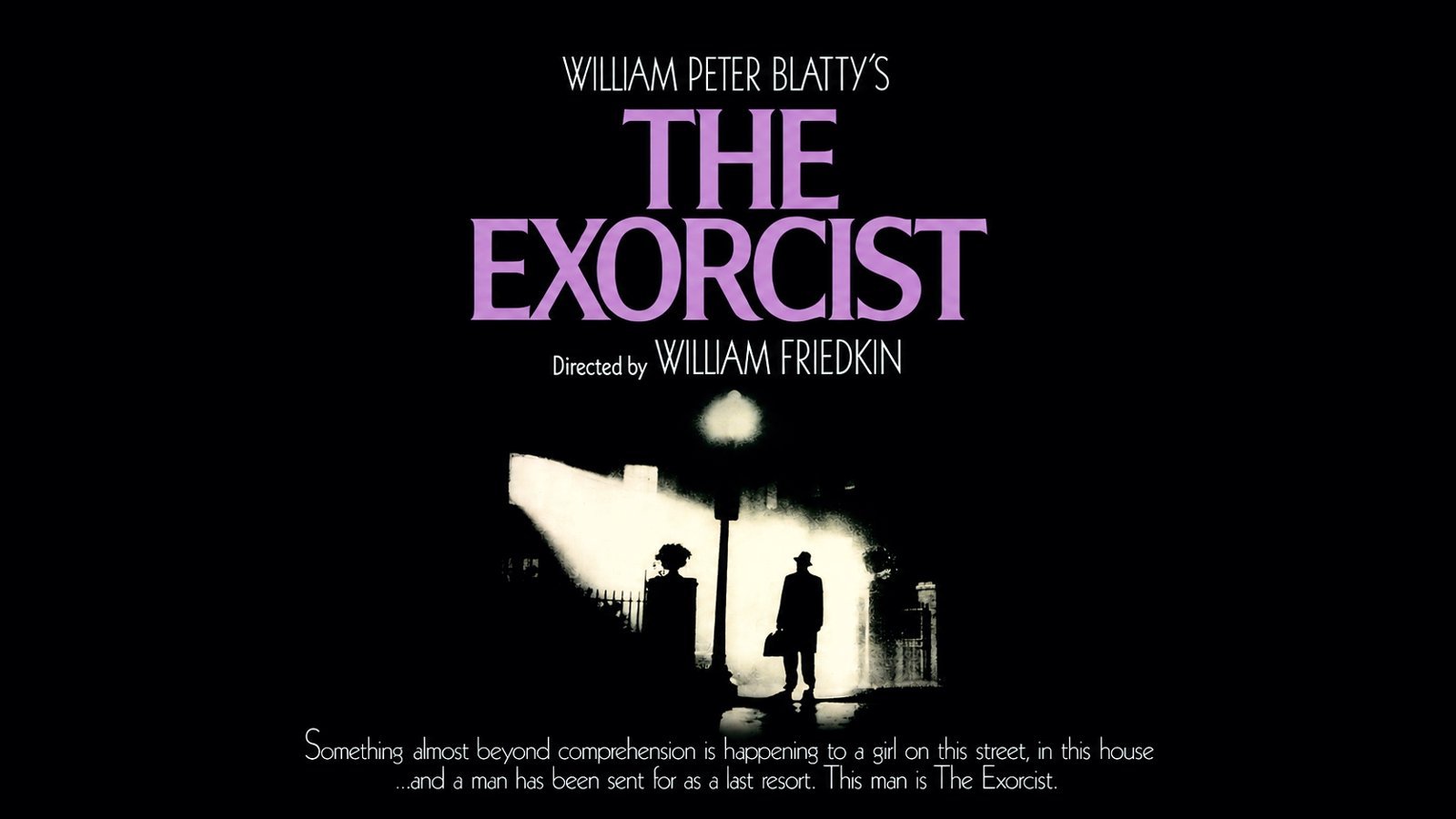
The Exorcist (1973)
Starring: Ellen Burstyn, Linda Blair, Jason Miller, Kitty Winn, Max Von Sydow
Director: William Friedkin
Synopsis: Hugely controversial film, highly acclaimed Box Office record buster is largely viewed as one of the great movies of all time and the greatest horror film ever made.
Reviewed by: Omar Khan
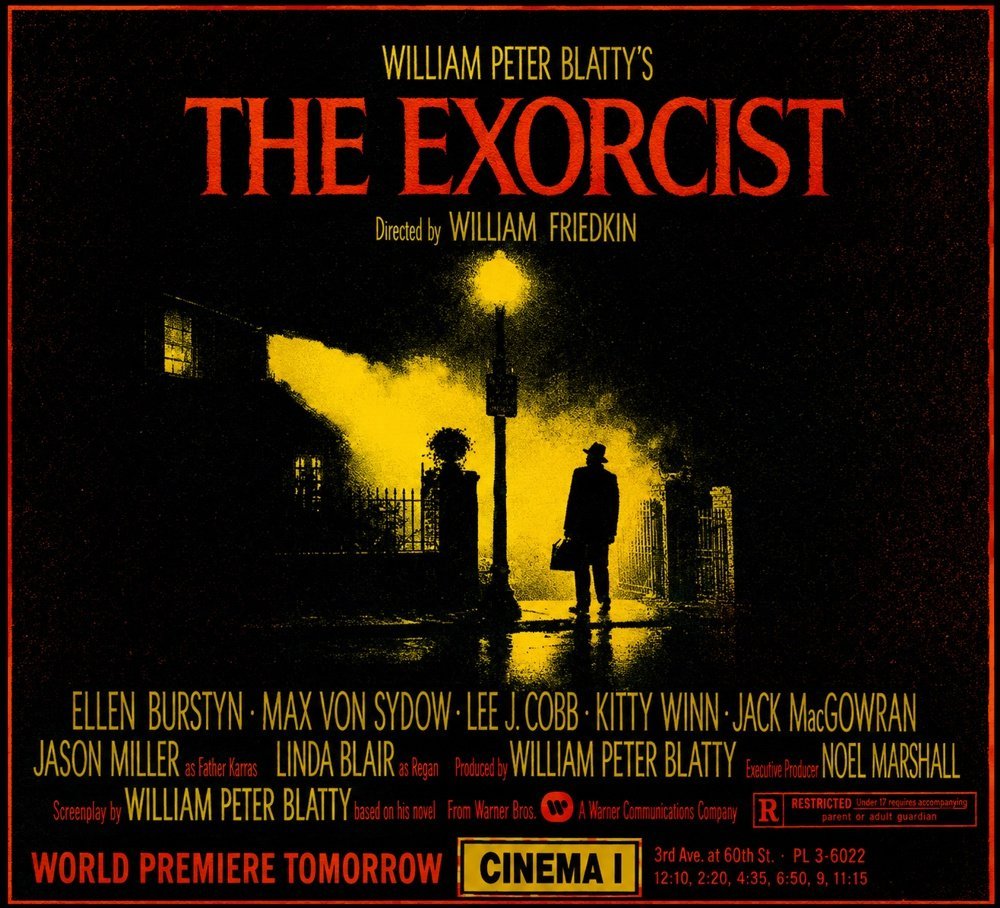
Discussing The Exorcist is something of an undertaking. It is one of the most analysed, written about and debated films ever made, and more than half a century after its release, it continues to cast an extraordinarily long shadow over the horror genre.
William Peter Blatty's bestselling novel provided the foundation, with Warner Bros. quickly acquiring the screen rights and Blatty himself remaining closely involved as producer and creative guide. The production has since become almost as legendary as the finished film, with countless stories surrounding its troubled shoot, groundbreaking special effects and the extraordinary lengths director William Friedkin went to in pursuit of absolute realism.
The accolades were equally unprecedented. The Exorcist became the first horror film to be nominated for the Academy Award for Best Picture. This distinction elevated the genre to a level of respectability it had rarely enjoyed before.
The story itself scarcely needs retelling. A young girl becomes possessed by an ancient demonic force, and the nightmare that follows shakes the faith of everyone around her, particularly her sceptical mother. Yet beneath all the horror lies a surprisingly hopeful affirmation that goodness, sacrifice and faith can ultimately triumph over unimaginable evil.
Watching The Exorcist is far more than simply watching a film unfold. It seizes its audience by the scruff of the neck and drags them through an emotionally exhausting ordeal. Friedkin constructs the opening movements with remarkable patience. Following the haunting prologue in Iraq, life in Georgetown appears almost reassuringly ordinary before the foundations begin to crack. Then, almost imperceptibly at first, normality slips away, and the audience finds itself trapped inside one of cinema's most relentless nightmares.
The opening remains one of the most remarkable sequences in horror cinema.
Before a single supernatural event occurs, Friedkin has already unsettled his audience. The first sounds are those of the Islamic call to prayer as Father Merrin wanders through an ancient landscape that feels strangely disconnected from the modern world. Every image contributes to an overwhelming sense of unease: the one-eyed blacksmith, the old woman glimpsed in the marketplace, the unbearable heat, the scorched earth, dogs fighting amid swirling dust while Merrin confronts the towering statue of Pazuzu.
The dust itself almost becomes a character.
It gathers in the hot wind, rising and swirling with increasing force before the film quietly dissolves to Georgetown. Somehow, the dust appears to have travelled with us. As the camera settles upon an ordinary family home, there is a subtle but unmistakable sense that something unseen has arrived. A barely perceptible thud accompanies its invisible intrusion.
Evil has crossed continents.
Friedkin communicates all of this without explanation or exposition. It is one of the finest examples of visual storytelling in modern cinema.
From that point onwards, the atmosphere becomes almost unbearable. Scene after scene has since entered cinema history, yet even decades of imitation have left them remarkably little the worse for wear. Friedkin tightens his grip with extraordinary confidence, never allowing the audience the opportunity to recover. The film becomes an emotional endurance test, hammering its viewers into submission before finally offering the smallest glimmer of hope through sacrifice and redemption.
Every department operates at the highest possible level. The performances remain exemplary, Owen Roizman's cinematography is masterful, Dick Smith's revolutionary make-up effects continue to astonish. In contrast, the sound design and Mercedes McCambridge's unforgettable vocal performance remain among the most disturbing ever committed to film.
More than fifty years later, The Exorcist has scarcely aged at all.
The film became a genuine cultural phenomenon upon its release. Cinemas reported record-breaking box-office figures as audiences queued for hours in freezing weather in the hope of securing tickets. Reports of fainting, vomiting and screaming spectators spread around the world. Religious groups condemned the film, protests followed, and every attempt to suppress it merely increased public curiosity. Warner Bros. found itself handling not simply a successful film but an international event.
I was too young to see it during those early years, but I vividly remember driving past London cinemas where ambulances stood outside theatres showing The Exorcist. For years, people dismissed those stories as publicity folklore.
They weren't.
I saw them myself.
Having only read Blatty's novel at the time, I wondered whether anything on a cinema screen could equal the horrors I had imagined while reading it.
Apparently, it could.
I finally experienced the film at Karachi's magnificent Palace Cinema, where The Exorcist was enjoying an astonishing run that ultimately lasted nine months. The Palace seated around 500 people, yet show after show sold out. Most imported films disappeared after three or four weeks. The Exorcist became an obsession.
We were fortunate enough to secure tickets for an evening performance, and the excitement inside the packed auditorium was unlike anything I had experienced before. What fascinated me most was that many members of the audience understood little or no English.
It didn't matter.
Friedkin's film communicates through images, atmosphere and sound every bit as much as dialogue. Terror requires no subtitles.
Whoever controlled the sound system that evening deserves some honorary credit.
Clearly deciding that Friedkin's carefully constructed shocks were not quite enough, he periodically nudged the volume several notches higher at precisely the right moments. Mercedes McCambridge's demonic voice thundered around the auditorium with almost physical force. Every scream, every crash and every moment of Regan's possession became an assault upon the senses.
The audience was battered for two relentless hours.
Demolished.
I returned the very next evening to relive the whole extraordinary ordeal.
Decades have passed, yet that experience at the Palace Cinema remains one of my most treasured memories of going to the movies. It wasn't simply watching The Exorcist.
It was participating in a collective experience unlike anything I have witnessed before or since.
As Spinal Tap would have said...
This one went to eleven.
Years later, while visiting my brother in Washington, D.C., I finally made the pilgrimage to Georgetown itself. Walking down the famous Exorcist Steps was a genuine thrill, while an ice cream parlour nearby delighted horror fans with a magnificent painted map marking many of the film's locations throughout Georgetown. Today, the steps themselves bear an official plaque commemorating their place in cinema history.
How fitting.
More than half a century after its release, The Exorcist has become part of Georgetown's identity, just as it has become part of cinema's.
Every year brings new films that borrow something from Friedkin's masterpiece. Some imitate its imagery, others its structure, others simply its atmosphere. All of them stand in its shadow.
More than fifty years later, The Exorcist remains not merely one of the greatest horror films ever made.
It remains the benchmark.



0 Comments
Leave a Comment