
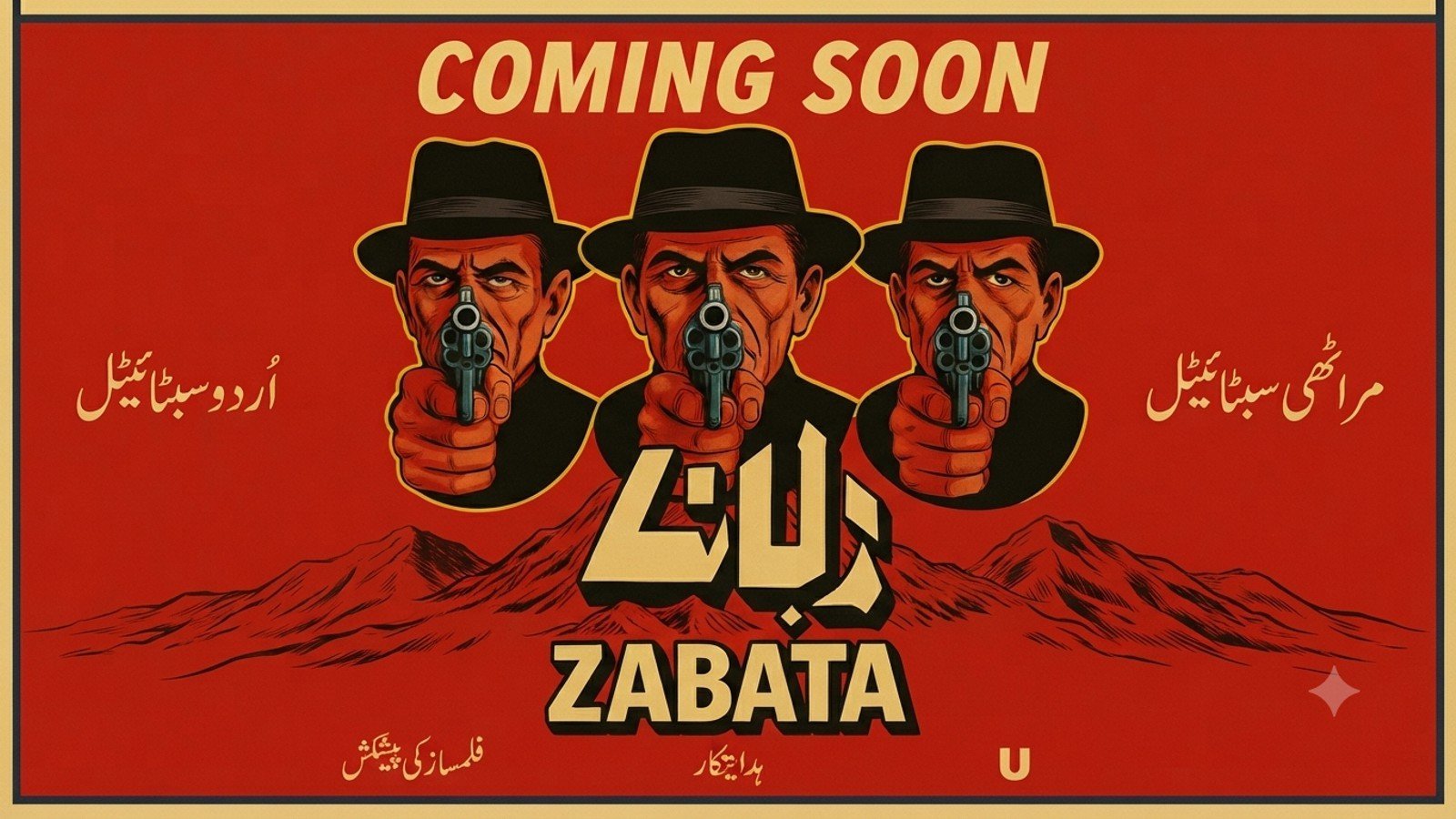
Zabata (1993)
Cast: Sultan Rahi, Babra Sharif, Asif Khan, Jehanzeb Mughal,Humayun Qureshi
Director: Jehangir Mughal
Synopsis: If Jodorowsky and Tarantino had been Punjabi, and directed a typical revenge masala film the result could have been something like Zabata.
Reviewed by: Omar Khan
The film begins with a montage of music from Belly dancing to Jackson’s “Thriller” set to some startling visuals of various shady-looking Bad Hombres in full regalia. All are preparing to take on bounty hunters seeking the head of the legendary crime king, their boss, Zabata. Within moments, a seasoned Lollywood viewer can sense something not quite right with Zabata.
The attackers are mercilessly repelled before the title sequence kicks off to an exquisite version of Giorgio Moroder’s “Chase”, used to accompany the 9 O’clock News once upon a time here in Pakistan. This version is fused with chants of “Zabata, Zabata” and is excellent. Suddenly the titles freeze, and the music stops dead in its tracks. Then they start dramatically as the last few big names on the credits are revealed in this dramatic stop-start manner. It’s a familiar start to any Daku film on the lines of Sholay.
Still, it is executed with a bizarre visual flair that evokes thoughts of Jodorowsky and the most excessive spaghetti westerns. When this style is fused with a typical masala-laden Punjabi epic, the result is truly delectable and extraordinary.
Zabata’s opening sequences are among the most visually compelling moments of Lollywood cinema ever captured on film; they are utterly bizarre. Bizarre enough to make a viewer want to follow the film.
It was shot in 1992, when Sultan Rahi was in his 60s, and the team that bankrolled it and put it together was the Fighters Association of Pakistan. This group of stuntmen and fighters assembled to create a feature film to showcase their skills, and thus Zabata was written to exhibit their brilliance to full effect. Another remarkable fact is that the Fighters Association soon ran out of money, so the primary cast performed in the movie without drawing a fee.
It takes just moments into the film to tell that much thought and effort has been put into how the film is presented. The camerawork is reminiscent of Khatarnaak (1974) at its most mesmerizing, whereas in Khatarnaak, the funky scenes were used mainly in the fight scenes. The movie is shot with this unique visual flair that this viewer has never witnessed in home production. The result may not be a masterclass in filmmaking techniques, but almost every shot is composed quite deliberately, and to some extent, the sound design strives hard to enhance the wonderful weirdness on screen.
The film’s story is threadbare, with a Sholay-like scenario as the backdrop. Zabata is a Gabbar Singh-like character, devastating villages in the vicinity turn by turn with his gang of hoodlums bearing the dreaded Eagle symbol. Zabata is a ruthless, cold-hearted psycho who lives for brutality and sadism.
Sultan Rahi, an earnest farmer working the soil in the hot burning sun, recruited by the desperate villagers to save them. He sets off to take revenge. Along his journey, he encounters a Ninja Warrior, Babra Sharif, with her tale of woe at the hands of Zabata and his
Zabata goons. The two unite and head out to do what no man could dream of: destroying Zabata.
There is nothing new or extraordinary about the plot or anything groundbreaking about the film. It is the usual rape-revenge thing done to death in these parts. And yet, it is undoubtedly one of the few films that work solely on the strength of delicious style over substance. Jehangir Mughal must be credited for being the driving force, and undoubtedly the man who forced the film to be shot in a particular stylized manner. He wrote, directed, acted in the movie, and created this slice of masala brilliance. It is now imperative that the other films he directed be tracked down.
Sadly, the film didn’t score at the Box Office, and there were no follow-ups nor any attempts to replicate the visual flair of this flawed bit of genius. As the second half rolls around, the film loses impetus and falters due to the obligatory songs and the injection of some needless romance. Babra is given a piece or two, which only slows the film down. Still, there are some extraordinary fight sequences and surprisingly fantastic gore to relish. It would have been interesting to see these gruesome sequences in their uncut glory because it looks as though the censor had some significant cuts enforced. Just as the movie appears to be stumbling to a standstill, there is yet another fabulously demented sequence involving babbling Psychos, having their limbs hacked off “Black Knight” style while cackling in defiance! The balance is restored, and the film’s climax is a glorious concoction of flailing and flying limbs, gushing blood, and gouged eyes, all done with spectacular dash and verve.
Without a shadow of a doubt, Zabata is one of the most memorable and extraordinary visual experiences in the history of Pakistani cinema. Note “memorable and extraordinary” do not necessarily translate to “aesthetically pleasing” or “good cinema” in any language. What Zabata is, is damn good delirious fun.


0 Comments
Leave a Comment