
The Hot Spot Rating
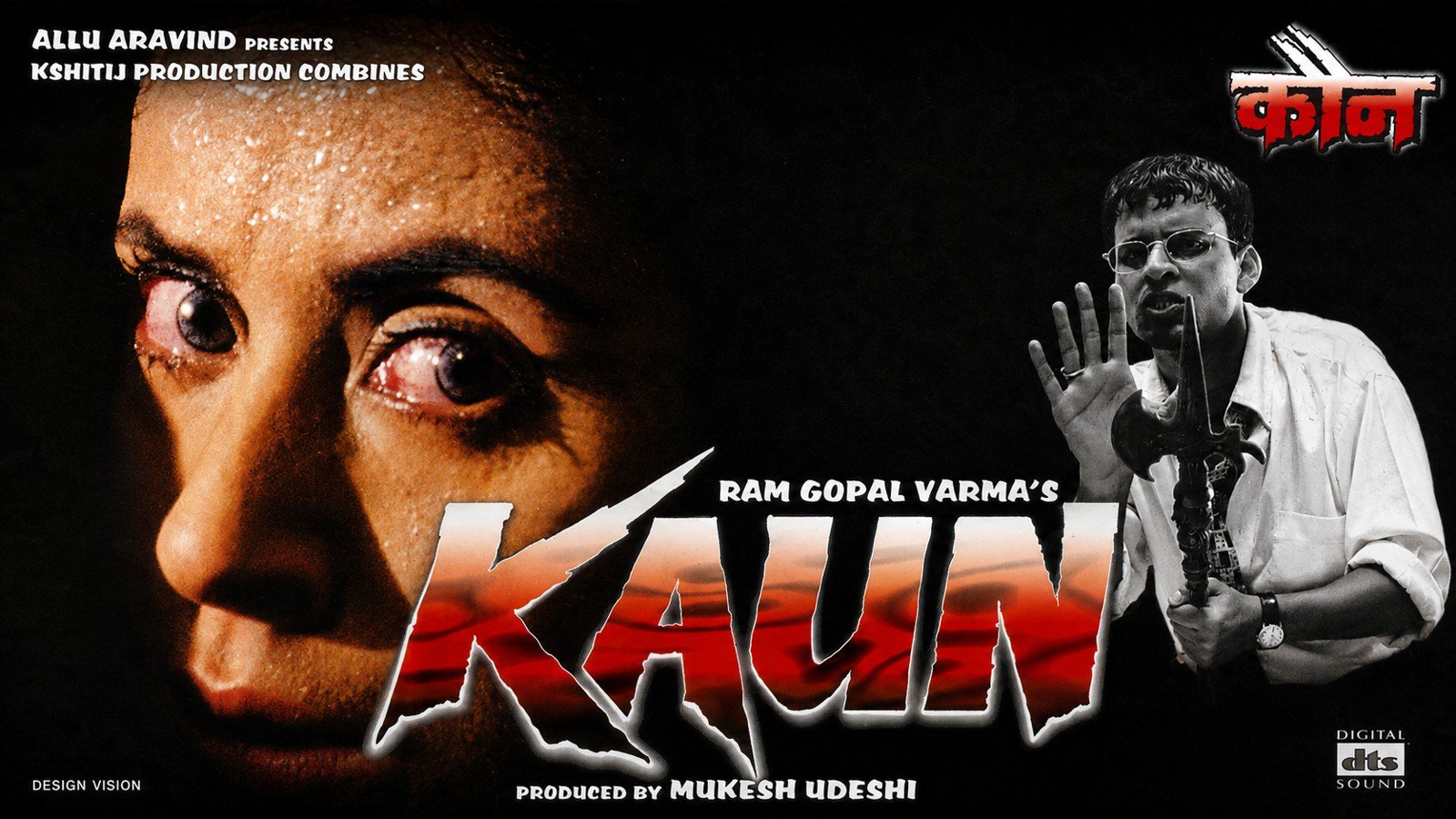
Kaun (1999)
Starring: Urmila Matondkar, Manoj Bajpai, Sushant
Director: Ram Gopal Verma
Synopsis: Bollywood plays with the stalker, slasher genre with rip roaring results.
After hundreds upon hundreds of violence-laden vigilante revenge thrillers, family melodramas and endless ritualised sing-song sessions comes a film that is at once a breath of fresh air and a slap in the face.
Kaun deserves credit before one even begins discussing its merits and shortcomings because it is at least attempting something different. Its subject matter and treatment are far removed from the staple diet of mainstream Bollywood audiences and, whether successful or not, any attempt to push beyond the endlessly recycled formula deserves acknowledgement.
A desi slasher-thriller is certainly a welcome change from the usual procession of avenging brothers, separated families and romantic frolics.
So before tearing the film apart, let us first congratulate the producers for having the courage to stray from the beaten-to-death path. Taking risks and attempting to expand the boundaries of popular cinema is admirable in itself.
Unfortunately Kaun then proceeds to fail spectacularly in achieving most of the goals it sets for itself.
The story concerns a young woman alone in a house on a dark and stormy night. Television news bulletins warn of a psychotic killer on the loose while a succession of strangers arrive at her door, any one of whom could be the murderer.
The director attempts to pile on the tension from the outset and after an amusing little title song — “Kaun? Don’t Open The Door!” wails away ominously on the soundtrack — proceedings begin in earnest.
Urmila finds herself trapped in what should have been a nightmare scenario.
The problem is that the film relies almost entirely on the oldest and most exhausted tricks in the horror handbook.
Every few minutes a mysterious noise emerges from somewhere in the house.
Every few minutes Urmila nervously inches towards the source.
Every few minutes she slowly approaches a door, peers beneath a bed, investigates a cupboard or creeps around a corner.
And every few minutes something harmless leaps out.
Usually a cat.
One or two such scenes can be effective.
Twenty of them become an endurance test.
For the first half hour the film seems convinced that repeatedly startling the audience constitutes suspense. The director strains desperately to create atmosphere but the effort becomes painfully visible. One can practically see the machinery grinding away behind every scene.
Then there are the performances.
Urmila turns in one of the most astonishingly awful performances ever witnessed in a supposedly serious thriller. Her entire approach feels calculated, artificial and wildly exaggerated. At no point does she resemble a terrified woman trapped in a dangerous situation.
She resembles an actress trying very hard to convince us she is trapped in a dangerous situation.
The distinction is crucial.
The infamous rendition of “Twinkle Twinkle Little Star” remains one of the most unintentionally hilarious moments in modern Bollywood suspense cinema. It is difficult to decide whether to laugh, wince or simply stare in disbelief.
Could the performance have been any worse?
Possibly.
But not by much.
Manoj Bajpai fares somewhat better though his character appears to have been written specifically to test the audience’s patience. During the course of the film he must utter the word “Ma’am” several hundred times.
By the halfway point one begins yearning for silence.
Sushant fares worst of all, managing to embarrass himself during an appearance that is mercifully brief.
The larger problem with Kaun is that everything feels forced.
Every scene.
Every reaction.
Every supposed nuance.
Nothing emerges naturally.
The characters appear to be working overtime to convince the audience of emotions that never genuinely register. The entire enterprise feels laboured and self-conscious despite its extremely short running time.
Even the climactic revelation, which is supposed to send viewers home in a state of shock, provoked little more than laughter.
Urmila’s antics during the finale are genuinely hysterical and almost worth revisiting purely for their camp value.
Credit should be given to the music director, however. If the film generates any tension at all, much of the responsibility rests with the soundtrack, which works tirelessly to create an atmosphere that the screenplay and performances struggle to sustain.
Yet after dismantling the film so thoroughly, one returns to the same conclusion.
At least they tried.
At least somebody attempted something different.
At least somebody decided that Bollywood audiences deserved an alternative to the endless stream of revenge dramas, romances and family sagas that dominated the era.
Kaun may be a deeply flawed, frequently irritating and often unintentionally comic exercise, but it represents a genuine attempt to break away from convention.
For that alone it deserves a small measure of respect.
As for the film itself, it ultimately plays less like a thriller and more like a horror-comedy with grand camp ambitions.
And spare a thought for the poor cat, who survives the ordeal with considerably more dignity than most of the cast.