
The Hot Spot Rating
Title: Papi Gudiya (1996)
Cast: Karisma Kapoor, Shakti Kapoor, Razzak khan, Tinnu Anand, Avinash Wadhawan
Director: Lawrence D’Souza
Nutshell: Fabulously clunky Bollywood version of Child’s Play.
The film begins with a voice of sage authority delivering an explanation as to the motive behind its creation. The voice claims the film was essentially made for the empowerment of children and to develop their self-confidence and awareness to such a finely tuned level that, just in case they ever find themselves in a predicament similar to the events of the film, they can tap into that resourcefulness and stand a minute chance of survival against all odds. The children of the future ought not to be phased by computers, flying saucers, “Roe-Butts,” or even apparently harmless little dolls. All these potential evils need to be handled with a calm, collected head, and this film aims to help develop such skills. Clearly, the causes are noble indeed, and the voice has that resonance that tells you he just knows what he is talking about.
In the opening scene, a Bombay police station is heavily under fire from a large and extremely irate crowd. The mob has turned violent, and the precinct is receiving a battering of rocks, sticks, stones, and some particularly choice words about how the police have thus far failed to catch the killer — or killers — responsible for several young children disappearing in the locality.
The Police Commissioner takes a rock to the face as he arrives at the precinct to put heat on Inspector Yadav, who is handling the case. Yadav suggests there might be something more sinister behind the disappearances and promises to throw himself into the investigation even more vigorously than before.
Meanwhile, a menacing dreadlocked figure prowls playgrounds and talent shows, stalking children for victims as part of his evil black magic scheme, which requires him to slay 12 children for the 12 moons of Puranmashi. There is just one night to go, and he needs one final victim. His eyes are set on a supremely talented kid at a local talent show who is dazzling the audience on his way to victory. Moments later, the child is abducted, but fate intervenes and he manages to escape — though not for long.
Meanwhile, the evil black magician Channi has his plans thwarted most unexpectedly by Inspector Yadav. Forced to flee without young Raju, he makes his way to a department store where Yadav corners him at last. As lightning crackles above, Channi summons his powers of black magic, grabs a doll from one of the shelves, and begins chanting magical incantations in an attempt to transfer his spirit and soul into the doll before his physical body is destroyed. Yadav closes in, but Channi follows the script of Child’s Play to the hilt and successfully inhabits the doll. Channi’s corpse is taken away by the authorities, but we all know he lives on inside a new willing host.
Shakti Kapoor absolutely turns it on in his role as the dreadlocked Channi, with the black magic chant he comes up with on that fateful night arguably the finest black magic chant ever encountered in the annals of Indian cinema — and there have been plenty over the years. This one is spectacular.
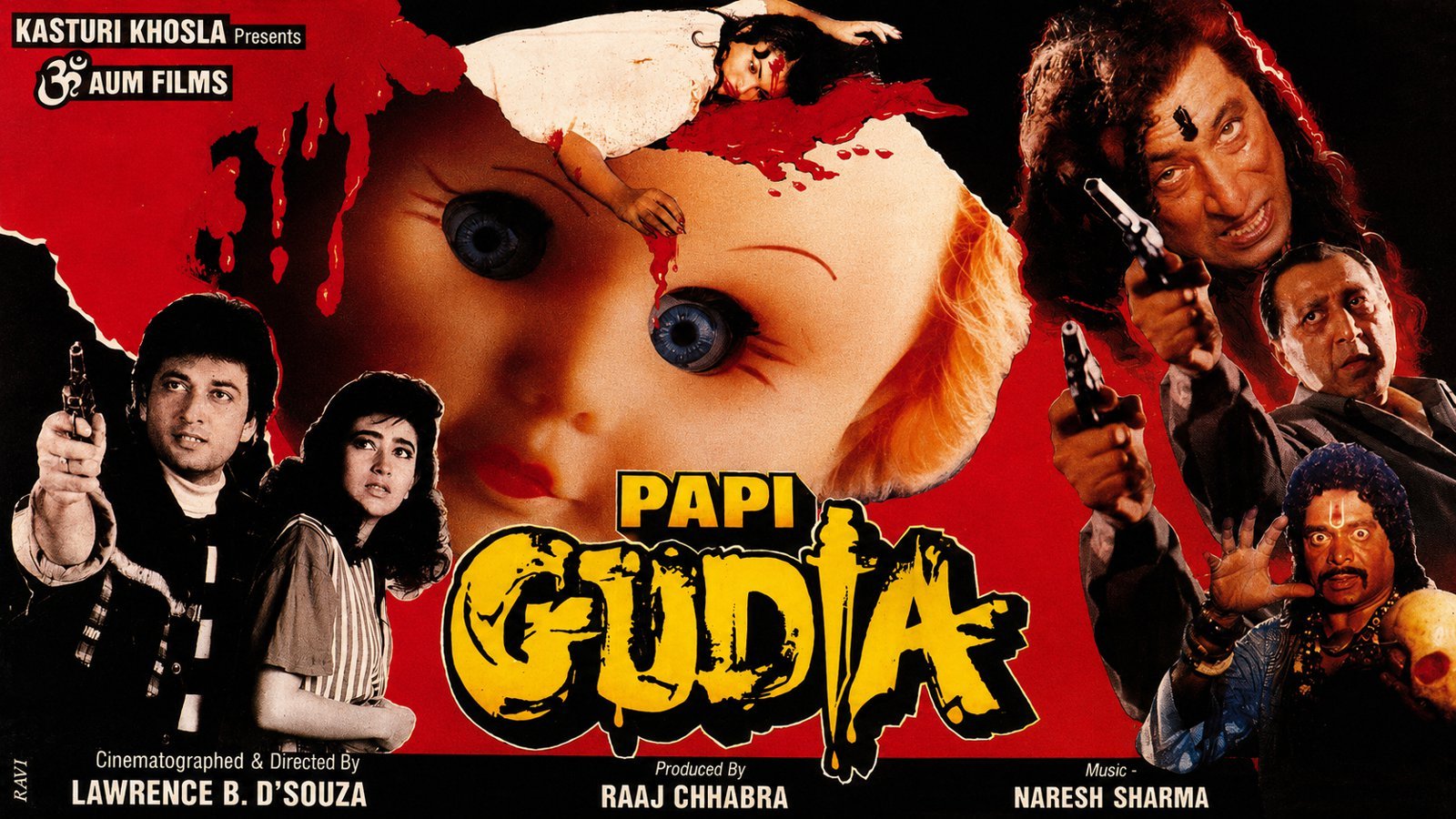
Unfortunately, all aspirations the film has as horror go flying straight out of the window the moment the audience lays eyes on the doll. A doll that is supposed to contain the soul of a serial killer and perpetrate untold horrors — including cold-blooded murder — instead induces instant pained laughter and resounding guffaws rather than any sense of dread or malice. Of all the dolls in the world the producers could have chosen, they had to pick this one. One genuinely wonders whether anyone has ever asked the producers or director why they selected that particular doll for the role, which is essentially the title character of the movie itself. The doll is so pitifully wrong that you almost suspect it must have been done on purpose, though the thought process remains bewildering all the same. Perhaps doll beauty truly is in the eye of the beholder, and the filmmakers honestly believed this abomination was going to spawn millions of nightmares and half a dozen sequels like the Child’s Play series it so shamelessly rips off.
Basically, the film follows a path very close to the Child’s Play storyline, with dance showgirl Karisma Kapoor picking up the possessed doll from a shady street vendor selling stolen and dodgy goods at bargain prices. Raju, Karisma’s younger brother, insists she buy him the doll, and the nastiness begins the moment Channi arrives at their home. It appears as though Channi has chosen a female body to inhabit, unlike Chucky, who was very much a man.
The first victim receives a brutal hammer blow to the face before being launched off the balcony of a high-rise flat. Yadav is mysteriously murdered, and the policeman in charge, played by Avinash Wadhawan, becomes convinced the eight-year-old Raju is responsible. Love blossoms between the charming police officer and the pretty, pert dancer Karisma, but unknown to them, Raju and Channi are embarking upon a murderous spree across Bombay.
After Yadav’s murder, Wadhawan and Karisma’s budding romance is put to the test by the increasingly bizarre situation involving Raju and Channi. Karisma has the same horrifying realization that Alex’s mother had in Child’s Play when she discovers there are no batteries in the doll’s compartment — we’ve seen it all before. Convinced at last, she tries and fails to persuade her boyfriend, though it isn’t long before he himself becomes the victim of a vicious attack and barely survives. Meanwhile, Channi now seeks to transfer his soul into young Raju’s body and continue living as the boy.
Karisma and her boyfriend finally turn to one of Channi’s old associates for guidance, but Channi’s powers have grown tenfold since the days of his apprenticeship, and he won’t be toppled so easily. The battle is now on to save Raju from Channi’s evil intentions — but not before the producer and director shove another half a dozen songs into the film after the interval point.
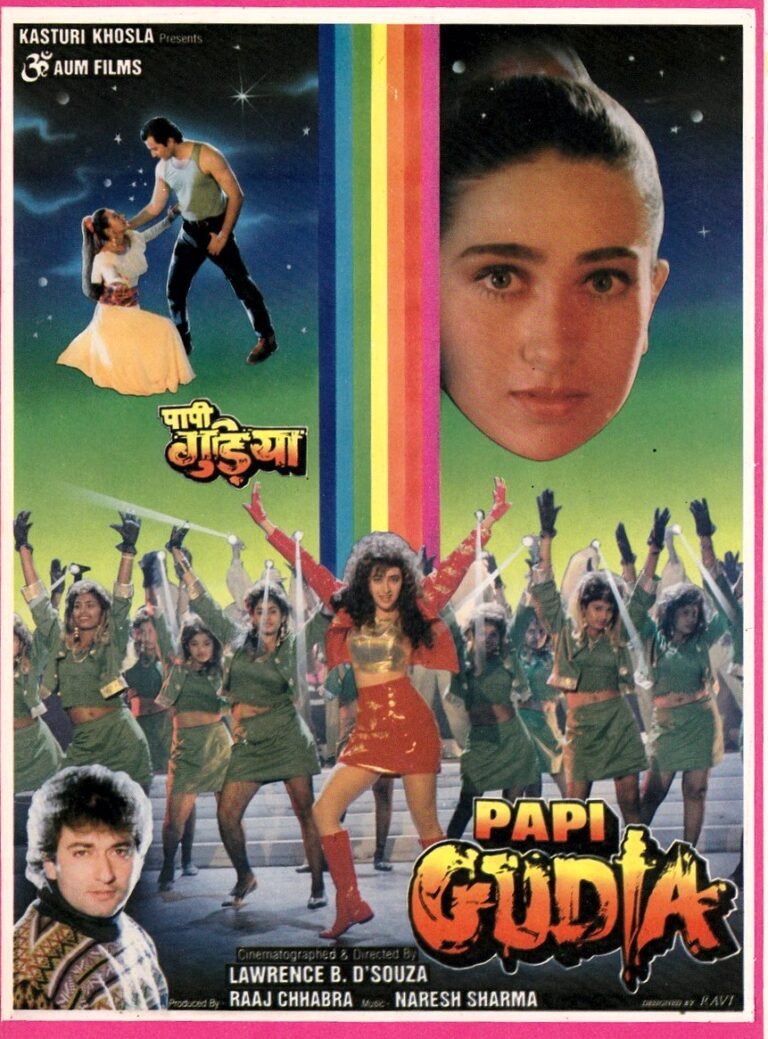
What had been an utterly goofy but engaging film up to this stage now begins to falter badly under the weight of its musical interludes, which deflate whatever momentum the movie had started to build. The first two songs would have been more than enough, but following them with another five or six means the film is unable to sustain any rhythm and instead collapses beneath its own self-inflicted excess. However, things do move along at a brisk pace whenever there aren’t any laborious musical interruptions, especially those featuring the dreaded Kumar Sanu.
Shakti Kapoor steals the show with his typically vigorous depiction of the child-killing, black-magic-practising, dreadlocked Rasta evil sadhu gone spectacularly awry. Karisma is perfectly adequate, especially considering she has to endure a range of tacky ’90s-style disco routines attached to songs with lyrics so cringe-inducing they provoke more than a few giggles along the way.
Sadly, it’s yet another case of a film losing steam entirely in order to accommodate half an hour of painful musical numbers, including more of Kumar Sanu — perhaps the single most potent reminder of the dreadful excesses of the 1990s.
Other than the fact that the film works only as comic relief and not in the slightest as actual horror, it can still be enjoyed and admired for what it is: a ridiculous and marvellously inept reworking of Child’s Play.
Perhaps the film’s greatest unintentional moment is its connection to those hideous kiddie talent shows they have in India, where little pre-teens are made to cavort and twitch to sexually loaded film songs while the audiences and judges are all well on the wrong side of 40 and consist either of demented parents who beat their children into becoming stars or people who look disturbingly like closet paedophiles. There is not a child to be seen anywhere in the audience. These shows are genuinely more disturbing than anything in Papi Gudia, and it feels entirely appropriate that Shakti/Channi is merely one predator among many.
Fortunately, the fun moments in Papi Gudia are in reasonably fair supply, but the songs negate much of that goodwill, and unless you had an FF button handy on the remote, it’s unlikely you would survive the true horror — namely the music and songs — of this otherwise insanely enjoyable, horribly misfired, shoot-yourself-in-the-foot piece of Bollywood dementia.
Highly recommended — but entirely for all the “wrong” reasons.