
The Hot Spot Rating
House No.13 (1990)
Cast: Anil Dhawan, Sharat Saxena, Reeta Bhaduri, Salim Fateh, Leena Nair
Director: Baby
Nutshell: Old House bears ghastly secrets and a hidden doorway to hell…. effective chiller
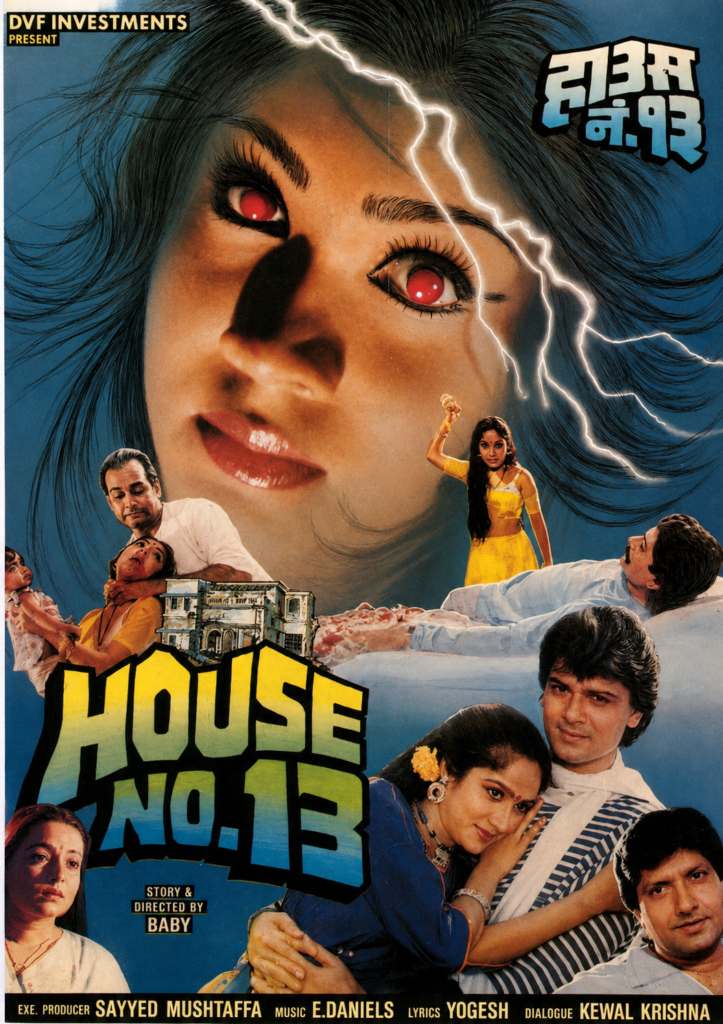
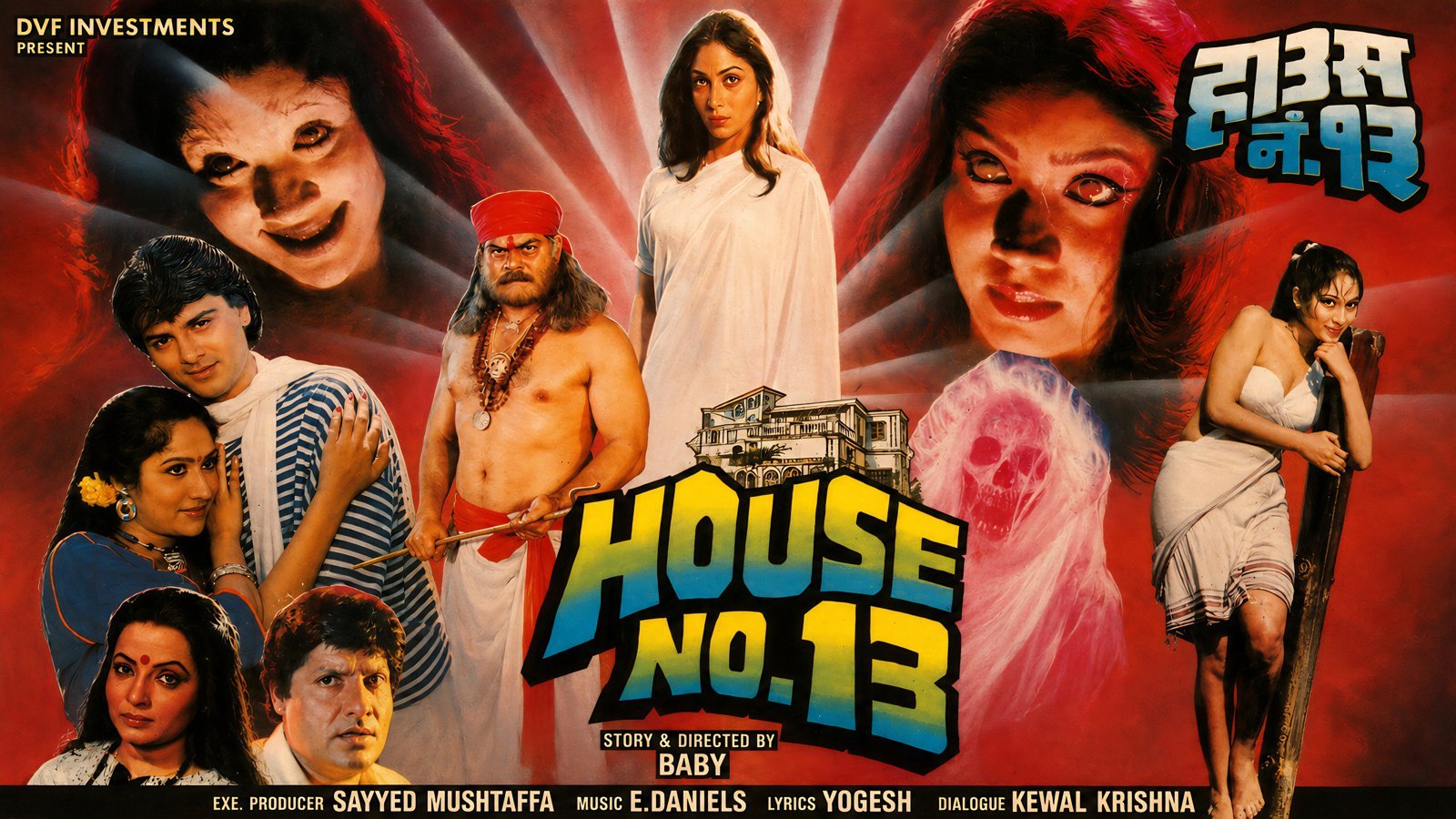
House No. 13, this deliriously entertaining 1990 shocker conceived, written, and directed by the magnificently mononymous Baby, stands several notches above the sort of horror fare audiences had sadly become accustomed to during the dreary post-Ramsay years of the 1990s.
Ever since the once-prolific Ramsay Brothers production line gradually diverted its energies toward television, Bollywood horror had lurched steadily downhill into the hands of assorted smut merchants and bargain-bin opportunists such as K. I. Shaikh, Jitendra Chawda, Kishan Shah, R. Mittal, Harinam Singh, and company.
Had it not been for occasional rescue attempts by filmmakers such as Ram Gopal Varma with efforts like Raat and Kaun?, the genre might well have expired altogether.
The real heroes keeping Indian horror alive during this period, however, were arguably a determined group of South Indian filmmakers quietly producing genuinely atmospheric and occasionally inspired horror films while much of mainstream Hindi horror collapsed into unwatchable nonsense.
House No. 13 is one such example.
Though clearly influenced by Western haunted-house cinema, the film nevertheless retains a distinct personality and atmosphere of its own. Most importantly, it avoids the laziness that plagued so many Indian horror productions of the era. The death scenes are not merely shot-for-shot imitations of imported Hollywood material, and — miracle of miracles — there is not a single rubber monster mask, bear costume, or pair of ludicrous plastic vampire fangs in sight.
Even more astonishingly, the soundtrack largely avoids the endlessly recycled “BBC Horror Effects” library so beloved of cheap Indian horror cinema, particularly those hysterically overused wolf howls.
Naturally, the film still opens on the obligatory dark and stormy night.
Rain lashes violently against the windows of a decrepit old haveli where a brooding artist is hard at work completing his latest masterpiece while his nervous servant repeatedly warns him that the mansion is haunted.
The artist scoffs dismissively at such nonsense.
Naturally, this proves unwise.
Soon a mysterious young woman arrives seeking shelter from the storm. Drenched, timid, and strangely ethereal, she accepts the artist’s invitation to dry herself and change clothes. He then politely asks whether she would mind posing for a portrait.
She agrees.
While painting her, however, the artist gradually notices something horrifying:
the woman casts no reflection in the mirror beside her.
And with that marvellously eerie revelation, the film immediately grabs attention.
The opening sequence is genuinely effective and culminates in a satisfyingly creepy shock that launches the film fully into supernatural territory.
Some time later, an unsuspecting family purchases the notorious haveli at a suspiciously bargain price and happily move in, entirely unaware of the gruesome history attached to the property.
Leading the family is veteran actor Anil Dhawan, who wanders cheerfully into the nightmare alongside the rest of his household.
Predictably, things soon deteriorate.
The wheezing old grandfather complains that mirrors in his room are behaving strangely, clouding over mysteriously with smoke. Nobody believes him of course. Later, the grotesquely fake Mona Lisa hanging above his bed develops what appears to be some sort of supernatural skin disease.
Then comes one of the film’s finest sequences.
The painted woman’s hair suddenly begins growing outward from the canvas in thick, writhing strands that snake through the room before wrapping themselves around the terrified old man and dragging him screaming toward a gruesome fate.
It is wonderfully absurd and surprisingly effective.
Elsewhere:
- dolls become possessed,
- hidden doors lead into bizarre ghostly dimensions,
- spirits in white saris drift ominously through corridors,
- and assorted demons with unresolved grievances terrorise the household relentlessly.
Director Baby attacks these sequences with admirable enthusiasm and considerable flair. There is genuine effort put into atmosphere, pacing, and visual invention — qualities often painfully absent from low-budget Indian horror cinema of the period.
Unfortunately, Bollywood being Bollywood, the film is still periodically interrupted by several entirely forgettable songs and an excruciatingly bland romantic hero whose scenes threaten to bring proceedings grinding to a halt.
Thankfully, however, the film avoids one of the greatest curses of vintage Hindi horror:
the intolerable comedy sidekick.
Mercifully absent are the likes of:
- Jagdeep,
- Paintal,
- Asrani,
- or Narendra Nath mugging endlessly for cheap laughs.
A tremendous blessing indeed.
Another major asset is Sharat Saxena as the resident Tantrik. Unlike the usual pot-bellied, bug-eyed occult buffoons so common in Indian horror films, Saxena plays the role with calm authority and surprising restraint. His muscular frame, beard, and quietly serious demeanour lend the film a degree of credibility whenever supernatural chaos threatens overwhelming silliness.
The plot itself — wronged female spirit returns from beyond the grave seeking revenge — is ancient material even by horror standards. Yet Baby injects enough energy, atmosphere, and originality into the execution to keep matters consistently engaging.
Yes, the songs remain irritating.
Yes, the romantic subplot drags.
Yes, portions of the acting are wildly uneven.
But despite these flaws, House No. 13 remains one of the stronger Indian horror films of its decade and proof that post-Ramsay Bollywood horror was not entirely devoid of life.
Alongside films such as Chudail and Maa Ki Shakti, it suggested there was still genuine enthusiasm and imagination lurking within Indian horror cinema — particularly in the South.
And at a time when rumours circulated that the Ramsays themselves were preparing a comeback with Dhund: The Fog, the future of Indian horror suddenly did not seem quite so bleak after all.