
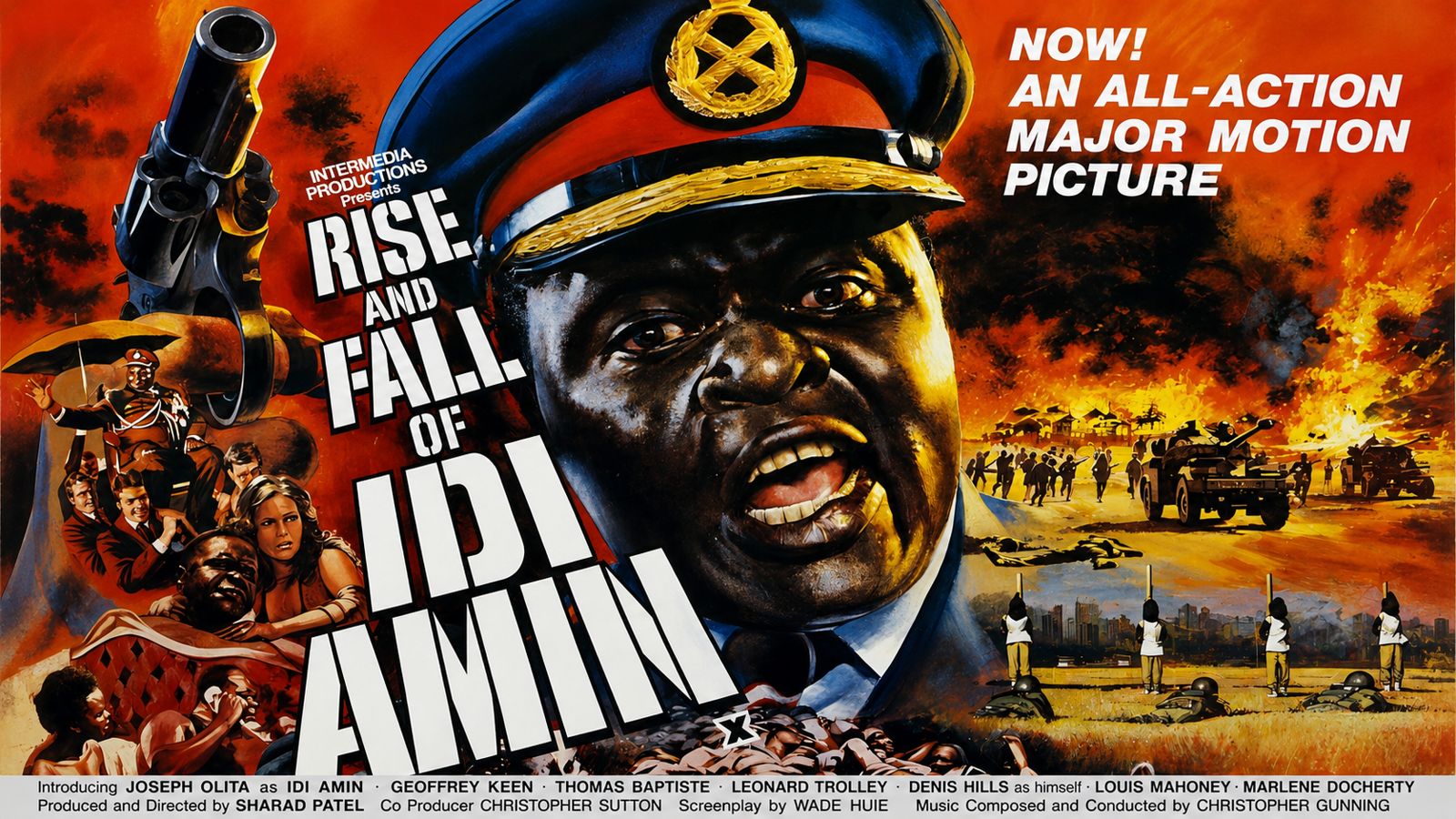
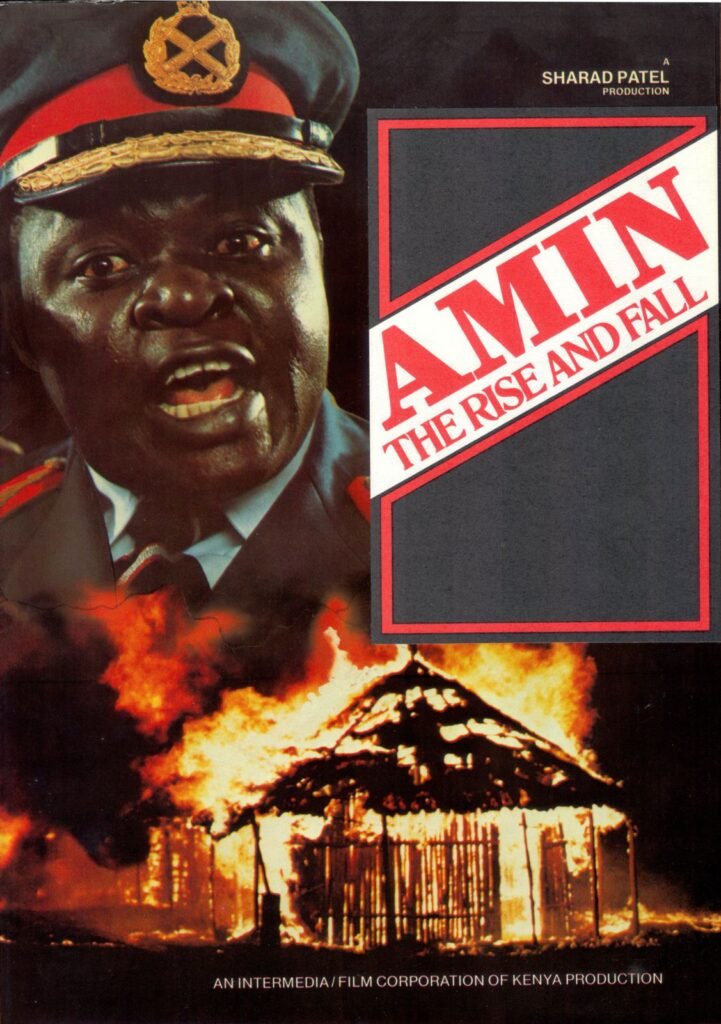
“Here HE comes, the great Lee-dah,
Full of wonder and full of Pow-ah,
Loved by all
and adored by all,
a man of the people who govern true!”
The chorus then triumphantly breaks into:“DSO! CBE!”
— apparently meaning “Conqueror of the British Empire.”
This elusive gem of Blaxploitation cinema is about as magnificent as the genre ever gets. It ranks alongside — if not above — such towering epics as Shaft thanks largely to the booming, rip-roaring performance by Joseph Olita in the title role.
The scriptwriters have worked absolute miracles here, transforming what could easily have been a dry, one-dimensional political docu-thriller into something operating far beyond the hysterical realms of outright farce. The film hurtles along at breakneck speed, beginning with a barely intelligible introductory blurb about Uganda before plunging headfirst into the joyous scenes surrounding Amin’s military takeover from Milton Obote, the civilian — if deeply corrupt — ruler of the ravaged nation.

OLITA BRILLIANTLY PLAYS AMIN AS A SLAVERING, DEMENTED SEX MANIAC WITH THE INTELLECT OF A DROOLING THREE-YEAR-OLD.
It is genuinely a great performance and energises the entire film with sheer force and dynamism.
Olita carries the movie effortlessly upon his mighty shoulders, clearly relishing and fully inhabiting the role at every opportunity. Perhaps most shocking of all is that the events depicted onscreen are, by and large, remarkably faithful to the various biographies written about Amin and Uganda throughout the turbulent 1970s. Very few liberties appear to have been taken by the filmmakers, and perhaps it is merely the film’s sensationalistic style that creates the impression that the material somehow exists beyond reality.

The Dora Bloch affair and Operation Entebbe are historical facts, as are Amin’s expulsions of Ugandan citizens of Asian origin. Amin openly likened himself to Adolf Hitler and reportedly idolised him, promising to erect a statue “in the middle of Kampala.”
Amin also changed allegiances with every passing season, first courting the British and Israelis before suddenly spouting Marxist gibberish to appease the Soviets. Later still, he embraces Islam and eventually finds himself abandoned by almost everyone except an enthusiastic collection of eager-beaver Libyans.
“Allah saves me,” mutters Amin after narrowly surviving an assassination attempt.
Earlier, he bids farewell to departing Russians at the airport with what may well be the single worst accordion performance in recorded history.
His pandering to the Arab world ultimately proved extremely convenient, considering he was later granted a life of comfort in Saudi Arabia, safely avoiding meaningful punishment for the atrocities committed during his reign. Much of this material is documented in the writings of Dennis Hills, a British journalist and one-time Amin confidante.
The shocks and horrors — random murder, plunder, torture, massacres, rape, beheadings, voodoo, cannibalism, and of course Amin’s endless sexual exploits — are piled on so relentlessly that the viewer is left in a near delirium.
At first, much of it is uproariously funny.
Then, once the laughter subsides, there is an uncomfortable realisation that all this madness was not some lurid fantasy but actual historical fact responsible for devastating hundreds of thousands of lives. The mayhem and destruction are entertaining onscreen, but living through them would have been anything but amusing.
Idi Amin was undoubtedly a bumbling oaf of a man, yet simultaneously a ruthless and stone-hearted mass murderer. Some continue to argue that he was a genuine Ugandan nationalist who stood up to colonial powers and stuck it to the white man. There is perhaps a sliver of truth buried somewhere within that argument, but overwhelmingly he was a sadistic brute utterly lacking in statesmanship, diplomacy, or basic competence.
His “understanding” of economics was astonishing in all the wrong ways, while his regard for the judiciary bordered on the catastrophic. The scene in which he shoots the Justice representative in a fit of rage is genuinely horrifying, though within the context of the film it somehow plays like grotesque pantomime.
Perhaps the best way to appreciate the movie is simply as an outrageous historical Blaxploitation splatter-black-comedy rather than as a serious examination of the tragedy that befell Uganda in the early ’70s when this lunatic seized power.
Sadly, decades later, Uganda still appears to be in recovery mode, while the regimes that followed Amin have themselves remained entrenched in power for decade after decade, with human rights concerns continuing to cast a long shadow — even if the bizarre “entertainment factor” provided by a buffoon obsessed with seeing his own name splashed across the international press no longer exists quite as it did during the reign of Field Marshal Idi Amin Dada.
A line such as:“You bitch — chop her arms and legs off!”
is genuinely laugh-out-loud funny while watching this deranged spectacle unfold onscreen. Yet when one remembers that such acts were horrifyingly close to reality for some of Amin’s unfortunate companions, the laughter suddenly catches in the throat.
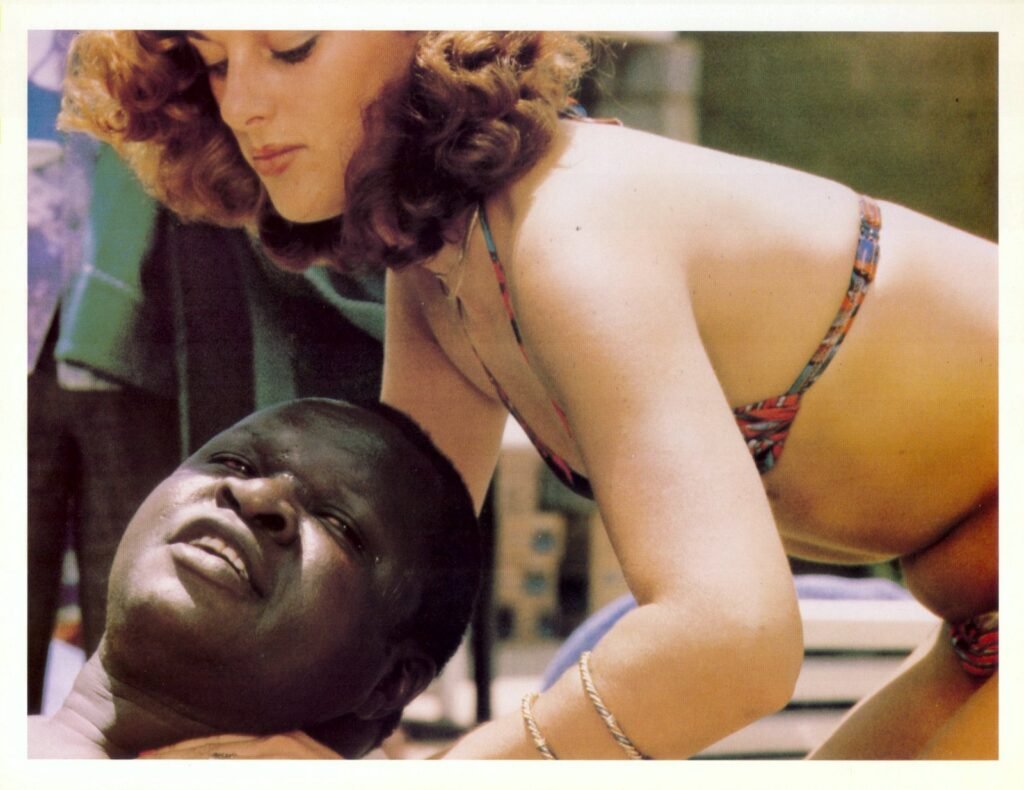
Overwhelmingly, however, the film succeeds as a fabulous slice of utterly outlandish black comedy. Olita is dynamite throughout, and the movie delivers guffaws by the cartload while refreshing those cinematic regions most films cannot even hope to reach.
If all that somehow weren’t enough, one bizarrely ends up almost cheering for the ogre-like Amin by the film’s conclusion — if only for his absurd perseverance and, naturally, his spectacularly prolific romantic conquests.
What a joy it was finally to track down and purchase this elusive gem after years of searching without success. We are now immensely proud to add this epic slice of Blaxploitation insanity to our distinctly manic collection for all to enjoy.