
The Hot Spot Rating
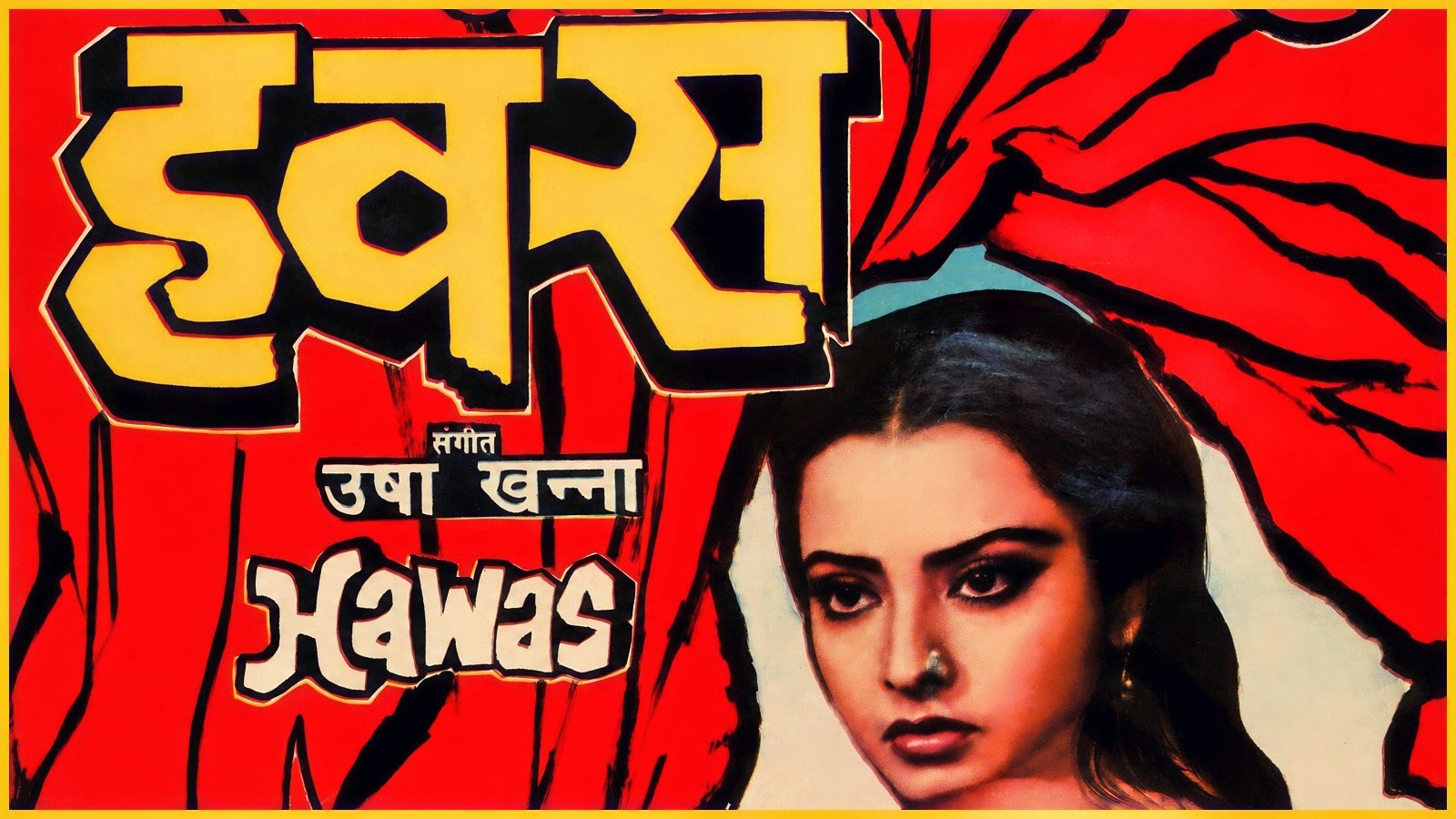
Title: Hawas (1974)
Cast: Bindu, Neetu Singh, Anil Dhawan, Faryal, Pinchoo Kapoor, Mehmood, Vinod Mehra, Rekha
Director: Sawan Kumar
Nutshell: Sawan Kumar’s Spectacular and deliciously sleazy tale about the dreaded curse of Nymphomania with Bindu as the smouldering victim.
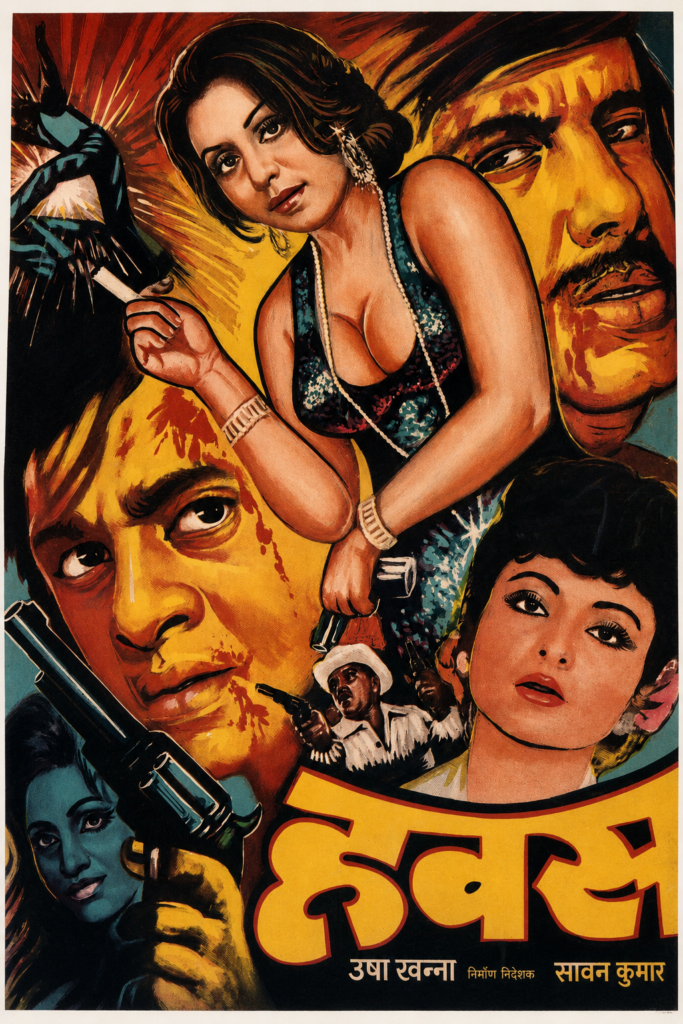
Hawas opens with shady operator Pinchoo Kapoor running an immensely profitable criminal enterprise alongside a smooth-talking gang of professional scammers, conmen, and assorted lowlifes who spend their days swindling jewellers, businessmen, moneylenders, and virtually anyone unfortunate enough to possess a functioning bank account.
The rewards, naturally, are considerable.
Flashy sports cars, endless rivers of alcohol, decadent parties, and enough glamorous women to populate an entire cabaret nightclub — all the essential ingredients of the good life are present and correct. Among the gang’s slickest operators are Anil Dhawan and the perpetually seductive Faryal, whose daily existence revolves around cheating people with effortless charm and considerable style.
Business is booming, but in the criminal underworld “comfortable” is never enough for very long.
Soon the gang sets its sights upon a fabulously wealthy industrialist who is beginning to wobble somewhat with age but has nevertheless managed to secure himself an absurdly glamorous young wife in the form of Bindu. Though visibly ageing, the old tycoon appears thoroughly rejuvenated by his marriage to this breathtakingly voluptuous trophy bride — much to her obvious frustration.
Because poor Bindu suffers from what the film rather breathlessly describes as “nymphomania.”
And in the gloriously trashy world of Hawas, this means she is apparently incapable of resisting any reasonably functioning male who wanders into her orbit.
Pinchoo and company quickly realise this particular weakness may prove extremely useful.
As the film helpfully explains, nymphomania may once have been considered a Western condition, but it has now apparently spread enthusiastically to India as well, with alarming “cases” emerging nationwide.
Thus begins Bindu’s feverish campaign of seduction.
Priests, doctors, policemen, businessmen, loafers — virtually every male character entering the film eventually finds himself dragged into her increasingly chaotic web of lust and manipulation. The result is simultaneously absurd, sleazy, hilarious, and strangely pitiable.
Complications arise once Anil Dhawan develops feelings for Bindu’s beautiful young stepdaughter, played by Neetu Singh. Before long he finds himself romantically entangled with both mother and daughter simultaneously, leading to increasingly awkward and combustible situations.
The film itself is a magnificently shameless piece of mainstream Bollywood exploitation cinema.
Dialogue throughout ranges from wonderfully trashy to utterly surreal, with gems such as:
“Main kya Dharmendra hoon, jo larki dekhi aur gana shuroo?”
perfectly capturing the film’s deliriously tawdry tone.
Meanwhile Bindu absolutely devours every scene she appears in. This is unquestionably her film from beginning to end, and she attacks the role with astonishing enthusiasm.
Director Sawan Kumar Tak further spices proceedings up by throwing in a sizzling cabaret performance from Rekha performing the infectious “Aao Yaro Gao” as the “Malka-e-Husn.” The soundtrack itself, composed by the criminally underrated Usha Khanna, is far better than the film probably deserves, packed with catchy jazz-funk rhythms and several genuinely memorable songs.
Asha Bhosle performs numbers such as “Yeh Hawas Kya Hai” and “Apne Dil Mein Jaga Dijiye,” while Mohammed Rafi contributes the film’s most famous song, “Teri Galiyon Mein Na Rakhenge,” which enjoyed considerable popularity at the time.
As the story progresses, Bindu repeatedly recounts the tale of a former lover whose tragic death supposedly left her trapped in a permanent state of uncontrollable desire. Whether genuine trauma or manipulative excuse, her obsession steadily intensifies until sex, deceit, violence, and murder begin merging together into one feverish downward spiral.
Eventually even her ageing husband becomes little more than an inconvenient obstacle standing between her and total freedom.
In one of the film’s most memorably lurid sequences, she lovingly kisses and massages the old fool in a steaming bath before suddenly dragging him beneath the water and drowning him mercilessly.
Afterwards she performs the grieving widow act admirably enough, but suspicion gradually begins closing in as Anil Dhawan teams up with a sympathetic thug to expose her increasingly psychotic behaviour.
Her downfall appears inevitable.
The remarkable thing about Hawas is that despite being utter rubbish in many respects, it remains consistently entertaining rubbish. There is enough glamour, melodrama, sleaze, camp excess, and unapologetic tackiness to carry the film through its weaker stretches, while Bindu’s gloriously uninhibited performance holds everything together almost single-handedly.
Neetu Singh, still fresh-faced following Yaadon Ki Baaraat, performs reasonably well, while Anil Dhawan makes for an appropriately oily romantic rogue. Ultimately though, this belongs entirely to Bindu, who dominates the screen with magnificent conviction.
By the mid-1970s, Bindu had become enormously popular playing seductive vamp characters ever since Do Raaste, though despite occasional lead roles she never entirely escaped that “bad girl” image.
Still, the 1970s were a remarkably adventurous period for Bollywood, and Hawas occupies a curious little niche as one of those “almost dirty movies” that somehow slipped through mainstream Hindi cinema carrying an Adults Only certificate while remaining just respectable enough to avoid outright obscenity.
It is certainly no masterpiece.
But as a gloriously sleazy slice of vintage Bollywood exploitation cinema, it proves consistently amusing, bizarrely watchable, and definitely not the sort of film one would choose for a quiet Sunday afternoon screening with the in-laws.