
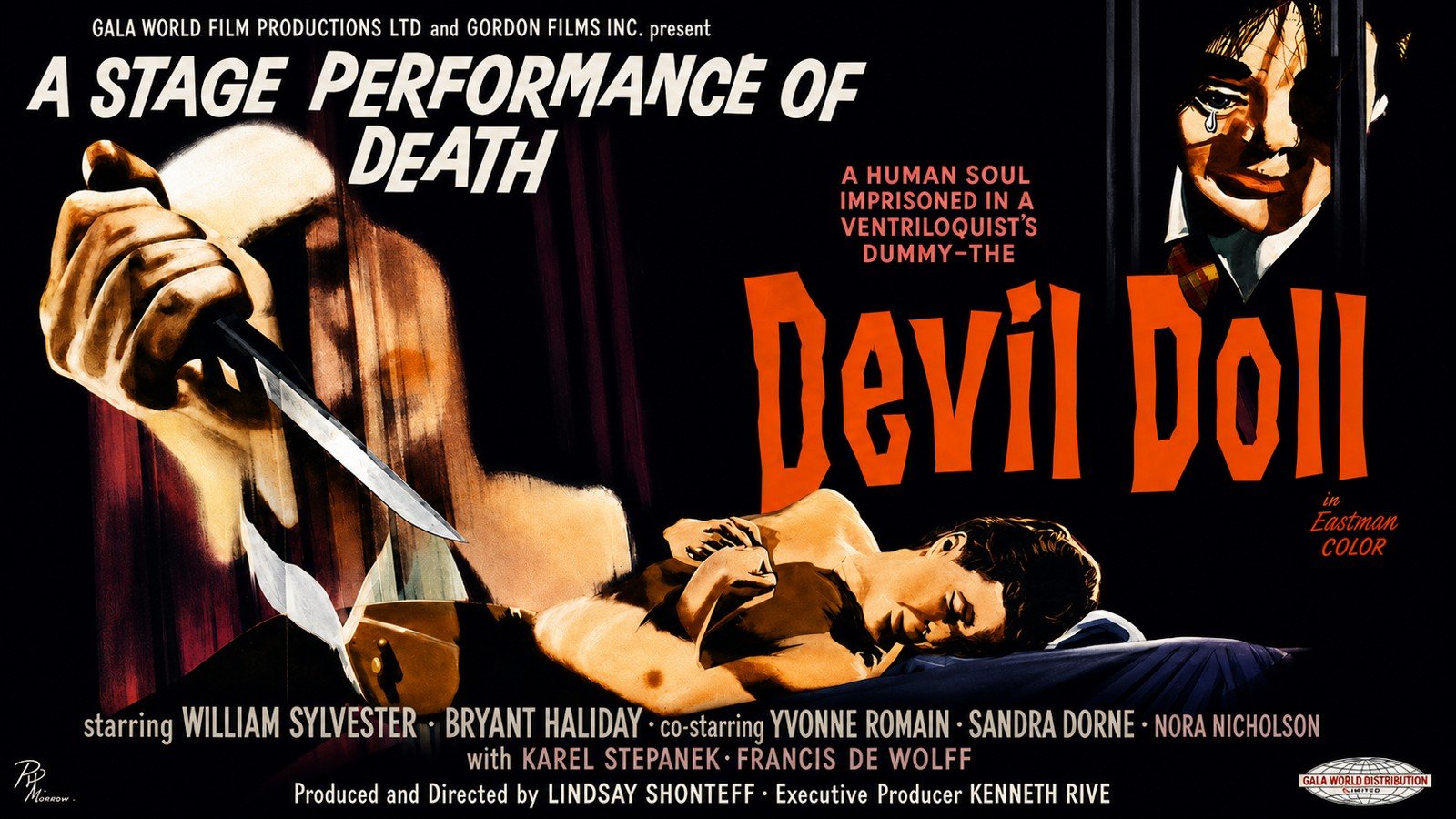
Devil Doll is a marvellous, edgy thriller with more than a few shades of Todd Browning’s classic Freaks running through it. Brilliantly acted, it possesses a compelling, mesmerising quality and contains numerous genuinely chilling sequences involving a mysterious ventriloquist and his sinister dummy.
Really rather creepy and deeply impressive, this is an unheralded classic that deserves a far broader audience than it has ever received.
The story revolves around the mysterious Vorelli, a bizarre ventriloquist whose powers appear to extend far beyond those of any ordinary stage performer. London is enthralled by his hypnotic genius, yet there is far more to this macabre figure than first meets the eye in this strange and unsettling tale of twisted horror.
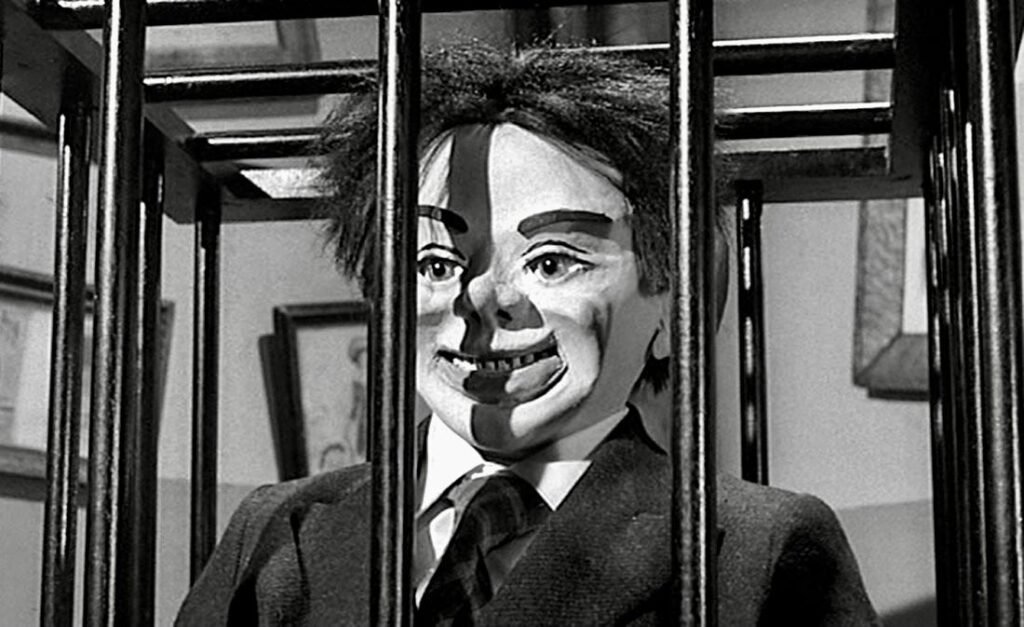
His act centres around Hugo, a dummy with uncanny powers that leave audiences shocked and bewildered. One of the most compelling aspects of the performance is the strange, almost poisonous tension between Hugo and his master, Vorelli. Instead of the usual comic banter associated with ventriloquist acts, these two seem bound together by deep-rooted hatred and enmity — emotions Vorelli deliberately feeds upon to create an intensely uncomfortable but mesmerising spectacle for audiences who continue to pack theatres night after night whenever the act arrives in town.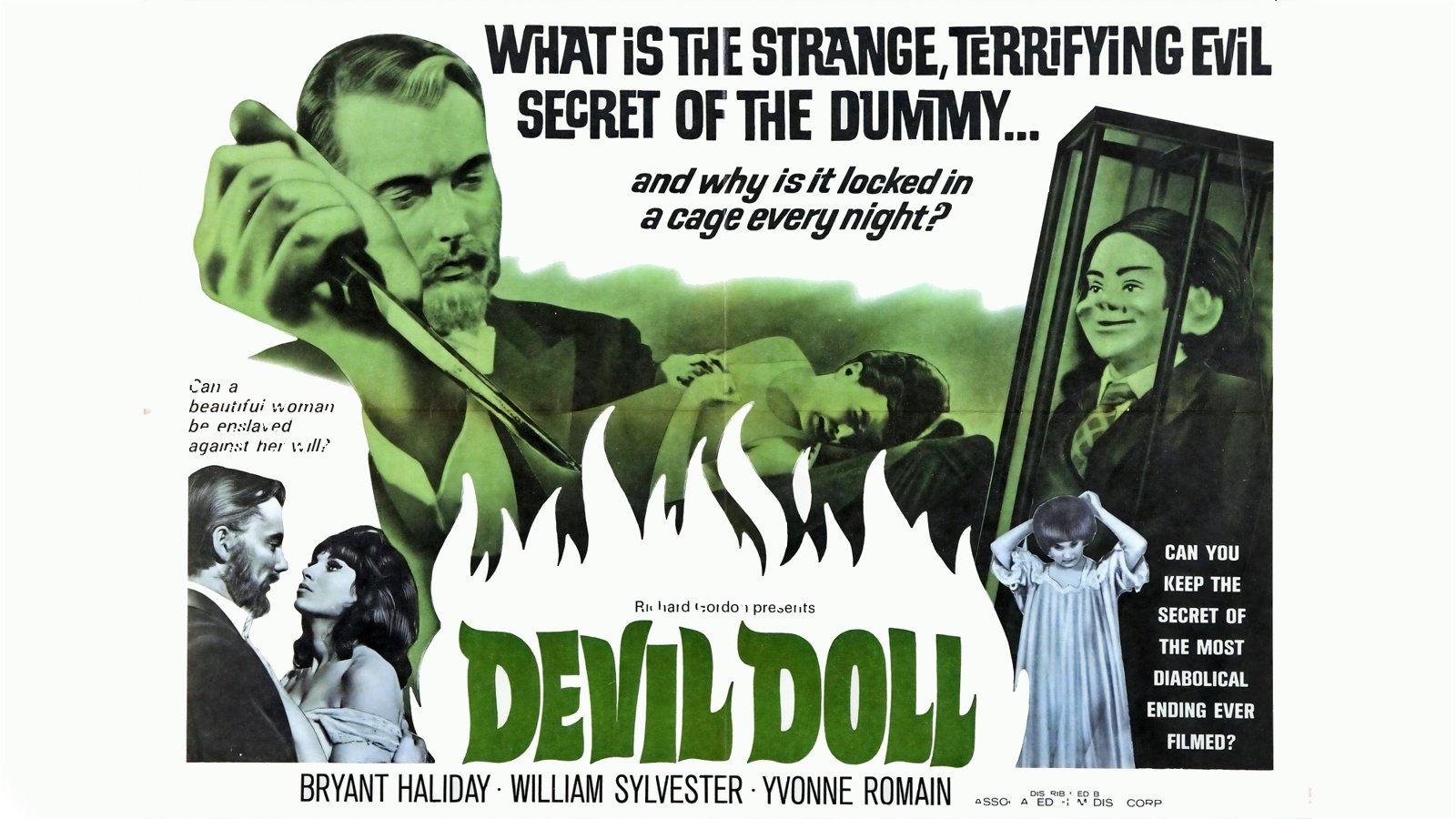
Audiences are particularly startled whenever Hugo rises awkwardly from his chair and lurches across the stage. There are audible gasps during moments when he is taunted and chided by Vorelli before suddenly grabbing a knife and advancing threateningly towards his master. There are no jokes, no harmless pranks — only exchanges charged with tension, hostility, revulsion and dread. Hugo is anything but cute or amusing. His fixed yet warped grin evokes genuine horror rather than laughter. Yet the show is a sensation and Vorelli is a major star, basking in fame and adulation while playing to sold-out crowds night after night.
A journalist becomes fascinated by the mystery surrounding the act and invites Vorelli and Hugo to a lavish social gathering attended by aristocrats and socialites. Given the opportunity to examine the dummy more closely, he searches for hidden mechanisms or wires that might explain Hugo’s movements, but finds nothing of the sort. Hugo appears to be little more than a lifeless dummy stuffed with padding and loosely connected limbs. Meanwhile, Vorelli begins using his hypnotic powers to place the journalist’s beautiful fiancée under his sinister spell, with chilling consequences.
One of the film’s most haunting moments occurs when Hugo, wearing his hideously drawn grimace-like smile, awkwardly approaches the journalist pleading for help and muttering cryptic references to “finding me in Berlin, 1947.”
The journalist begins digging into Vorelli’s past and uncovers a series of deeply disturbing stories told by those who crossed paths with him years earlier — tales involving hypnotism, murder and even the transference of souls from one body into another. Impossible, unbelievable stories… and yet the increasingly strange behaviour of his fiancée, who suddenly announces she is abandoning him to become Vorelli’s wife, forces him to reconsider the terrifying possibility that something truly monstrous lies behind the act.
Events build towards a shocking climax as the murky whispers and suspicions erupt into horrifying revelations concerning Vorelli’s grotesque methods and hideously twisted ambitions. There are unmistakable shades of Todd Browning’s masterful Freaks in the film’s ghastly and deeply unsettling conclusion.
Bryant Halliday is excellent as Vorelli, positively oozing menace, sleaze and corruption. The film also possesses moments that recall the dreamlike surrealism of Les Yeux Sans Visage and deserves far greater recognition than it has ever received. Genuinely creepy and consistently unnerving, Devil Doll stands as a minor masterpiece of the macabre.
Many sequences are frighteningly compelling as Hugo and Vorelli grapple for dominance in what increasingly resembles a battle of hatred and control. The atmosphere is lurid, sordid and strangely hypnotic all at once. Ventriloquist horror stories have often proved highly effective thanks to the eerie discomfort inherent in the concept itself. The Devil-Doll from the 1930s remains a classic, Dead of Night is rightly revered, and Magic in the late 1970s was widely acclaimed. James Wan’s Dead Silence had its moments but ultimately felt rather weak. This British slice of macabre horror from 1964, however, is as good as the genre gets — bristling with dark energy, menace and psychological unease.
Interestingly, Devil Doll had to be re-cut prior to release after the BBFC threatened to refuse certification. Director Lindsay Shonteff was reportedly forced back into the editing room to trim the film down. It would be fascinating to see the uncut version today, though sadly that now appears highly unlikely.
The film also has a curious Pakistani connection. Writer Frederick E. Smith, a former RAF World War II pilot, was reportedly inspired by a yogi he encountered in Quetta during his youth. The yogi supposedly helped cure him of a dangerous illness and spoke at length about the transference of souls from one body into another. Smith later began writing horror fiction for the English publication London Mystery Magazine, where the original Devil Doll story first appeared. Remarkably, he was paid only £10 for the tale and had no idea it would eventually be adapted into a feature film years later.
Produced at London’s lesser-known Merton Park Studios, Devil Doll never achieved the recognition it deserved upon release. Over time, however, it has steadily developed a devoted cult following among admirers of strange British horror cinema — and rightly so. It is undoubtedly a warped little gem deserving of far wider appreciation.
Shot in stark black and white, filled with claustrophobic close-ups, effective sound design, strong performances and capable direction from Lindsay Shonteff, Devil Doll remains a taut, sinister and deeply atmospheric tale well worth discovering.
A must-watch for true lovers of the macabre.