
The Hot Spot Rating
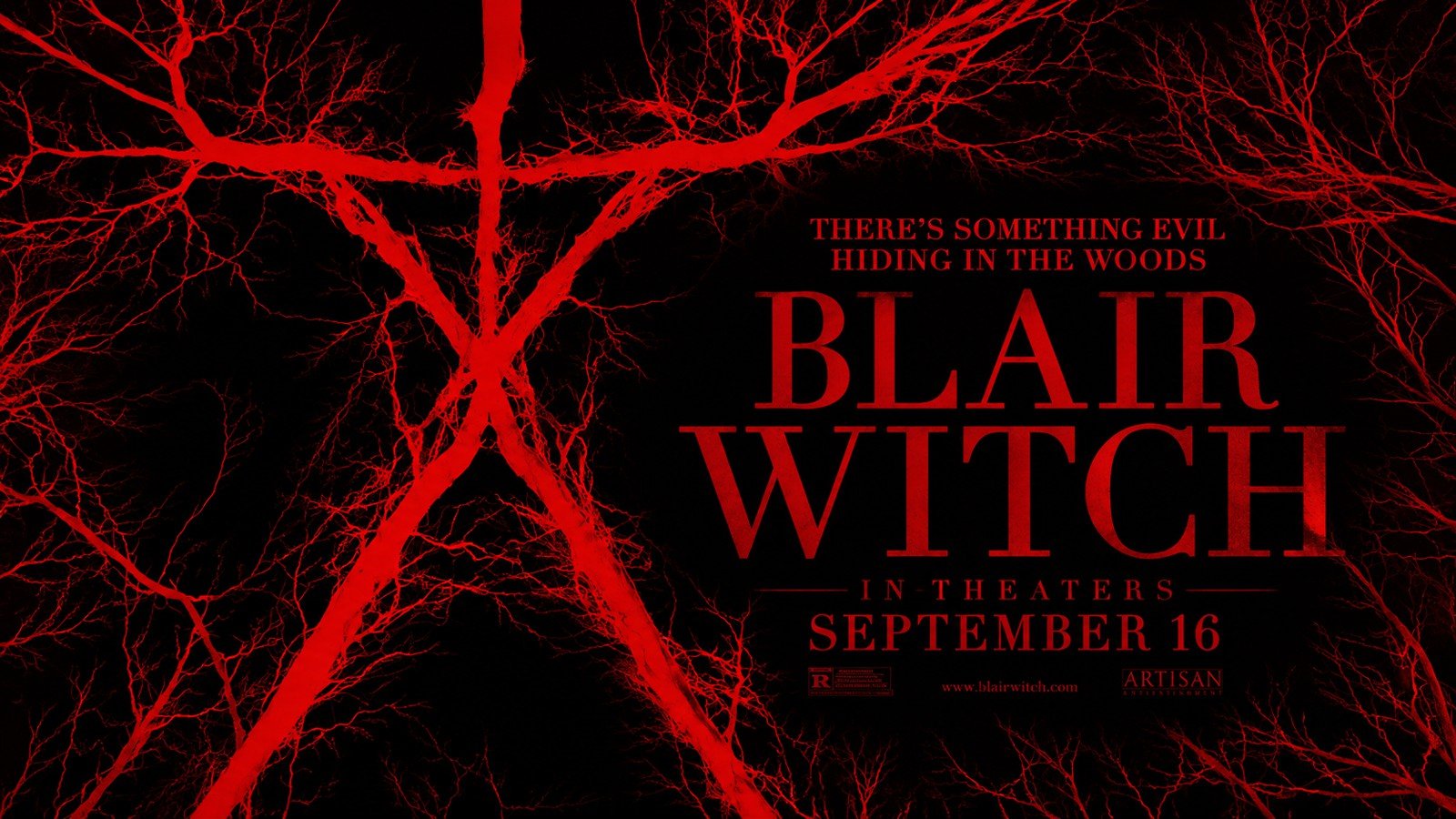
Blair Witch (2016)
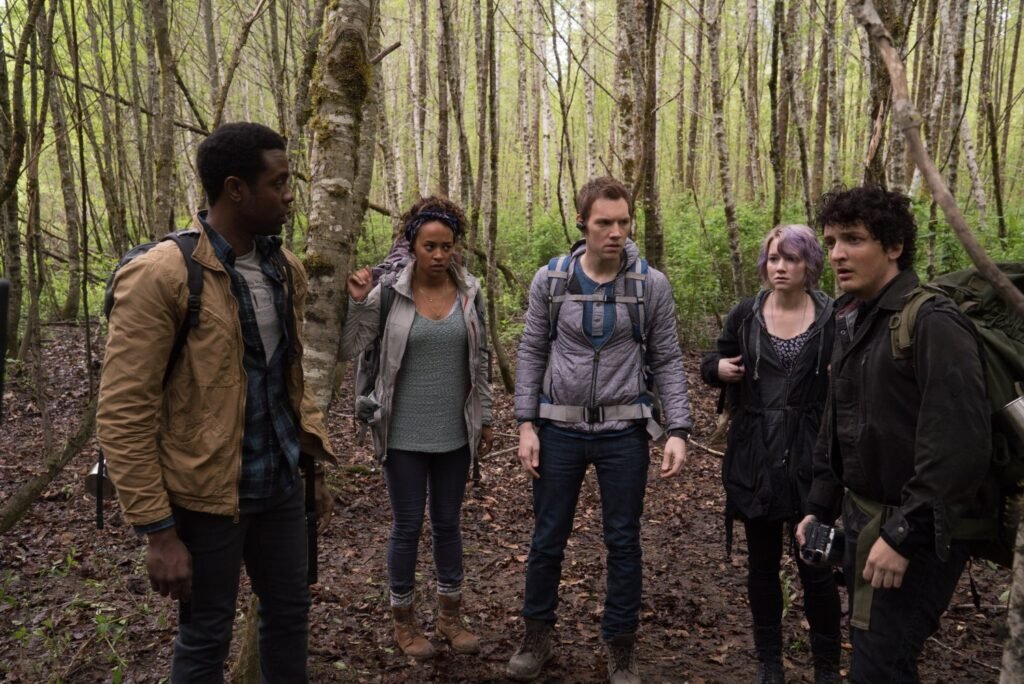
Cast: James Allen McCune, Callie Hernandez, Brandon Scott, Valorie Curry, Corbin Reid
Director: Adam Wingard
Nutshell: Apparently, Heather may have survived in 1999, so her younger brother sets off with some friends and a couple who drifted out from Cabin Fever to search for her in the same woods in Burkittsville. More of the same with none of the freshness or impact.
“A nerve-jangling return to the woods.”— Empire Magazine
“A worthy successor to one of horror’s most influential films.”— Empire Magazine
“Wingard and Barrett understand what made the original work.”— Variety
“The film delivers some genuinely frightening moments.”— Variety
“A slick, efficient fright machine.”— The Hollywood Reporter
“The scares are effective even when the ideas are not new.”— The Hollywood Reporter
“A terrifying sequel.”— Peter Travers, Rolling Stone
“The filmmakers know how to push the audience’s buttons.”— Rolling Stone
“It never escapes the shadow of the original.”— The Guardian
“The mystery is less intriguing the second time around.”— The Guardian
“An exercise in diminishing returns.”— The Telegraph
“The film mistakes volume for terror.”— The Telegraph
“A sequel nobody was asking for.”— The Independent
“Competently made but creatively bankrupt.”— The Independent
“The original changed horror cinema. This one merely imitates it.”— Little White Lies
“A found-footage film arriving after the genre has exhausted itself.”— Little White Lies
“The Blair Witch mythology deserves better.”— Slant Magazine
“The film offers bigger scares but fewer ideas.”— Slant Magazine
The summer of 1999 was a memorable one. A rare holiday to New York happened to coincide with the release of several films that genuinely excited the palate. Deep Blue Sea arrived with virtually no expectations and somehow managed to be as entertaining as it was preposterous, arguably becoming the most enjoyable shark movie in a quarter of a century. Next came Lake Placid, another absolute delight that exceeded all expectations thanks to its sharply written script, generous humour and surprisingly likeable killer crocodile. It demanded a second viewing and duly got one.
There was also a small film by M. Night Shyamalan about a boy who sees dead people, a movie that would soon become a major box-office phenomenon. Yet the true buzz film of the summer was neither sharks nor ghosts, but a tiny independent production that Artisan Entertainment had acquired for the princely sum of around one million dollars.
Getting tickets proved almost impossible.
Every screening seemed to be sold out. We waited several days before finally securing seats and when we did, the admittedly modest cinema was absolutely packed. People were sitting on the stairs, leaning against walls and occupying every available inch of floor space. The film was only in its opening week and playing on a very limited number of screens, yet the buzz surrounding it was deafening.
That film was The Blair Witch Project.
What arrived in 1999 felt like a genuine turning point for horror cinema. Its “reality” approach wasn’t entirely unprecedented, but it was executed with such conviction and intelligence that it felt revolutionary. The mythology had already been carefully nurtured online long before the film opened. The legend of the Blair Witch, the town of Burkittsville and the story of Rustin Parr had all been woven into the internet with such skill that many people genuinely weren’t sure where fact ended and fiction began.
That was part of the genius.
Audiences walked into cinemas unsure of what they were about to see and emerged asking the same question:
“Was that real?”
The illusion was so convincing that the film achieved something extraordinarily rare. It blurred the line between reality and fiction in a way few films had ever managed before. For a brief period, the Blair Witch mythology became genuine modern folklore.
Then came the aftermath.
The years that followed saw the found-footage genre explode in popularity. Some films used the format brilliantly. Paranormal Activity proved that lightning could strike twice and launched an entire wave of imitators. Others were considerably less successful. Soon every conceivable variation was being attempted. We had haunted houses, alien abductions, serial killers, ghosts, Sasquatch sightings and countless other horrors presented through shaky cameras and faux-documentary techniques. Even Pakistan eventually joined the party with Aksbandh.
By the time the dust settled, the format had been mined, exploited and exhausted.
Nothing about found-footage remained fresh anymore.
Which brings us to Blair Witch (2016).
By this point, the rights had passed to Lionsgate, who understandably looked at the franchise and saw easy money. The logic was obvious enough. A new generation of horror fans had arrived, nostalgia was proving profitable and surely there was life left in the old witch yet.
The problem was that everything which made The Blair Witch Project feel groundbreaking in 1999 had long since become commonplace. What had once felt innovative now felt routine. If a new Blair Witch film was going to work, it needed reinvention rather than repetition.
Unfortunately, repetition is precisely what we got.
The new film is so similar in style and execution to its predecessor that it often feels less like a sequel and more like a glossy remake with a few cosmetic alterations. The original worked because its amateur performances felt authentic. The cast looked and behaved like ordinary people caught in extraordinary circumstances.
This time around, however, the illusion collapses almost immediately.
These are clearly actors.
They look like actors, speak like actors and behave like actors. The found-footage conceit never convinces because everything feels too polished and too carefully constructed. The original thrived on uncertainty and spontaneity; this version feels scripted, rehearsed and manufactured.
Even the technical improvements work against it.
Professional camerawork, sophisticated lighting and a conventional soundtrack all undermine the illusion of reality. Rather than feeling immersive, the film constantly reminds you that you are watching a studio production attempting to imitate something that once felt authentic.
The entire exercise comes across as a cynical attempt to squeeze a few more dollars from a concept that had already been thoroughly exploited. Instead of expanding the mythology or finding a fresh angle, the filmmakers simply retrace familiar ground and hope nostalgia will do the heavy lifting.
It doesn’t.
The overwhelming question throughout the film is simply:
“Why?”
Why revisit this story?
Why repeat the same formula?
Why make a film that offers so little that is genuinely new?
The answer, unfortunately, appears obvious.
Money.
Blair Witch arrives decades after the moment had passed. It functions best as an accidental parody of what made the original so effective. Humourless, clueless and entirely devoid of fresh ideas, it feels like a film that fundamentally misunderstands the reason audiences fell in love with The Blair Witch Project in the first place.
What was once revolutionary has here become routine.
What was once terrifying has become predictable.
And what was once one of horror cinema’s most fascinating experiments has been reduced to a tired exercise in brand maintenance.
An utterly unnecessary film that nobody was asking for and few were likely to remember afterwards.
Watch the trailer and save yourself the trouble.