
The Hot Spot Rating
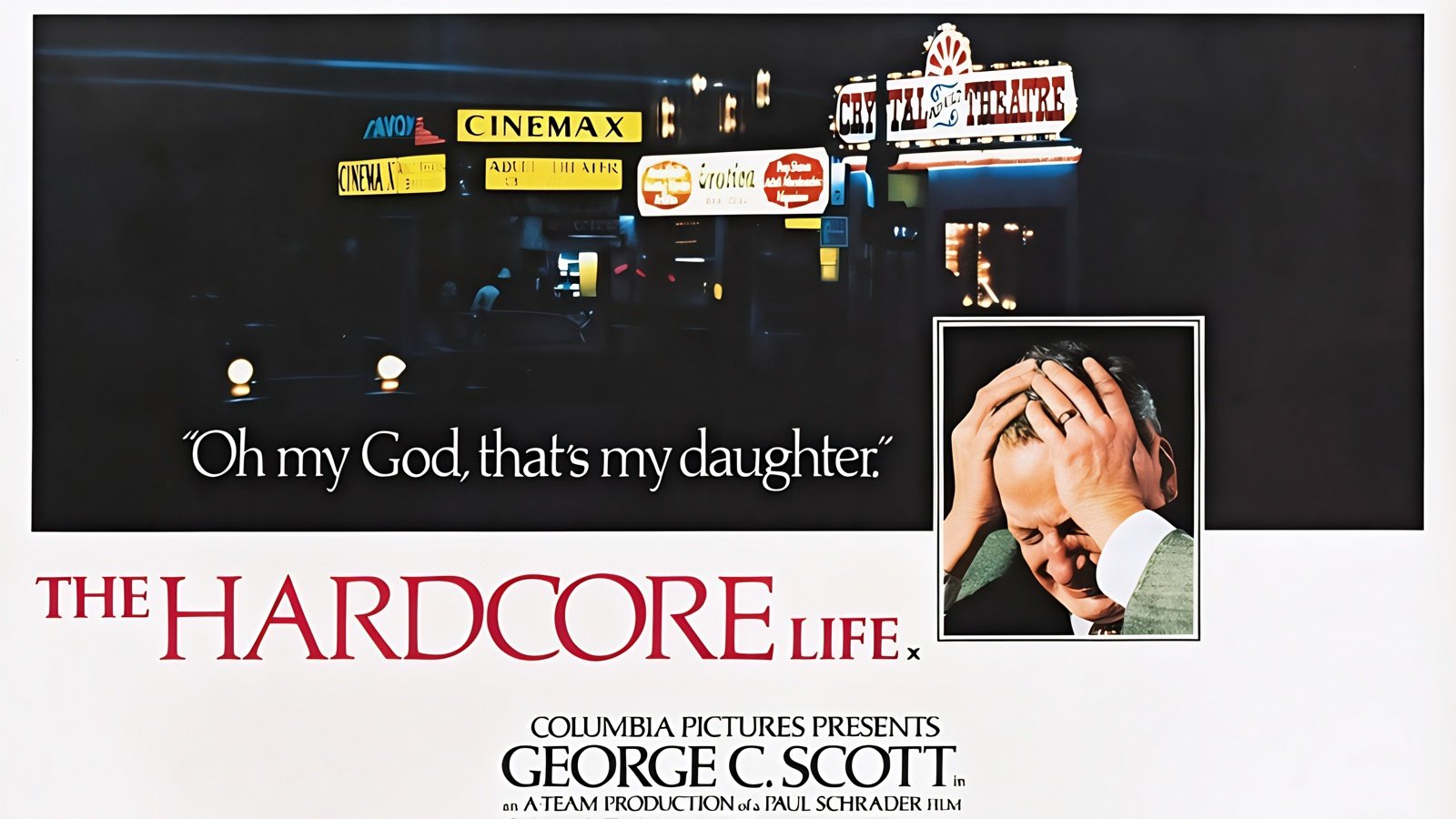
Hardcore (1979)
Cast: George C. Scott, Season Hubley, Peter Boyle
Director: Paul Schrader
Nutshell: Writer/Director Schrader takes you back to the seedy, seamy streets and underbelly of “Taxi Driver” in this moralistic Sex Trade drama.
“Moments of pure revelation.”— Roger Ebert, reviewing the film with 4 out of 4 stars.
“A rich film of ideas and of strikingly real characters.”— Gene Siskel.
“A very good film.”— Variety
“An extraordinary sensitivity to the realities of the American heritage.”— Vincent Canby
disappointing stuff.”
— Charles Champlin.
“Absorbing but unsatisfying.”— Gary Arnold.
“A movie that arouses thought.”— Alexander Walker
Paul Schrader’s brilliantly written Taxi Driver was crafted into a finely tuned portrait of American urban decay, alienation, the erosion of traditional morals, and a world where dreams and aspirations collide disastrously with exploitation and sleaze. With Hardcore, Schrader once again revisits the underbelly of society to construct a tale of moral corruption, this time focusing on the late 1970s and the sleazy streets infested with vermin, drugs, pornography, and the sex trade.
The film opens in the deep Midwest, where members of a Calvinist family celebrate Christmas in a manner that is both stiff and deeply conservative. The children sit through religious discussions rather than playing games or watching endless hours of television. It is a tightly knit community, with the Calvinist Church binding everyone together and old-school Christian values ruling the day. Everyone is white, and “outsiders” appear to be an urban disease that has yet to reach these parts. The Church plays a central role in shaping the community’s morals, values, and entire way of life.
George C. Scott’s daughter is sent away with a group from the congregation, but weeks later word filters back that she has disappeared. Thus begins the journey of a morally upright man of faith into the murky world of sleaze as he starts trawling city streets in search of his missing daughter.
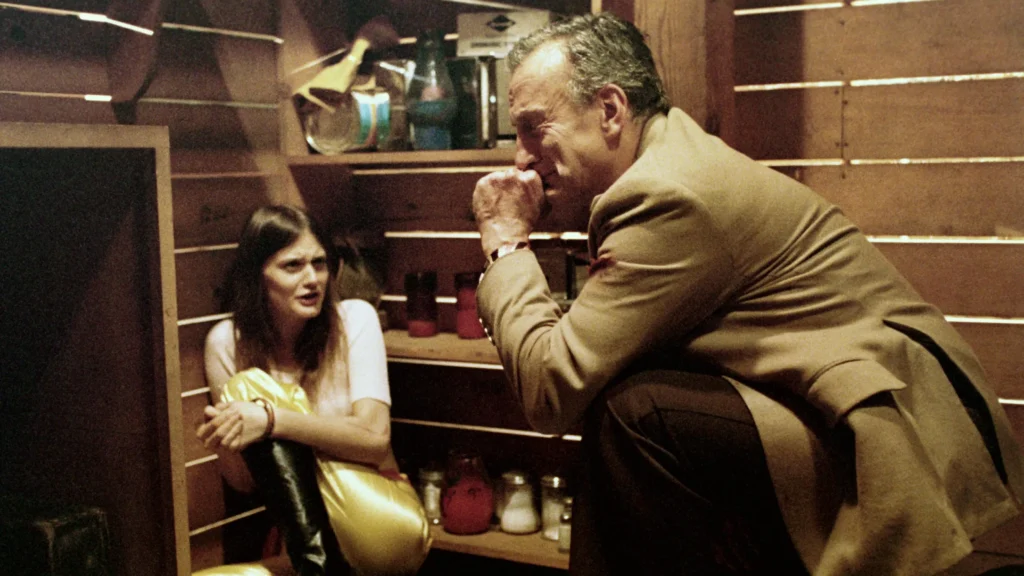
He hires a private investigator, played by Peter Boyle, and it soon transpires that his daughter has appeared in an 8mm homemade pornographic film. The detective takes Scott to a seedy fleapit porno cinema where he watches in horror as flickering images of his daughter appear on screen alongside a succession of random men. The scene in which he squirms helplessly in his seat remains one of the film’s strongest moments, and George C. Scott is capable enough as an actor to keep himself just on the right side of melodrama.
The story unfolds against the backdrop of the late 1970s, when a growing sense of disillusionment had begun to settle over America. Rising oil prices were driving up the cost of living, urban decay was playing havoc with law and order in many major cities, and the sex trade was flourishing openly in numerous red-light districts. AIDS had yet to rear its ugly head and put a dent in the rampant hedonism that had become a booming and highly lucrative business.
Scott plunges headlong into this world of peep shows, flickering projectors, and endlessly heaving bodies, becoming increasingly repulsed by what he encounters. Eventually, he dismisses his investigator and decides to go undercover himself, posing as a porn producer and exhibitor. Slowly he learns the ropes, placing advertisements in magazines that look suspiciously like Screw and interviewing prospective stars for his imaginary productions.
Among them is the unforgettable “Big Black Dick”, who in arguably the most entertaining sequence in an otherwise fairly dour movie proudly proclaims himself to be a nine-inch superstar unlike any other.
Later, Scott teams up with a personable prostitute, played by Season Hubley, and together they begin to close in on the trail of his missing daughter, Kristen.
Unfortunately, the film, already lacking much genuine tension and relying heavily on what often feels like voyeurism, eventually limps towards a rather flaccid climax and ends up as a botched moral thriller that never actually thrills. Today it feels remarkably dated, almost like a rejected episode of Law & Order that somehow escaped from the cutting-room floor decades before the series was even conceived.
Its moral framework feels equally antiquated by modern standards. The pacing is sluggish, and an unfortunate amount of screen time is devoted to tired Hollywood stereotypes that are neither funny nor revealing, merely dull. One might expect such material from a particularly weak episode of Kojak, but not from a feature directed by the man who wrote Taxi Driver.
The film lacks the potency required to function either as an eye-opener about the world of sleaze and exploitation or as a compelling moral drama. It possesses neither the grit nor the realism necessary to make its subject matter resonate. Worse still, it relies heavily on tired clichés and worn-out stereotypes that fail to shock, provoke, or engage.
There is surprisingly little visual flair despite the enormous opportunities the material presents. The film’s palette is drab, the landscapes uninspiring, and the camerawork often resembles television at its most mechanical. There is precious little anger, pain, or genuine pathos on display, despite George C. Scott trying—and occasionally over-trying—to convey his horror, disgust, and helplessness at the world unfolding around him.
Scott is perfectly adequate, as is Season Hubley, but beyond the pounding musical score there is very little to remember here other than how singularly dreary the entire experience becomes. When the climax finally arrives, it falls flat on its face, leaving the viewer numb not because of any profound moral questions or emotional impact, but simply out of boredom.
For a film called Hardcore, dealing with what should have been a challenging and provocative social subject, this proves to be remarkably softcore on almost every level and consequently misses the point entirely.
Taxi Driver exists in another realm altogether.