
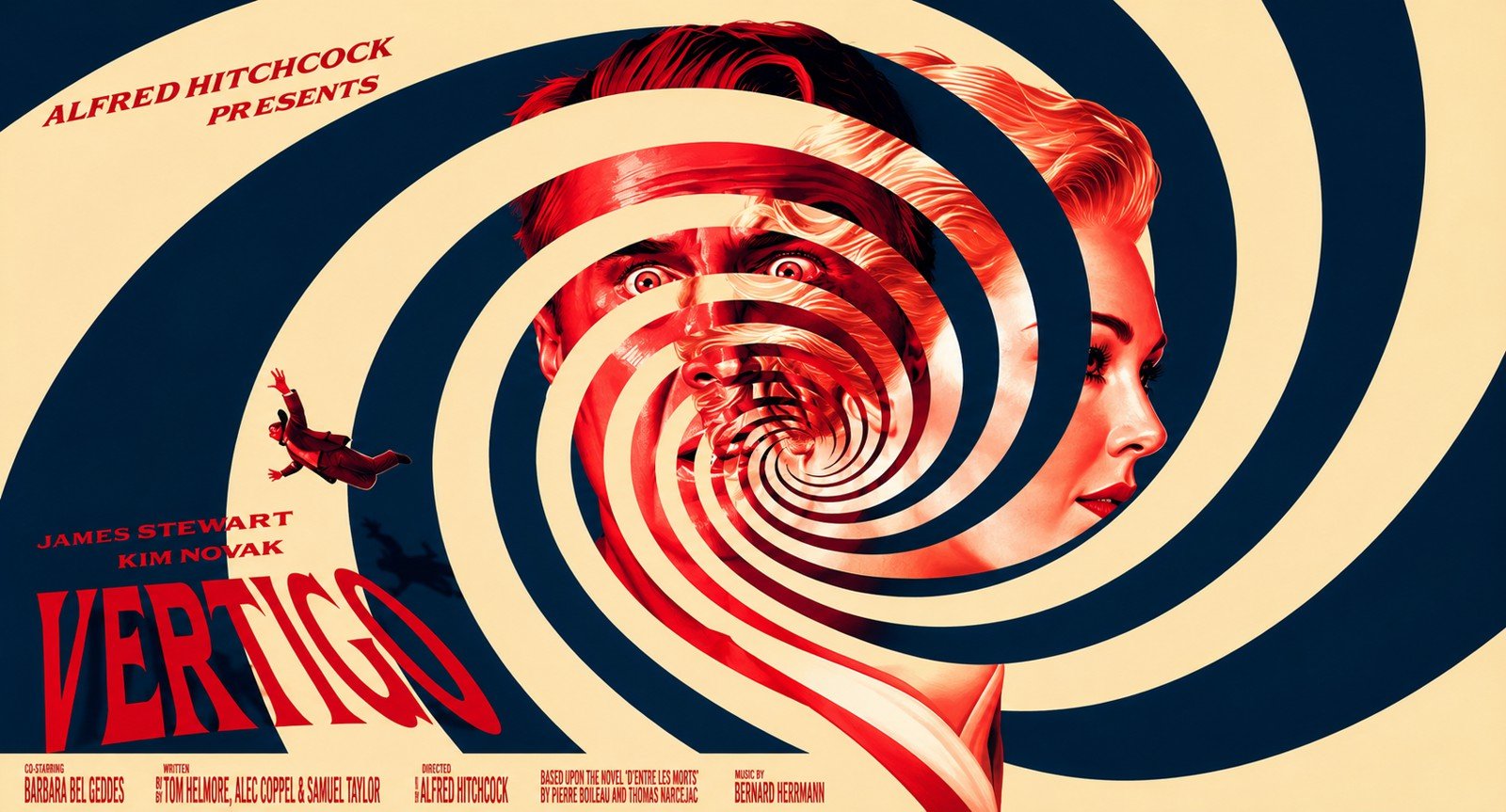
The Hot Spot Rating
Vertigo (1958)
Starring: James Stewart, Kim Novak, Barbara Bel Geddes, Tom Helmore
Director: Alfred Hitchcock
Synopsis: Widely regarded as one of the greatest films EVER!
Reviewed by: Shaharyar. M. Khan
“The best director’s masterpiece.”
— Orson Welles
“One of the most beautiful and haunting films ever made.”— Roger Ebert
“Hitchcock’s masterpiece.”— Sight & Sound
“The defining Hitchcock film.”— The Guardian
“A dream of a movie.”— Pauline Kael
“The most deeply personal of Hitchcock’s films.”— Robin Wood
“A film of obsessive beauty.”— Empire
“The greatest film ever made.”— Sight & Sound Critics’ Poll
“A dark and dizzying masterpiece.”— Time Out
“An endlessly fascinating study of obsession.”— The New York Times
In the mid-1980s, The Times of London celebrated one hundred years of filmmaking by inviting many of the world’s leading film critics to participate in a seminar. After lengthy debate, the assembled pundits of cinema reached a surprising conclusion. The greatest film ever made was not Citizen Kane but Vertigo.
I felt deeply vindicated. From the day I first saw Vertigo, I was convinced that it was the most complete film I had ever encountered. It features flawless performances from its principal players, James Stewart as the troubled detective and Kim Novak as Madeleine, while the supporting cast, including Barbara Bel Geddes, Tom Helmore, and Henry Jones as the Coroner, are equally superb. The camerawork is haunting, the story packed with suspense and astonishing twists, and woven through it all are profound themes of guilt, obsession, human frailty, and the search for redemption.
Vertigo is Hitchcock’s masterpiece and the apogee of his extraordinary career in cinema. The seed for the project was planted rather cleverly by the French thriller writers Boileau and Narcejac, who had recently enjoyed a remarkable success when their novel became the basis for Les Diaboliques.
Hitchcock acquired the story, originally titled D’entre les morts (From Among the Dead), reshaped it extensively, and ultimately stamped it with his unmistakable artistic signature. Initially, Vera Miles was selected for the lead role, but when she became pregnant Hitchcock was forced, somewhat reluctantly, to cast Kim Novak instead. At the time, Novak aspired more to stardom than to serious acting, yet her contribution to the finished film proved invaluable. Every aspect of the production, from Bernard Herrmann’s magnificent score to the locations and even the celebrated opening credits, was meticulously supervised by Hitchcock himself.
When the film was first released, critical reaction was respectful rather than enthusiastic. Gradually, however, its true greatness became impossible to ignore. As the years passed, critics began to recognise it as one of the towering achievements in the history of cinema. Novak was luminous as Madeleine. Some have argued that she did not so much act the role as allow Hitchcock to reveal something of her own inner persona. Stewart, meanwhile, was magnificent as the tortured, guilt-ridden detective, and the atmosphere created by the film leaves impressions upon the mind that remain long after the credits have rolled.
Perhaps the greatest single shot in cinema history is the image of James Stewart standing atop the church tower, looking down upon the tiled roof below where Madeleine has apparently leapt to her death. In the courtyard beneath, two nuns pass serenely with their rosaries while the silence is broken only by the tolling of church bells. It is an image of extraordinary power and one that remains etched forever in the memory.
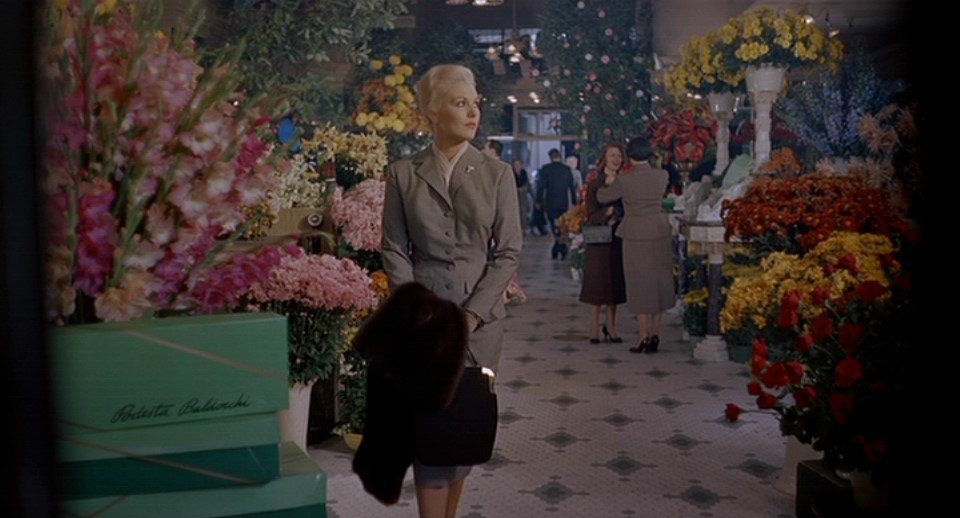
For devoted Hitchcock admirers, countless other images from Vertigo possess a similarly magical quality. Ernie’s Restaurant, the McKittrick Hotel—alas, no longer with us—the Golden Gate Bridge, the flower shop, the Coroner’s devastating interventions, the giant sequoias, and the eerie green glow of the Empire Hotel all form part of a cinematic tapestry unlike any other.
Vertigo is, for me, Hitchcock’s greatest achievement and one of the supreme accomplishments of world cinema. No serious film lover should ever miss the opportunity to see it.