
The Hot Spot Rating
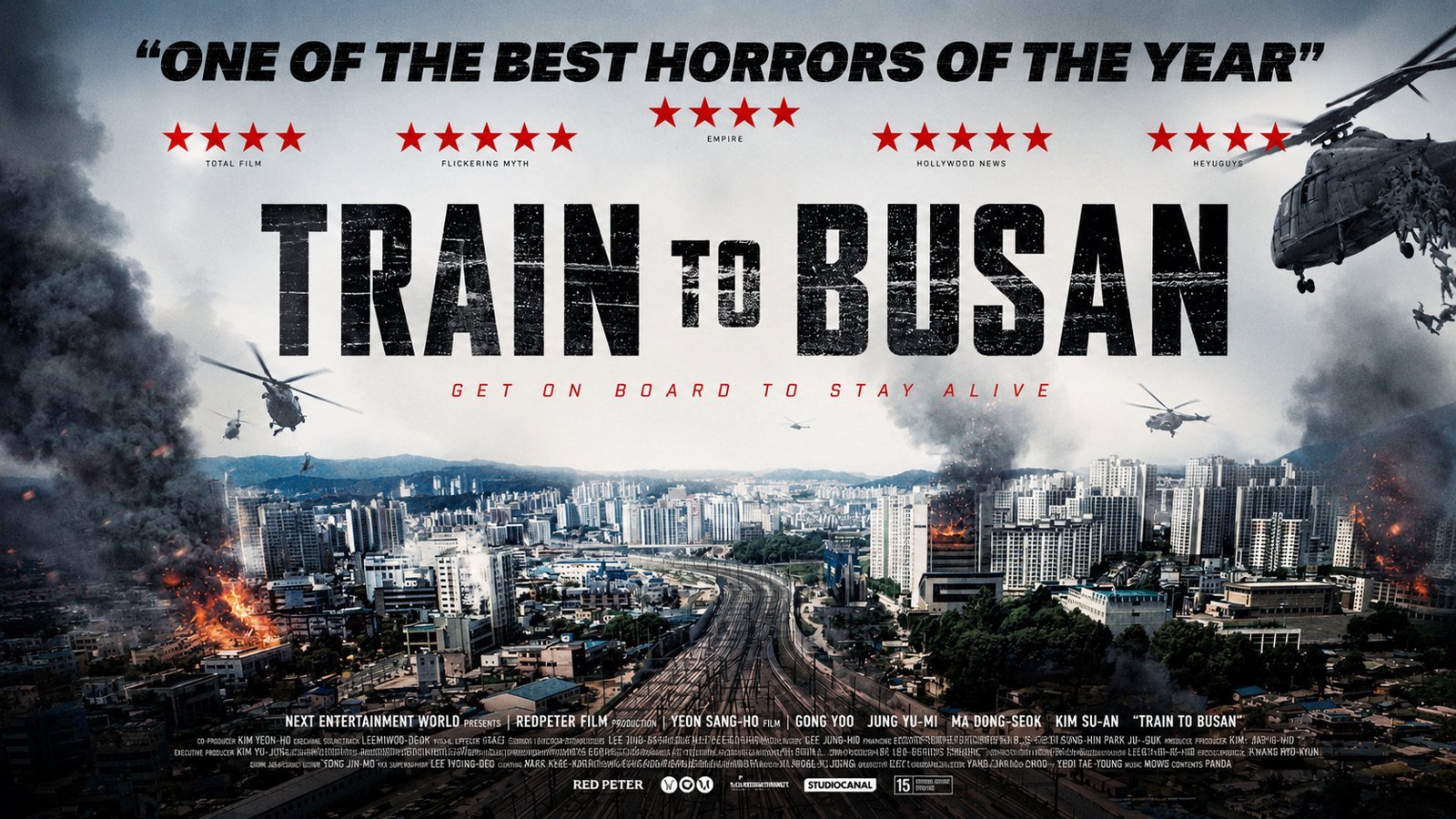
Train To Busan (2016)
Cast: Yoo Gong, Soo-an Kim, Yu-mi Jeong, Dong-Seok Ma, Woo-sik Choi
Director: Sang-Ho Yeun
Nutshell: A virus runs amok, turning scores of people into Zombies on a train to Busan. Korea’s biggest-ever Box Office Record Buster combines action, wit, horror and pathos with gratifying results. The Best Zombie movie in years.
“One of the best zombie movies ever made.”— Fangoria
“A masterfully crafted thrill ride.”
— The Hollywood Reporter
“A high-speed thrill ride with a surprising emotional punch.”
— Variety
“The year’s most purely entertaining zombie movie.”
— Empire
“A zombie film with genuine heart.”
— The Guardian
“As emotionally involving as it is terrifying.”
— Screen International
“A crowd-pleasing horror film of the highest order.”
— Time Out
“A relentless, emotionally charged blockbuster.”
— IndieWire
“A spectacularly entertaining zombie apocalypse movie.”
— RogerEbert.com
“The most exciting zombie movie in years.”
— The Telegraph
These days, the internet is a pretty decent barometer for judging a movie’s worldwide buzz or level of interest. Such is the case with a Korean film that generated enough noise from all the right quarters to suggest something a little bit special. With recent news filtering through that Train to Busan had become the highest-grossing film in Korean cinema history, the buzz clearly wasn’t built on trendy hot air, bloated reputations, or oversized egos alone. That said, film festival audiences are often desperate to discover the next “big thing” and can sometimes whip themselves into a frenzy trying to uncover the next obscure classic. Such is the nature of the beast.
It therefore came as little surprise that the initial screenings had all sold out, with several extra showings arranged to accommodate the growing crowds of curious moviegoers.
The theatre was jam-packed to the rafters as a brief introduction from the director was unspooled before the feature. Refreshingly, he was free of the ego and self-importance that so many Hollywood directors seem unable to resist displaying.
The action begins with a van travelling near the demilitarized zone. Reports are filtering through about some kind of contamination, and border guards have been placed on alert to ensure the situation remains under control. Moments later, an animal struck down by the van miraculously springs back to life and darts away. An ominous sign, to say the very least.
We then meet a ruthless business executive whose life revolves around closing deals and making money. His marriage has fallen apart, and his relationship with his young daughter appears fractured beyond repair. The next day is the little girl’s birthday, but rather than wanting to spend it with her father, she longs to be with her mother. He attempts to placate her with a shiny new gift, only to discover that it’s the exact same present he had already given her before. Not exactly Father of the Year material.
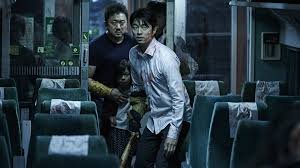
The child insists on travelling to see her mother and wants to take the train. Initially reluctant, her father eventually has little choice but to accompany her. The following morning they board the train together, but strange events are already beginning to unfold. As the train departs, a desperately ill-looking young woman manages to climb aboard.
It isn’t long before her contorted body twists into a grotesque new shape and acquires a terrifying afterlife. She mutates into a zombie, sinks her teeth into her first victim, and rapidly sets off a chain reaction that spreads through the train like wildfire. Soon, the majority of the passengers have been infected and are hurtling through the carriages, savaging anything they can see or hear moving.
Now, perhaps for the first time in his life, our cold-hearted businessman begins to learn about compassion, helplessness, suffering, alienation, and the pain felt by his own innocent daughter. His transformation from calculating money machine to human being is accelerated by the courage and selflessness displayed by several fellow passengers. Slowly but surely, he begins to redeem himself in his daughter’s eyes, and a relationship that seemed permanently broken starts to heal in a genuinely touching way.
Later, his daughter explains why she stopped singing during a school performance and never finished her song. He simply hadn’t bothered to show up. Now, however, she sees him gradually becoming someone with a soul and a heart. With admirable restraint and subtlety, the film allows this father-daughter relationship to be reborn, and these emotions become the true heart of what could easily have been nothing more than a zombie romp. There is far more going on beneath the surface of this thoughtful and intelligently crafted film.
Elsewhere, there are numerous moments of heroism and sacrifice. Time and again, the film champions compassion, tolerance, and kindness towards those in desperate need. It’s difficult not to draw parallels with the millions of refugees struggling through today’s increasingly ugly world, often treated as pariahs by those determined to cling to their wealth and privilege rather than share even a fraction of it.
Zombie movies have long reflected the excesses and moral failings of materialistic societies, and Train to Busan continues that tradition remarkably well. These themes resonate strongly throughout the film, yet never feel heavy-handed. While a considerable emotional current runs through the story, there is also a healthy dose of humour to balance the message with pure pulp entertainment. The combination works beautifully.
Surprisingly, there is very little graphic gore for a zombie film in which people are being munched upon at an alarming rate. We rarely see actual necks being chewed or limbs being torn apart. Instead, the film wisely leaves much of the horror to the audience’s imagination, which is almost always more effective than showing every gruesome detail in close-up.
The movie moves at a cracking pace throughout and hurtles—train-like—towards its gut-wrenching and emotionally charged conclusion. There are some genuinely terrific set-pieces along the way, but it is the emotional weight that really lands as the film approaches its climax. Judging by the audience around me, many people were busy wiping away tears as the story drew to its memorable close.
The enthusiastic applause and cheering that greeted the final credits were testament to how skilfully the director had blended thrills, drama, emotion, and comic relief into something immensely satisfying. Few filmmakers manage to juggle so many elements without dropping one or two, but here the balance feels remarkably natural.
Discovering that the film had become the biggest money-spinner in Korean cinema history therefore came as no surprise whatsoever. It offers plenty for audiences looking for a zombie film while simultaneously rewarding viewers who appreciate serious drama and relevant social, political, and human themes. Zombie movies are not always known for being particularly cerebral unless your name happens to be George A. Romero, but Train to Busan combines brains, heart, and entertainment with a deft touch that is both thought-provoking and hugely enjoyable.
A film that is involving, moving, thought-provoking, and expertly crafted. Zombie movies generally don’t come much better than this. Definitely one to recommend on several different levels.