
The Hot Spot Rating
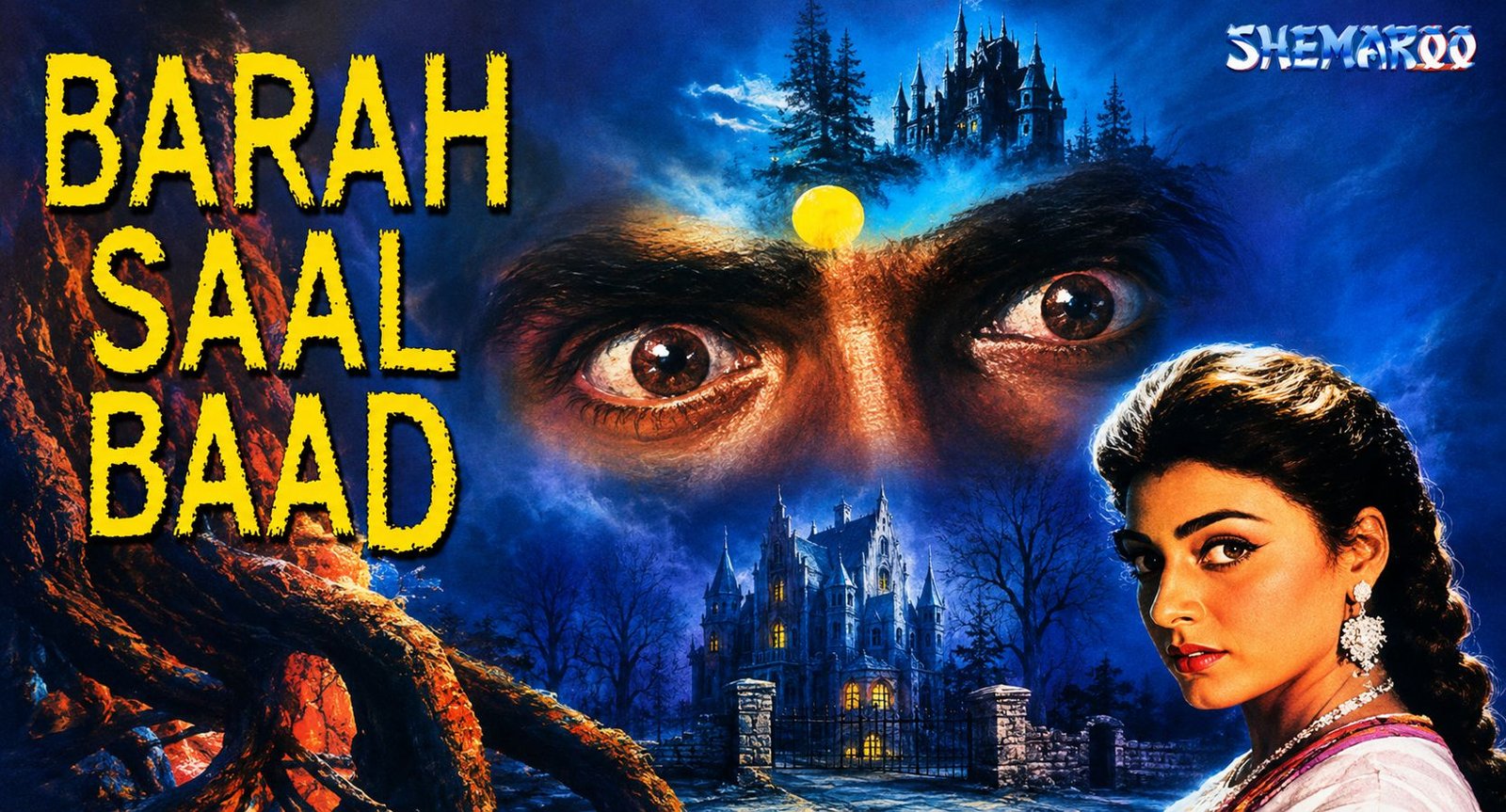
Barah Saal Baad (1988)
Cast: Bhanupriya, Sarat Babu, Jaya Chitra, Nuthan Prasad
Director: N.B.Chakravarthy
Synopsis: A spiritual tussle between the forces of Evil vs virtue embroils a close-knit traditional family with deadly results.
Barah Saal Baad begins with a title sequence showing various old-school Hindu worshippers immersed in their respective spiritual worlds. Some seek enlightenment through light, while others appear drawn towards darkness for inspiration and guidance. It is an intriguing opening and neatly establishes the film’s central theme: how a gifted Tantrik or Mantrik can gradually drift down a path that leads towards darkness and evil, entering a world consumed by black magic, voodoo, vengeance, and angry spirits.
The story follows Shera, a disgruntled and disillusioned young Mantrik whose experiences have left him bitter, angry, and consumed by a desire for revenge. Determined to right the wrongs he believes have been inflicted upon him, he embraces Satanism and black magic. Along the way, however, he encounters a saintly Tantrik who represents virtue, wisdom, and spiritual balance.
The two engage in lengthy discussions concerning spirituality and mysticism. There is mutual respect between them, and the Good Tantrik repeatedly attempts to steer Shera away from the darkness that threatens to consume him. Unfortunately, Shera’s thirst for vengeance burns too deeply, and he chooses to follow his own twisted path in search of justice against those he believes have wronged him.
The focus of his wrath eventually becomes the happy family of Tulasi, played by Bhanupriya, and he gradually sets about targeting them through black magic and sinister rituals.
Shera accepts a challenge from the Good Tantrik to prove the superiority of their respective philosophies: black magic versus wholesome virtue. The games begin.
Soon Shera tracks down Tulasi, securing strands of her hair and using them in his rituals. Whenever he appears to have attained a new level of evil power, his contact lenses obligingly transform into dramatic shades of red and yellow. Apparently this is what happens when one successfully graduates from Spirituality 101 to Advanced Villainy.
One by one, members of Tulasi’s family become targets. Shera recruits a shady accomplice in the form of a servant employed by the unsuspecting household. The servant delivers a glass of milk intended for Tulasi, but it is instead consumed by her young niece. Minutes later, the child begins convulsing violently before succumbing to the poisoned drink.
The family is devastated as the sunshine of their lives is cruelly taken away from them, little realizing that the tragedy is the work of Shera and his dark arts.
Shera returns to the house and secures additional samples of hair from family members. Before long, another victim suffers a similarly grim fate.
Eventually, the Good Tantrik’s own wife is attacked, and he realizes that Shera’s descent into darkness is complete. The once-promising Mantrik has become a powerful practitioner of black magic whose obsession with revenge has utterly consumed him.
A few days later, the film serves up one of its more memorable moments. During a family dinner, Tulasi suddenly begins devouring every item of food in sight as though possessed by some ravenous demon. She gulps down dish after dish, stuffing herself while laughing uncontrollably. It is certainly odd, although whether it is frightening is another matter entirely.
The Good Tantrik concludes that the only way to break the cycle of evil is to confront Shera directly. The two finally meet, and Shera gradually realizes what a terrible mistake he has made by using his powers for destructive purposes. Repentant, he resolves to undo the damage he has caused and dedicate his abilities to the forces of good.
This leads him into conflict with an evil female sorceress who subjects him to a series of spiritual trials designed to test the strength of his mystical powers and determine whether he can truly escape the darkness he has embraced.
Unfortunately, by this point it is all rather dreary.
The changing contact lenses are simply not enough to generate chills, thrills, or much of anything else. Horror never really materializes, and not a single scene manages to be genuinely frightening. Shera’s increasingly colourful eyeballs prove woefully inadequate substitutes for atmosphere, tension, or actual scares.
This dubbed South Indian production takes itself desperately seriously yet never delivers a single memorable horror sequence. The closest it comes to generating any sense of unease are the occasional scenes involving Shera’s voodoo rituals, but these are few and far between.
There is no blood and gore to speak of, no creepy set-pieces, no mounting tension, and precious little imagination. The film remains earnest throughout, but earnestness alone is not enough to rescue something this dull and uneventful.
Bhanupriya was a major star in South Indian cinema and even made a brief transition into Bollywood, where she unfortunately never achieved the same level of success. She deserves considerably better than Barah Saal Baad, a plodding and uninspired effort that struggles to generate interest from beginning to end.
Ironically, the film’s best moments arrive during the opening title sequence, where various sadhus and holy men perform rituals and spiritual ceremonies. Once the actual story gets underway, things quickly become laborious, ponderous, and increasingly tedious.
For a film promising black magic, voodoo, spiritual warfare, evil sorcerers, and demonic possession, the result is astonishingly toothless.
A badly scripted, poorly executed yawn.
Deathly boring.