
The Hot Spot Rating
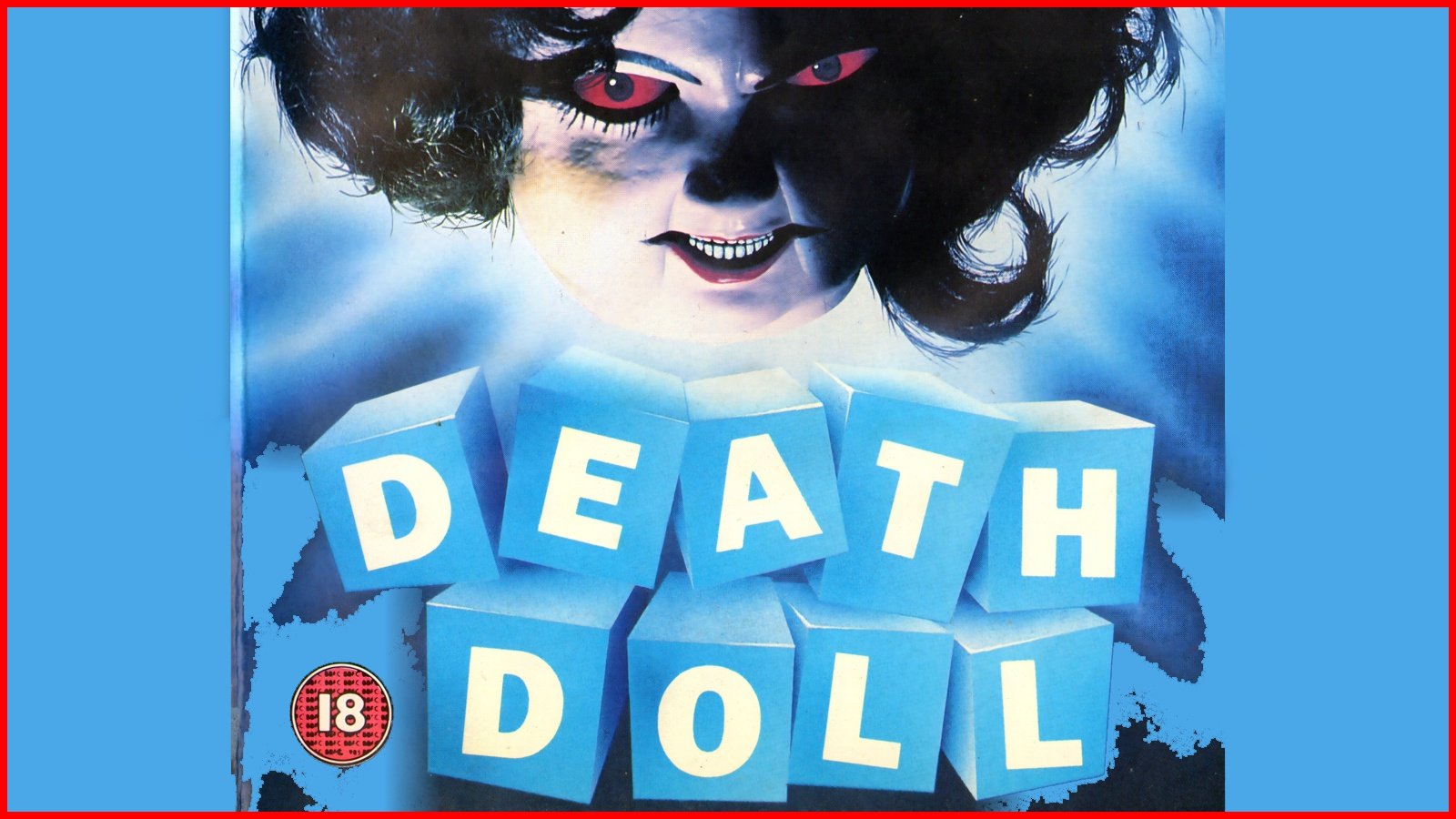
Death Doll (1984)
Cast: Andrea Walters, William Dance, Jennifer Davis, Philip Boatwright
Director: William Mims
Synopsis: another example of the adage…Never judge a video by its cover!
“A bit of a slow-burner, but it has a nice little atmosphere to it.” — Letterboxd user review
“There is plenty of eerie atmosphere to keep you watching.” — The Silver Scream
“A fascinating watch, even if it is just for its obscure nature.” — The Silver Scream
“A decent little obscure movie.” — Letterboxd user review“Worth checking out.” — The Silver Scream
“This delightfully bizarre and foreboding slasher…” — Letterboxd user review
“Makes good use of creepy dolls…” — Letterboxd user review
“A little low on action, but makes up for it with an overload of weirdness.” — Letterboxd user review
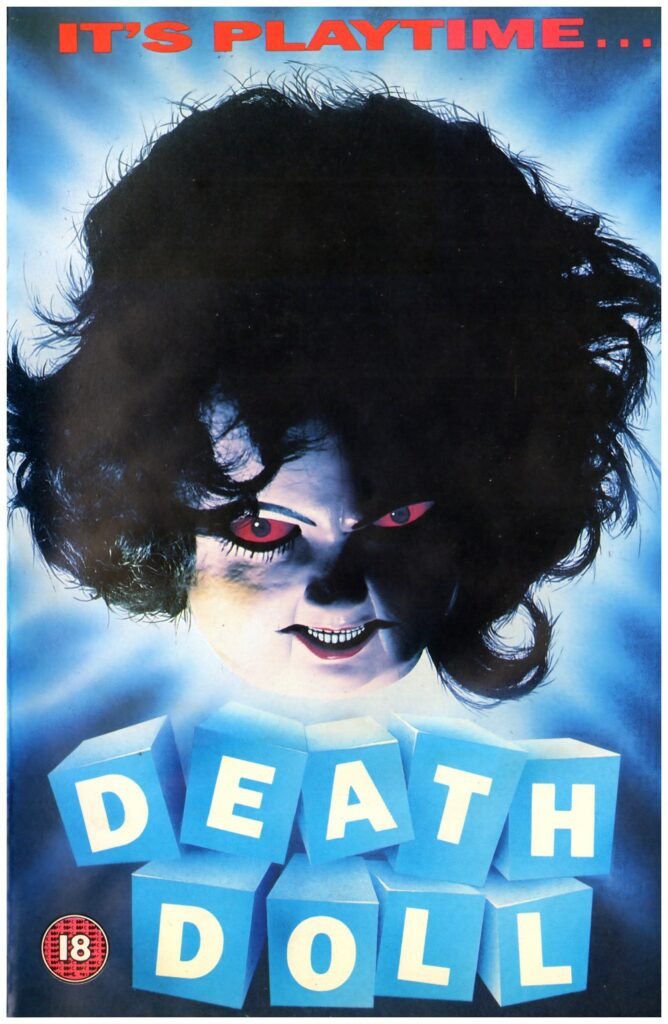
Death Doll opens with a title sequence so catastrophically awful — complete with sleazy bargain-bin synthesiser muzak — that one immediately suspects the production values may not rise much above those of a forgotten Z-grade adult video.
Indeed, when even the most forgiving movie guides fail to list the film at all, alarm bells begin ringing loudly.
Ordinarily this would be the moment to locate the remote control and flee for safety. Unfortunately, circumstances sometimes intervene. In this case, the remote was nowhere to be found and movement itself felt like a Herculean task, leaving no alternative but to endure Death Doll in the hope that at least the running time might prove mercifully brief.
The first impression is that this is very obviously an ultra-cheap straight-to-video nonentity featuring a cast of actors seemingly never heard from again. Yet surprisingly, once the dreadful title sequence subsides, the opening scenes are not entirely without interest.
A vacuous young couple wander into a creepy antique shop where they discover an old gypsy fortune-telling machine consisting of a grotesque witch-like puppet sealed behind glass. Insert a coin and the sinister dummy springs to life, demanding that users place their palm against the glass before dispensing ominous prophecies of doom.
When the pregnant wife is warned that her unborn child will bring terrible misfortune, she is deeply shaken — especially since she had only learned of the pregnancy earlier that same day. Her sceptical husband laughs the whole thing off until he tests the machine himself, deliberately refusing to place his palm against the glass.
To his alarm, the puppet immediately snaps at him to raise his hand properly.
For a brief moment, the film almost threatens to become intriguing.
A flash-forward reveals that the husband has since died in a mysterious “accident,” leaving behind a sizeable inheritance for his widow. Struggling to rebuild her life, she soon finds herself stalked by shadowy figures while bizarre murders begin occurring around her. In one particularly effective sequence, the tenant occupying her former apartment is brutally stabbed to death.
Fearing she herself is being targeted, the widow seeks refuge with her brother- and sister-in-law, though both subtly seem to blame her for their brother’s mysterious demise.
Meanwhile the sinister fortune-telling doll continues exerting an eerie pull over proceedings, repeatedly delivering strangely accurate prophecies whenever she returns to the antique shop. The mystery gradually deepens:
is somebody simply after the inheritance money?
Is there a deranged killer obsessed with dolls?
Or could the suspiciously cold sister-in-law — or her Norman Bates-esque brother — be concealing darker motives?
Each murder scene is accompanied by a discarded crumpled doll, adding further layers of cheap but reasonably effective mystery.
Eventually all is revealed in a climax complete with the obligatory “dead” killer lurching back to life for one final attack — because naturally no low-budget horror thriller would dare conclude any other way.
Truthfully, however, Death Doll remains a fairly dreary affair despite improving marginally after its atrocious opening.
The film was written and produced by Sidney Mims and directed by William Mims, both clearly operating on what appears to have been an almost non-existent budget. The cast largely resemble enthusiastic amateurs, while the production itself often feels closer to a home movie than a commercially released feature.
The camerawork is flat and uninspired, the framing utterly lacking in style or imagination, and the soundtrack assaults the ears with one of those aggressively awful 1980s synthesiser scores that seem designed specifically to irritate rather than create atmosphere.
And yet…
there remains something oddly compelling about the fortune-telling doll itself.
Despite the film’s overwhelming cheapness, the scenes involving the puppet possess a certain eerie charm, while some of the dreadful performances almost drift accidentally into entertainment value. One senses the filmmakers were genuinely trying to create suspense and mystery despite lacking the resources or technical ability to fully pull it off.
Many terrible films at least manage to look stylish.
Death Doll unfortunately feels cheap from top to bottom.
Still, it is not entirely without curiosity value for devoted lovers of obscure horror cinema and regional straight-to-video oddities. For dedicated collectors of bargain-bin horror obscurities, there is perhaps just enough weirdness here to justify a viewing.
The most unexpectedly touching aspect of the story, however, emerged afterward.
Following an earlier review, William Mims himself reportedly contacted the reviewer to clarify that he was not in fact deceased — confusion having arisen due to another individual sharing the same name. Mims also candidly admitted that financing the film himself had effectively broken him financially and that he had since left the film business altogether.
And honestly, that does give one pause.
Because behind even the most hopelessly flawed low-budget horror film lies somebody’s genuine dream, ambition, and enormous personal risk. Having attempted filmmaking oneself and endured criticism from others, one understands how painful public ridicule can be when directed at an earnest effort that simply failed to come together as intended.
So while Death Doll remains undeniably:
cheap,
shoddy,
predictable,
and often painfully amateurish,
the criticism is aimed at the film itself — not the sincerity of those who made it.
In the end, the experience probably taught William Mims more about filmmaking, criticism, resilience, and artistic vulnerability than any successful production ever could. And perhaps there is something oddly admirable in that too.